

Valve Grants BC.Game Exception for Singapore Major 2026 Qualification


Valve has officially granted BC.Game Esports an exception allowing the organization to pursue qualification for the PGL Major Singapore 2026 through the Asian region, resolving a dispute triggered by changes to the Valve Regional Standings (VRS) rules.
The ruling, published on October 7, 2026, makes BC.Game eligible for a Major invitation despite a newly introduced three-month restriction on regional transfers.
For a roster featuring Oleksandr Kostyliev, Emil "Magisk" Reif, and three players from the Asia-Pacific region, the decision could prove decisive in the final stages of the qualification race.
More importantly, Valve's intervention raises broader questions about regional eligibility, competitive fairness, and how CS2 teams should be treated when tournament regulations change shortly before a Major.
Quick Summary: Valve's BC.Game Decision
-
Decision: Valve approves BC.Game's assignment to the Asian VRS region.
-
Announcement: October 7, 2026.
-
Tournament: PGL Major Singapore 2026.
-
Reason for the dispute: A newly introduced three-month restriction on regional reassignment.
-
Affected roster: asap, Magisk, mzinho, s1mple, and Senzu.
-
Qualification outlook: BC.Game is eligible for an invitation and was projected to qualify by HLTV's simulator.
-
Important distinction: Regional eligibility does not, by itself, constitute an officially finalized Major invitation.
What Happened? Valve Approves BC.Game's Asian Major Eligibility
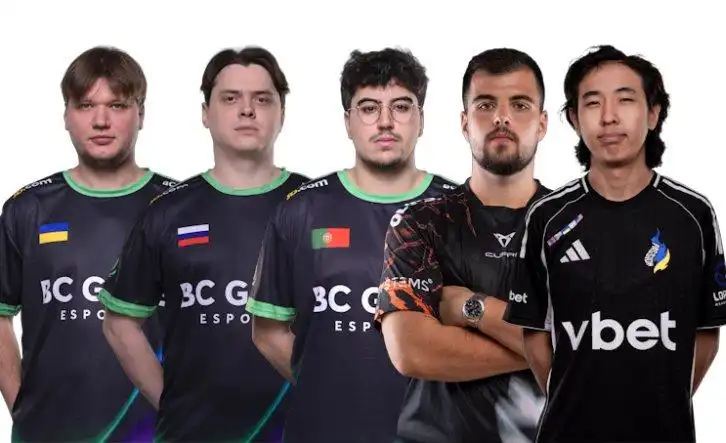
BC.Game's Counter-Strike 2 roster has received a special exemption from Valve, allowing the team to pursue qualification for the PGL Major Singapore 2026 through the Asian region.
Valve updated its official tournament-operation exceptions list to recognize BC.Game as an Asian-region team for Major invitation purposes.
The decision specifically identifies the five-player roster of Tyson "asap" Paterson, Emil "Magisk" Reif, Ayush "mzinho" Batbold, Oleksandr "s1mple" Kostyliev, and Azbayar "Senzu" Munkhbold.
According to HLTV's October 7 report, the exception followed an appeal by BC.Game after Valve introduced additional restrictions on switching VRS regions
The ruling is significant because the roster would otherwise have faced a potential eligibility problem under the updated requirements.
Why BC.Game Needed a Special Exception
On October 6, Valve adjusted its regional-assignment rules to prevent teams from rapidly moving between VRS regions shortly before Major qualification.
Under the new restriction, a roster cannot receive a regional assignment if it appeared on another region's VRS list during the preceding three calendar months.
The purpose is to reduce opportunities for teams to move into a different qualification region at the last moment.
However, this adjustment also created problems for BC.Game, whose roster changes had positioned the team for an Asian assignment before the new restriction was introduced.
Valve's subsequent exception resolved the eligibility issue for the specifically named BC.Game lineup.
Does This Mean BC.Game Has Qualified for the Major?
Not automatically.
HLTV reported that BC.Game had already appeared as a projected qualifier in its Major invitation simulator, making the team's participation highly likely following Valve's ruling.
Nevertheless, an eligibility exception, a projected invitation, and a finalized tournament invitation are three different things.
The official invitation outcome remains subject to the applicable VRS cutoff and confirmation process.
Background: How Valve's VRS Rules Created the Controversy
The Valve Regional Standings system plays a central role in determining invitations to major Counter-Strike tournaments.
Regional assignment matters because teams compete for invitations through different geographical allocations.
This creates an important distinction between a team's competitive strength and the region through which it can qualify.
The Three-Month Regional Assignment Rule
Valve's revised requirements introduced a restriction based on a roster's recent VRS history.
A roster that appeared in one region during the preceding three calendar months would generally be ineligible for reassignment to another region during that period.
The policy was introduced amid controversy surrounding late regional changes, including Sashi's move toward an Asian-eligible lineup.
The same rule unexpectedly affected BC.Game and WW, according to HLTV's reporting.
Why BC.Game's Situation Was Different
BC.Game's case involved an established roster containing two Mongolian players, Senzu and mzinho, alongside the subsequent addition of Australian player asap.
That lineup created an Asia-Pacific core while retaining internationally established players s1mple and Magisk.
The central issue was not simply the nationalities of the players. It was the interaction between the roster's regional assignment and Valve's newly imposed historical eligibility restriction.
Valve ultimately decided to recognize BC.Game as an exception.
Valve and BC.Game: Timeline of the Singapore Major Eligibility Dispute
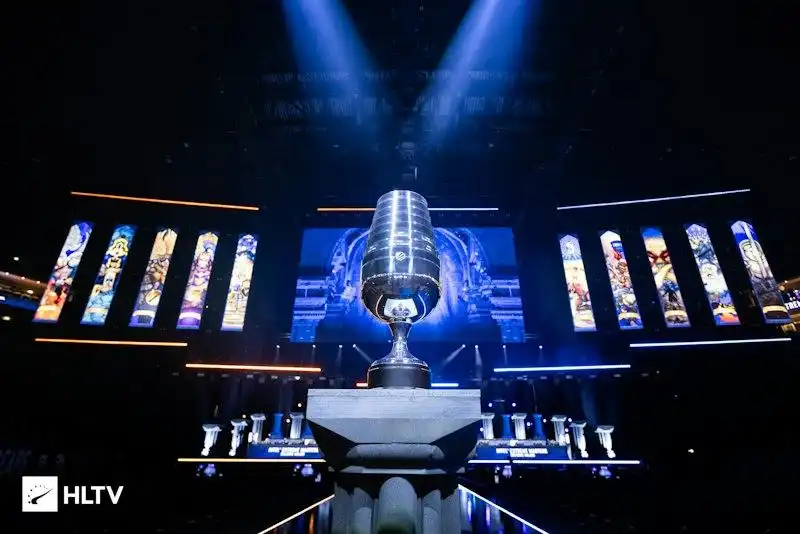
The PGL Major Singapore 2026 will bring together 32 Counter-Strike 2 teams from November 25 to December 13, with the final stage taking place at Singapore Indoor Stadium.
|
Date |
Development |
Significance |
|---|---|---|
|
Before October 6, 2026 |
BC.Game builds a roster including Senzu, mzinho and asap |
The lineup becomes eligible for consideration under Asian regional-assignment rules |
|
October 6, 2026 |
Valve introduces a three-month restriction on VRS regional reassignment |
Recent appearances in another region become an eligibility obstacle |
|
October 6–7, 2026 |
BC.Game's qualification prospects become uncertain |
The new rule threatens the team's Asian Major pathway |
|
October 7, 2026 |
BC.Game's management and coach publicly challenge the situation |
The organization seeks a resolution from Valve |
|
October 7, 2026 |
Valve adds BC.Game to its official exceptions list |
The roster receives Asian regional eligibility |
|
October 8, 2026 |
Qualification outlook remains highly favorable |
Final invitation confirmation remains the next milestone |
Timeline based on Valve's published ruling and HLTV reporting. Dates without a separately established official timestamp are presented at day-level precision.
Key Details: BC.Game's Singapore Major Exception
|
Category |
Verified information |
|---|---|
|
Governing authority |
Valve |
|
Organization |
BC.Game |
|
Tournament |
PGL Major Singapore 2026 |
|
Region approved |
Asia |
|
Ruling type |
Tournament-operation requirements exception |
|
Players covered |
asap, Magisk, mzinho, s1mple, Senzu |
|
General restriction |
Three-calendar-month regional reassignment condition |
|
Exception published |
October 7, 2026 |
|
Head coach |
Wiktor "TaZ" Wojtas |
|
Final invitation status |
TBD — official confirmation |
|
Next scheduled match |
TBD |
|
Final VRS position at invitation cutoff |
TBD |
BC.Game CS2 Roster: Players Behind the Asian Qualification Bid
The ruling applies to a specific five-player lineup rather than providing unrestricted regional eligibility to the organization.
|
Player |
Full name |
Country |
Status |
|---|---|---|---|
|
s1mple |
Oleksandr Kostyliev |
Ukraine |
Active roster |
|
Magisk |
Emil Reif |
Denmark |
Active roster |
|
asap |
Tyson Paterson |
Australia |
Active roster |
|
Senzu |
Azbayar Munkhbold |
Mongolia |
Active roster |
|
mzinho |
Ayush Batbold |
Mongolia |
Active roster |
|
TaZ |
Wiktor Wojtas |
Poland |
Coach |
Roster verified against HLTV's October 7, 2026 report.
How the Roster Creates an Asian Core
Three of BC.Game's five players come from the Asia-Pacific region: two Mongolian competitors and one Australian.
That composition is central to understanding the team's regional assignment.
However, regional eligibility should not be confused with a permanent change in organizational identity or the nationality of the entire roster.
The exception applies to the named lineup and its Major invitation eligibility.
Tactical Implications for BC.Game
From a competitive perspective, BC.Game combines experienced international players with younger Asia-Pacific talent.
s1mple brings extensive top-level Counter-Strike experience, while Magisk has competed in numerous elite international tournaments.
Senzu, mzinho and asap add a different competitive background to the roster.
Analysis: The main tactical challenge is likely to be integrating different playing styles, communication habits, and mid-round decision-making approaches.
Valve's exception does not directly change the team's in-game tactics. Instead, it removes an administrative obstacle and allows the lineup to focus on preparation for the Major qualification outcome.
No new player-role assignments, tactical changes, or performance improvements have been confirmed as part of Valve's ruling.
PGL officially introduces the Singapore Major 2026, outlining the tournament that BC.Game hopes to attend following Valve's regional eligibility decision.
Why Valve's Exception Matters for CS2 Esports
Valve's decision extends beyond the immediate qualification prospects of BC.Game.
It highlights three important issues in the modern Counter-Strike tournament ecosystem: regulatory consistency, regional competitive balance, and the predictability of Major qualification rules.
1. Competitive Fairness and Regional Representation
Regional qualification systems are intended to provide structured opportunities for teams from different parts of the world.
When internationally established organizations move into another region, their arrival can alter the competitive landscape.
For Asian teams, BC.Game's eligibility potentially introduces another strong contender into the invitation race.
For BC.Game, the exception preserves an opportunity to compete under a regional assignment that Valve has explicitly approved.
2. Predictability of Valve's Tournament Rules
Teams make roster and scheduling decisions months before major events.
A regulatory change introduced shortly before an invitation deadline can create uncertainty for organizations that have already invested in a particular qualification strategy.
Valve's exception suggests that individual circumstances can be considered when new restrictions create unintended consequences.
However, this should not be interpreted as a guarantee that future applicants will receive similar treatment.
3. The Wider VRS Qualification System
The Valve Regional Standings are more than a simple global leaderboard.
Regional eligibility determines which invitation allocation a roster can access, while ranking performance influences its position within the applicable system.
For that reason, a team's regional assignment can be just as consequential as its tournament results.
Impact Analysis: Who Benefits and What Could Change?
|
Stakeholder |
Potential impact |
Assessment |
|---|---|---|
|
BC.Game |
Restores eligibility for an Asian Major invitation |
Confirmed |
|
s1mple and teammates |
Preserves a highly favorable Major qualification pathway |
Confirmed eligibility; invitation pending |
|
Asian competitors |
May face additional competition for allocated invitations |
Potential impact |
|
Other region-switching teams |
Must account for the three-month restriction |
Rule confirmed |
|
Tournament organizers |
Need to apply Valve's regional rules and published exceptions |
Operational implication |
|
Valve |
Faces questions about consistency and timing of regulatory changes |
Editorial analysis |
Could the Decision Affect the Asian VRS Rankings?
The exception does not automatically award BC.Game additional ranking points.
Instead, it confirms which region the roster is eligible to represent for the Singapore Major invitation process.
Its practical effect depends on BC.Game's standing at the relevant cutoff and the available regional invitation slots.
No precise ranking-point adjustment or confirmed displacement of another team has been established in the verified ruling.
Could Valve's Decision Set a Precedent?
Potentially, but only in a limited sense.
The ruling demonstrates that Valve can publish a tournament-specific exception for a named roster.
It does not establish that every future region-switching team can bypass the standard waiting period.
Any broader interpretation would require additional official guidance.
What Changes Now for BC.Game?
Following Valve's ruling, BC.Game no longer faces the same regional eligibility obstacle that threatened its Singapore Major qualification.
The most immediate changes are administrative rather than tactical.
The roster can be considered for an invitation through Asia, and its previously favorable qualification projection becomes relevant again.
However, the team must still await the official outcome of the invitation process.
The key distinction is that Valve has approved BC.Game's eligibility, not announced a separate guaranteed tournament berth.
What to Watch Next: Singapore Major Qualification
-
Official Major invitation announcement. Confirmation that BC.Game appears among the invited teams.
-
Final Asian VRS standings. The ranking snapshot used for invitations will clarify the qualification outcome.
-
Further Valve clarification. Any additional exceptions or amendments could influence how future regional changes are handled.
-
BC.Game's competitive preparation. Upcoming matches will provide evidence of how effectively the current roster performs together.
-
Other affected organizations. Decisions involving teams such as Sashi and WW could reveal how consistently the revised regional-assignment rules are applied.
FAQ
Why did Valve grant BC.Game an exception?
Valve added BC.Game to its official tournament exceptions list following a dispute over a newly introduced three-month restriction on regional reassignment. The exception allows the named roster to represent Asia for Singapore Major invitation purposes.
Has BC.Game officially qualified for the Singapore Major?
Valve has confirmed that BC.Game is eligible for a Major invitation through Asia. HLTV's simulator projected the team to qualify, but the ruling itself does not constitute a finalized invitation.
Which BC.Game players are covered by the ruling?
The exception explicitly covers asap, Magisk, mzinho, s1mple, and Senzu.
What is Valve's three-month VRS rule?
Under the revised restriction, a roster generally cannot receive a new regional assignment if it appeared on another region's VRS list during the preceding three calendar months.
Does Valve's exception apply to other CS2 teams?
No automatic extension to other teams is established by the published decision. The exception specifically identifies BC.Game's roster for the Singapore 2026 Major.
Related News

.webp)