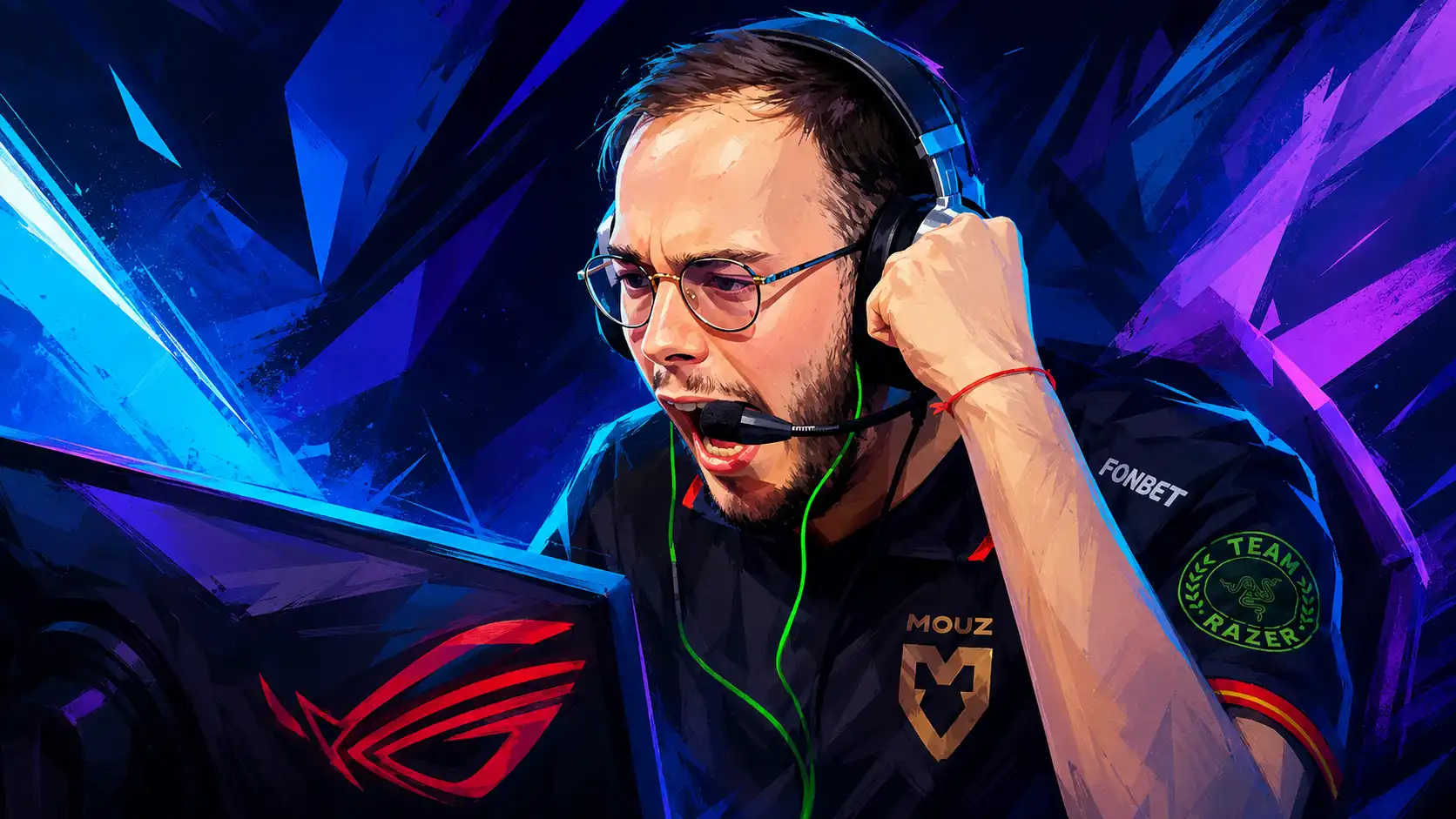

MOUZ Double Down on Youth with New Anchorless CS2 System


MOUZ have once again committed to a bold and somewhat risky roster strategy, doubling down on youth development while simultaneously reshaping their tactical identity. According to recent analysis, the organization is moving away from traditional “anchor” roles, signaling a structural shift that reflects both confidence in young talent and a willingness to abandon established conventions.
The decision comes after a period of sustained consistency followed by a noticeable dip in performance. Under coach Dennis “sycrone” Nielsen, MOUZ had achieved an impressive streak of 17 consecutive playoff appearances. However, their failure at BLAST Open Copenhagen became a turning point, prompting immediate roster action and reinforcing sycrone’s reputation for decisive mid-season changes.
Historically, such bold moves have defined MOUZ’s recent trajectory. The removal of experienced players like Nathan “NBK-” Schmitt and Jon “JDC” de Castro initially drew criticism, as did the short-lived benching of Kamil “siuhy” Szkaradek. Yet, each of these controversial decisions ultimately paid off, strengthening the team’s long-term competitiveness and validating the coaching staff’s aggressive approach to roster management.
The latest overhaul continues this pattern but introduces an additional layer of risk. The current iteration of MOUZ appears to be moving toward an “anchorless” system—one that reduces reliance on static defensive roles in favor of more fluid, aggressive setups. This stylistic shift places greater emphasis on adaptability, individual initiative, and mechanical skill, traits typically associated with younger players.
Supporting this direction is the organization’s continued reliance on its academy pipeline. MOUZ NXT has long been regarded as one of the most successful development programs in Counter-Strike, consistently producing talent capable of transitioning to tier-one competition. The promotion of Adrian “xelex” Vincze, a 17-year-old prospect from the academy team, exemplifies this philosophy.
At the same time, the team has undergone further structural adjustments. Ludvig “Brollan” Brolin and Jimi “Jimpphat” Salo were benched to make room for new pieces, while Justinas “jL” Lekavicius joined on a temporary loan. Additionally, Dorian “xertioN” Berman has taken over in-game leadership duties, marking a significant internal reshuffle not only in personnel but also in roles and responsibilities.
These moves highlight a clear strategic direction: MOUZ are prioritizing long-term growth over short-term stability. By investing in younger players and redefining their tactical framework, the organization is attempting to stay ahead of an increasingly competitive Counter-Strike landscape, where adaptability and firepower often outweigh rigid structure.
However, the risks are equally evident. Transitioning to a less conventional system without dedicated anchors can expose defensive weaknesses, especially against well-drilled opponents. Moreover, relying heavily on inexperienced players introduces volatility, as consistency at the highest level typically requires time to develop.
Still, MOUZ’s recent history suggests that such gambles are not made lightly. The organization has repeatedly demonstrated an ability to identify undervalued talent and integrate it successfully into the main roster. Their willingness to make unpopular decisions—and stand by them—has been a defining characteristic of their resurgence in recent years.
In this context, the current rebuild can be seen as both a continuation and an escalation of that philosophy. Rather than simply replacing underperforming players, MOUZ are reimagining how the game should be played within their system, trusting that their young core can execute a more dynamic and flexible style.
Whether this latest experiment will yield the same positive results remains uncertain. The combination of structural innovation and youth-driven development offers significant upside, but it also leaves little margin for error. As the team prepares for upcoming events, including key international tournaments, their performance will ultimately determine whether this ambitious approach becomes another success story—or a rare misstep in an otherwise effective strategy.
Related News