
BC.Game CEO Ako: Asian Players Have Longest Contracts as Team Commits to Region

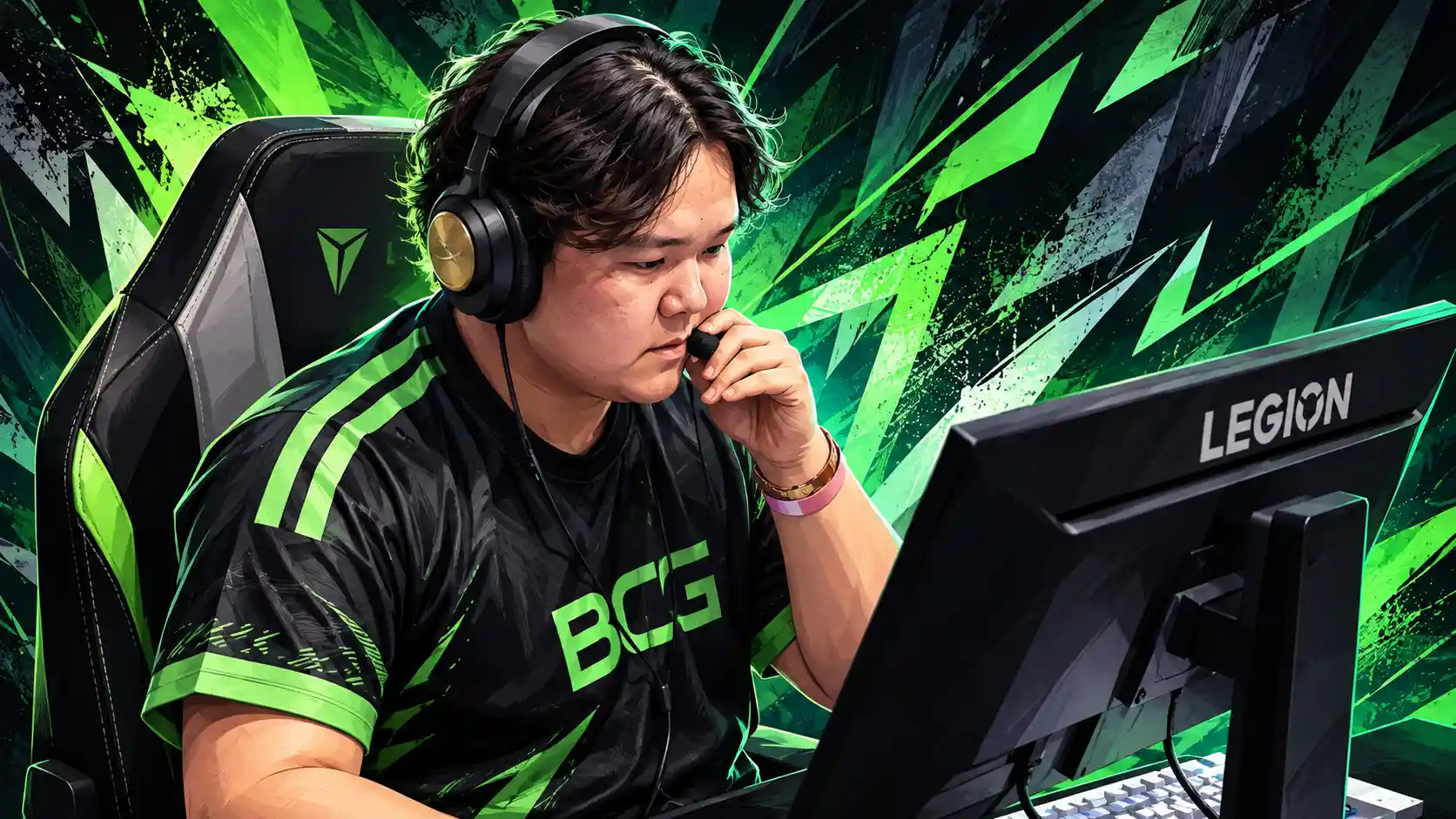
BC.Game CEO Ali “Ako” Muhanned says the organization’s move into Asian Counter-Strike is intended to be long-term, revealing that the team’s Asian players hold its longest contracts as he explained the case BC.Game presented to Valve.
The comments followed a turbulent period in the race for the PGL Singapore Major 2026. A Valve rule adjustment initially made BC.Game ineligible to pursue a Major invitation through Asia, but Valve subsequently issued a specific exception assigning the s1mple, Magisk, asap, Senzu and mzinho lineup to the Asian region and making it eligible for a Major invitation.
Muhanned discussed the process on the All About Counter-Strike podcast with James “BanKs” Banks and Jonatan “Devilwalk” Lundberg, arguing that BC.Game’s roster project should be distinguished from short-term region switching designed solely to exploit the Valve Regional Standings.
Quick Summary
| Detail | Information |
|---|---|
| Organization | BC.Game |
| Executive | Ali “Ako” Muhanned, CEO |
| Main issue | BC.Game’s Asia regional assignment |
| Region | Asia |
| Major | PGL Singapore Major 2026 |
| Valve ruling | BC.Game granted an exception |
| Eligible lineup | s1mple, Magisk, asap, Senzu, mzinho |
| Asian core | asap, Senzu, mzinho |
| Coach | Wiktor “TaZ” Wojtas |
| CEO’s position | Asian project is long-term |
| Contract lengths | Exact lengths not disclosed |
| Interview publication | October 8, 2026 |
| Confirmation status | Valve exception officially documented; contract claims attributed to Ako |
What did BC.Game CEO Ako say?
The central point of Muhanned’s interview was that BC.Game did not view its move into the Asian VRS as a temporary mechanism for reaching the Singapore Major.
According to the CEO, the organization contacted Valve after its Major path was disrupted by the publisher’s new restrictions on regional assignment.
Muhanned said BC.Game explained its plans and supplied information to Valve. Crucially, he stated that all of the team’s players have long-term deals and that the Asian members of the roster actually have the longest contracts.
“We are here to stay,” Muhanned said while discussing the organization’s intentions.
No precise contract expiration dates were disclosed in the interview, so the individual lengths of the deals remain TBD.
That distinction matters: the existence and relative length of the contracts are claims made directly by BC.Game’s CEO, while Valve’s official public exception confirms regional eligibility but does not publicly state that contract length was the reason the exception was granted.
Why BC.Game needed an exception from Valve
The controversy stems from how Valve determines a roster’s regional assignment for the VRS and Major invitation system.
BC.Game signed Australian player Tyson “asap” Paterson on September 22 to replace Denis “electroNic” Sharipov. Together with Mongolian players Azbayar “Senzu” Munkhbold and Ayush “mzinho” Batbold, asap created a three-player Asian-region majority within BC.Game’s five-man lineup.
The change shifted BC.Game’s regional affiliation from Europe toward Asia.
BC.Game then played the required matches with its new lineup at ROG JOURNEY Autumn 2026. After five matches with asap, HLTV reported that the roster had moved into the Asia VRS and reached No. 2 in the regional standings at that snapshot in time.
Then the rules changed.
Valve introduced a restriction under which a roster could only receive a regional assignment if it had not appeared on another region’s VRS list during the preceding three calendar months. Under that wording, BC.Game’s recent move from Europe to Asia no longer satisfied the new requirement.
The team’s Singapore Major route was suddenly in doubt.
BC.Game offered to start from zero
Before Valve issued its exception, Muhanned publicly proposed a more drastic solution.
He offered to surrender BC.Game’s inherited VRS position and allow the five-player roster to start from zero in Asia.
The CEO argued that BC.Game wanted its current lineup to earn qualification through results rather than retain an advantage accumulated by a previous roster configuration.
His proposal was effectively: erase the previous ranking advantage and judge only the current five-player team.
BC.Game identified asap, Senzu and mzinho as its Asian core and said those were players the organization believed in.
That proposal was not ultimately the mechanism publicly recorded by Valve. Instead, Valve added a direct exception for BC.Game.
Valve officially clears BC.Game for the Singapore Major race
The decisive development came when Valve updated its tournament operation requirements exceptions.
The publisher explicitly named BC.Game’s five-player roster:
asap — Magisk — mzinho — s1mple — Senzu
and assigned that lineup to Asia for the Singapore 2026 Major.
Valve’s official exception also states that the roster is eligible for a Major invitation.
That is the strongest primary-source confirmation in the story.
It is important, however, to distinguish eligibility from a guaranteed Major berth. Valve’s wording establishes that BC.Game can receive an invitation through Asia; it should not be rewritten as an unconditional confirmation that the team has already qualified unless the final invitation is separately confirmed.
BC.Game roster after the Asia switch
| Member | Country/region | Current status | Relevance to regional move |
|---|---|---|---|
| Oleksandr “s1mple” Kostyliev | Ukraine | Active | Existing lineup member |
| Emil “Magisk” Reif | Denmark | Active | Existing lineup member |
| Tyson “asap” Paterson | Australia | Active | Signing completed Asian-majority core |
| Azbayar “Senzu” Munkhbold | Mongolia | Active | Asian core |
| Ayush “mzinho” Batbold | Mongolia | Active | Asian core |
| Wiktor “TaZ” Wojtas | Poland | Coach | Head coach |
Valve’s exception specifically identifies the five active players rather than merely granting a blanket organizational exemption to the BC.Game brand.
Timeline: How BC.Game’s Asia VRS controversy developed
| Date | Development | Significance |
|---|---|---|
| September 22, 2026 | BC.Game signs asap to replace electroNic | Creates an Asian-majority five-player roster |
| October 2, 2026 | New lineup plays five matches at ROG JOURNEY | BC.Game becomes eligible for an Asia VRS switch under the rules then in effect |
| October 2, 2026 | BC.Game reaches No. 2 in an Asia VRS snapshot | Major prospects improve significantly at that point |
| October 6, 2026 | Valve changes regional-assignment requirements | Recent region switches become subject to a three-month restriction |
| October 7, 2026 | Ako proposes starting from zero in Asia | BC.Game publicly argues its case |
| October 7, 2026 | Valve adds BC.Game exception | Current lineup is officially assigned to Asia and eligible for a Major invitation |
| October 8, 2026 | Ako discusses the case publicly | CEO reveals long-contract argument and long-term Asian commitment |
The sequence explains why the contract discussion matters: it emerged not as an ordinary roster update but as evidence BC.Game’s CEO says was relevant to demonstrating that the Asian project was not intended as a short-lived Major qualification maneuver.
Key details of the BC.Game–Valve situation
| Question | Answer |
|---|---|
| Did BC.Game switch from Europe to Asia? | Yes |
| What completed its Asian-majority core? | Signing asap |
| Who are the three Asian-region players? | asap, Senzu, mzinho |
| Did Valve change its regional rules afterward? | Yes |
| Was BC.Game’s Major route affected? | Yes |
| Did BC.Game contact Valve? | Yes, according to Ako |
| Did Ako offer to reset the team’s points? | Yes |
| Did Valve grant an exception? | Yes |
| Is the exception official? | Yes, documented in Valve’s rules repository |
| Did Valve publicly say contracts caused the exception? | No |
| Did Ako say Asian players have the longest contracts? | Yes |
| Are exact contract lengths public? | No / TBD |
Why the BC.Game and Ako comments matter
This story extends beyond one team’s Major campaign.
The underlying issue is how Counter-Strike handles teams whose multinational rosters allow their regional classification to change.
VRS regional placement can have major competitive consequences because invitation thresholds differ between regions. Before signing asap, BC.Game was 36th in the European VRS with 1,191 points according to HLTV’s September 22 snapshot; those same points would have placed the team fourth in Asia, where five Singapore Major invitations were available.
That created an obvious integrity question: how should Valve distinguish a legitimate long-term international roster change from a late regional switch designed primarily to reach a Major?
Muhanned’s contract argument addresses that exact distinction.
If the Asian players are tied to BC.Game through longer-term agreements, as the CEO says, it supports the organization’s claim that it plans to build around them beyond a single qualification window.
It does not, on its own, establish a universal Valve precedent for future teams.
Valve’s published document identifies BC.Game as a specific Singapore 2026 Major exception rather than announcing that long contracts automatically qualify a roster for similar treatment.
Why BC.Game kept asap instead of returning to Europe
Another important detail from Muhanned’s interview concerns asap.
According to the CEO, reverting to a European configuration could have meant removing the Australian player. Muhanned said he rejected that possibility because he had promised asap that BC.Game would keep him.
That adds context to the organization’s decision to pursue an Asian solution rather than simply reverse the roster move once Valve changed the rules.
From BC.Game’s perspective, the argument is therefore based on roster continuity as well as competitive eligibility: the organization says the Asian core is part of its intended project rather than disposable infrastructure for a Major run.
VRS and Singapore Major impact
BC.Game’s VRS situation changed rapidly enough that ranking figures require timestamps.
After completing five matches with asap at ROG JOURNEY on October 2, HLTV reported BC.Game at No. 2 in the Asia VRS and gave the team a 95.9% Major qualification probability in its simulator at that moment.
Those numbers are historical snapshots, not permanent current values.
More importantly, Valve’s October 7 exception removed the specific regional-eligibility obstacle that had threatened BC.Game’s Singapore campaign. The roster is officially assigned to Asia and eligible for a Major invitation.
Current final Major invitation status: subject to the applicable VRS cutoff/final confirmation.
Current live Asia VRS position: should be refreshed at publication time rather than hard-coded from an older snapshot.
Tactical impact: what the Asian core changes
The controversy is primarily regulatory rather than tactical, so tactical conclusions should remain limited.
BC.Game’s current five is built around s1mple, Magisk, asap, Senzu and mzinho. The lineup had played only a small number of maps together by the time the regional dispute unfolded; HLTV’s lineup database showed six maps for the configuration in early October.
It would therefore be premature to claim that the move has created a settled tactical identity.
What is established is that asap replaced electroNic and that the move simultaneously altered BC.Game’s lineup and its regional composition.
Any deeper long-term role changes should be assessed once a larger sample of official matches exists.
What changes now for BC.Game?
The immediate regulatory uncertainty has been resolved in BC.Game’s favor for this Major cycle.
The team does not need to remove asap merely to restore its former European regional configuration, and Valve has explicitly recognized the existing five-player roster as Asian for Singapore Major invitation purposes.
The focus therefore moves from administrative eligibility back toward results.
There is also a longer-term test attached to Muhanned’s comments.
If BC.Game continues fielding and developing its Asian core after the Singapore cycle, that would provide tangible evidence for the organization’s stated long-term strategy. Conversely, future roster changes could change how the comments are interpreted.
For now, the CEO’s commitment is clear; the duration of that project will be established over time.
Historical comparison: BC.Game versus the wider region-switch debate
BC.Game was not the only roster affected by Valve’s intervention.
HLTV reported that Sashi and WW were also caught by the new regional rule. The broader controversy intensified following Sashi’s move toward an Asian core, after which Valve introduced the three-month restriction.
BC.Game, however, received an explicit exception.
That makes its case particularly important for future reference, but the scope of the precedent should not be overstated.
Valve’s public exception does not lay out a reusable checklist for other organizations. It names BC.Game’s exact lineup and the Singapore 2026 Major.
Therefore, future regional disputes would still require separate interpretation unless Valve publishes broader guidance.
What to watch next
The most important question is whether BC.Game converts its restored eligibility into a Singapore Major invitation.
Beyond qualification, there are three longer-term indicators worth tracking: whether asap, Senzu and mzinho remain central to the project after Singapore; whether BC.Game continues competing as an Asian-region roster in subsequent VRS cycles; and whether Valve turns the lessons from this dispute into broader regional-assignment rules rather than tournament-specific exceptions.
The exact contract lengths of BC.Game’s Asian players are another unresolved detail. Muhanned has described them as the longest deals on the roster, but their expiration dates have not been made public.
Related teams, players and entities
BC.Game — The international CS2 organization at the center of the regional-assignment dispute.
Ali “Ako” Muhanned — BC.Game CEO who publicly explained the organization’s case to Valve and its long-term Asian strategy.
Tyson “asap” Paterson — Australian player whose September signing gave BC.Game a three-player Asian-region majority.
Azbayar “Senzu” Munkhbold and Ayush “mzinho” Batbold — Mongolian members of the Asian core identified by BC.Game.
Oleksandr “s1mple” Kostyliev — Ukrainian AWPer and member of the Valve-approved five-player lineup.
Emil “Magisk” Reif — Danish veteran in BC.Game’s active five.
Wiktor “TaZ” Wojtas — BC.Game coach during the regional dispute.
Valve — Counter-Strike developer responsible for the VRS framework and the specific Singapore Major exception.
PGL Singapore Major 2026 — The Major at the center of BC.Game’s qualification dispute.
ROG JOURNEY Autumn 2026 — The event where the new BC.Game lineup accumulated its first five matches with asap and completed its initial move into the Asia VRS.
FAQ
Why did Valve give BC.Game an exception?
Valve officially granted BC.Game’s s1mple, Magisk, asap, Senzu and mzinho lineup an exception assigning it to Asia and making it eligible for a Singapore Major invitation. Valve’s public exception does not specify its full reasoning. BC.Game CEO Ali “Ako” Muhanned said the organization presented its plans and contract situation when making its case.
What did BC.Game CEO Ako say about the Asian players?
Muhanned said BC.Game’s players are on long contracts and that its Asian players have the longest deals on the roster. Exact contract durations were not disclosed.
Who are BC.Game’s Asian core?
BC.Game identified Tyson “asap” Paterson, Azbayar “Senzu” Munkhbold and Ayush “mzinho” Batbold as the three-player Asian core of its current roster.
Is BC.Game officially an Asian team for the Singapore Major?
For Singapore 2026 Major invitation purposes, yes. Valve explicitly assigned the asap, Magisk, mzinho, s1mple and Senzu roster to Asia and declared it eligible for a Major invitation.
Has BC.Game already qualified for the PGL Singapore Major?
Valve’s primary-source wording confirms eligibility for a Major invitation, not by itself an unconditional completed qualification. Final qualification/invitation status should be updated when formally locked.
Related News