
Valve Will Not Allow Major CS:GO Tournaments Despite the Game Returning to Steam

Valve Will Not Allow Major CS:GO Tournaments Despite the Game Returning to Steam
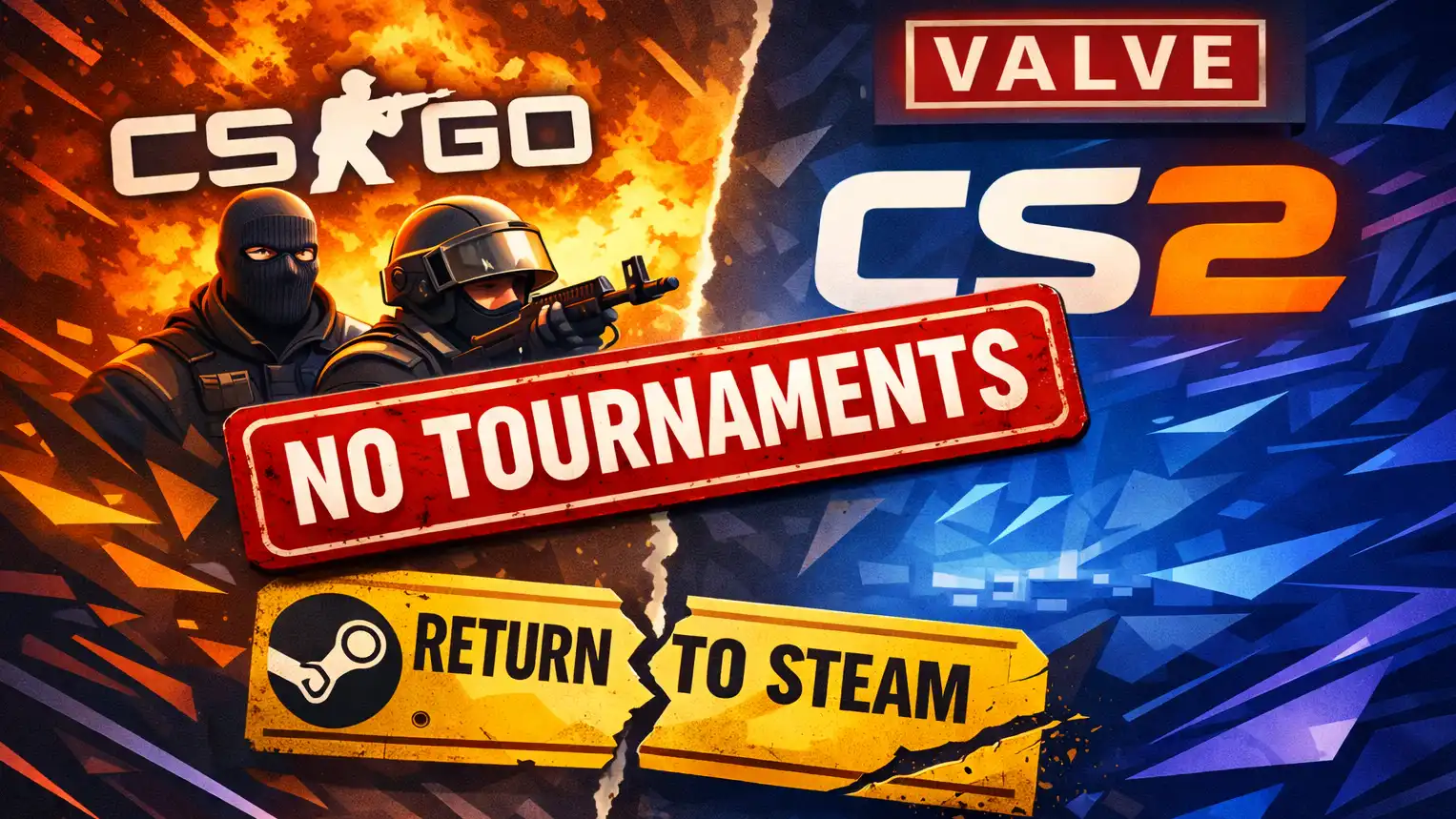
Valve has confirmed it will not grant licenses for large Counter-Strike: Global Offensive (CS:GO) tournaments, even though the game recently reappeared on Steam as a separate listing. The decision effectively prevents tournament organizers from hosting official large-scale CS:GO events and reinforces Valve’s long-term focus on Counter-Strike 2 (CS2) as the competitive platform for the esports ecosystem.
The information was first reported by Dust2.us and later confirmed by several esports outlets.
CS:GO Returns to Steam — But With Major Restrictions
On March 4, 2026, Valve quietly restored access to Counter-Strike: Global Offensive through a separate Steam app page. However, the release comes with several important limitations.
The CS:GO page is unlisted, meaning it cannot be found through regular Steam search and requires a direct link to access. The version also lacks many core online features.
Currently unavailable features include:
official matchmaking
full inventory support
normal server browsing functionality
Because of these restrictions, players who want to launch the classic version of the game must connect to community servers manually or through third-party platforms.
Despite the limitations, the return of CS:GO sparked immediate interest among fans nostalgic for the game that defined competitive Counter-Strike for over a decade.
Valve Confirms: No Licenses for CS:GO Esports Events
While the Steam reappearance initially raised hopes about possible CS:GO nostalgia tournaments, Valve has made its stance clear.
According to Dust2.us, Valve confirmed that licenses for large-scale CS:GO tournaments will not be issued. Without such licenses, organizers cannot run official high-tier events under Valve’s tournament rules.
Valve did not provide an explanation for the decision.
This effectively means that professional Counter-Strike esports will remain exclusively tied to CS2, which replaced CS:GO in 2023.
Why Valve Is Focusing on Counter-Strike 2
Valve’s modern tournament ecosystem is built around the Counter-Strike 2 competitive structure, including its official ranking systems and tournament regulations.
In recent years Valve introduced stricter Tournament Operation Requirements (TOR) governing how large Counter-Strike events must be organized. The rules emphasize transparency, open qualification paths, and standardized event structures for the global scene.
Because these rules apply to licensed tournaments, the competitive circuit now revolves entirely around CS2.
As a result, even if CS:GO remains playable in some form, its return does not signal a comeback of the original esports era.
The Community Still Misses CS:GO
The return of CS:GO highlights an ongoing divide within the community. Many professional players previously voiced concerns about CS2 during its early months.
For example, ENCE in-game leader Marco “Snappi” Pfeiffer criticized the game’s performance and input feeling in interviews during the transition period.
“It’s obviously not very optimized… the mouse feeling is pretty bad.”
NAVI captain Aleksi “Aleksib” Virolainen also mentioned issues with sound settings and consistency in the new engine.
Meanwhile, Vitality’s Emil “Magisk” Reif predicted that CS2 would initially produce unpredictable tournament results as teams adapted to the new mechanics.
These discussions fueled nostalgia around CS:GO and partly explain why its surprise return generated so much excitement.
CS:GO Player Numbers Surge After Steam Return
Despite lacking matchmaking and competitive support, CS:GO quickly attracted tens of thousands of players shortly after becoming available again.
Reports indicate the game reached over 60,000 concurrent players, showing that interest in the classic version of Counter-Strike remains strong even years after the transition to CS2.
Still, without official tournament licensing, this resurgence is unlikely to translate into a revived professional scene.
Conclusion
The unexpected return of CS:GO on Steam may appeal to longtime fans, but Valve has made it clear that the game will not return as a major esports platform.
With licenses for large tournaments off the table, the competitive future of Counter-Strike remains firmly centered on Counter-Strike 2.
CS:GO may live on as a nostalgic alternative for players, but the era of tier-one CS:GO esports appears to be definitively over.
Related News