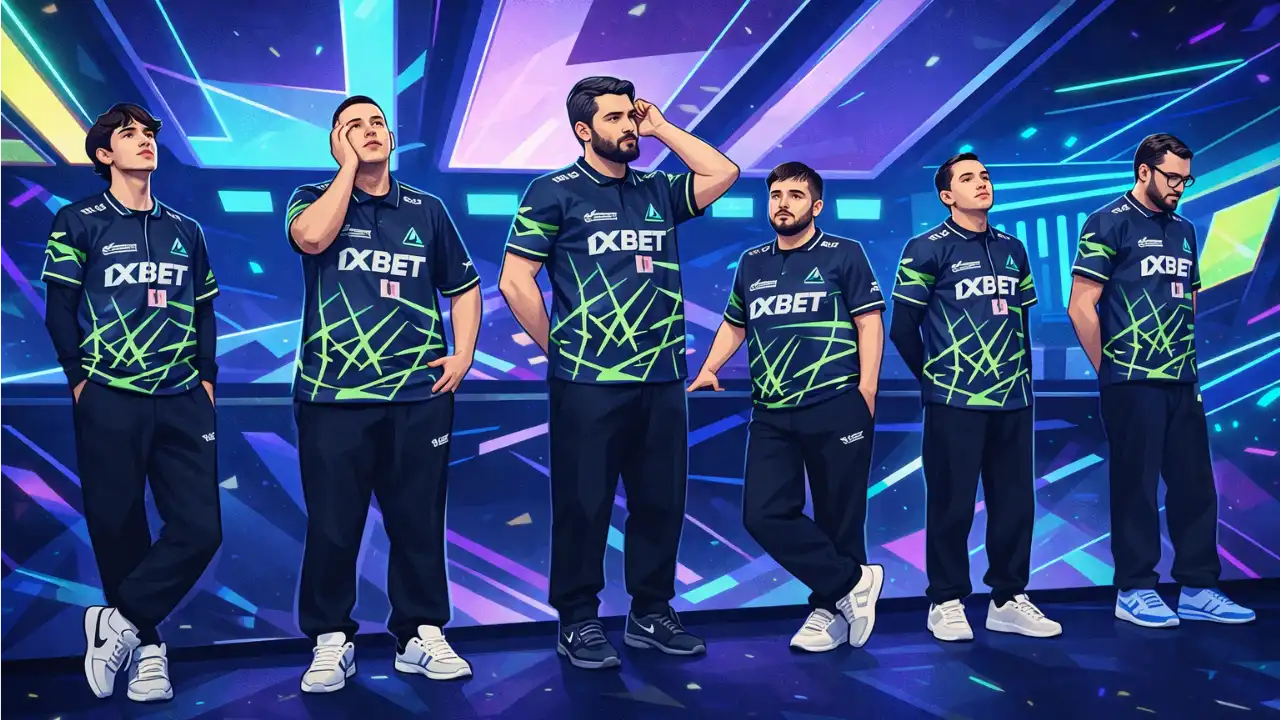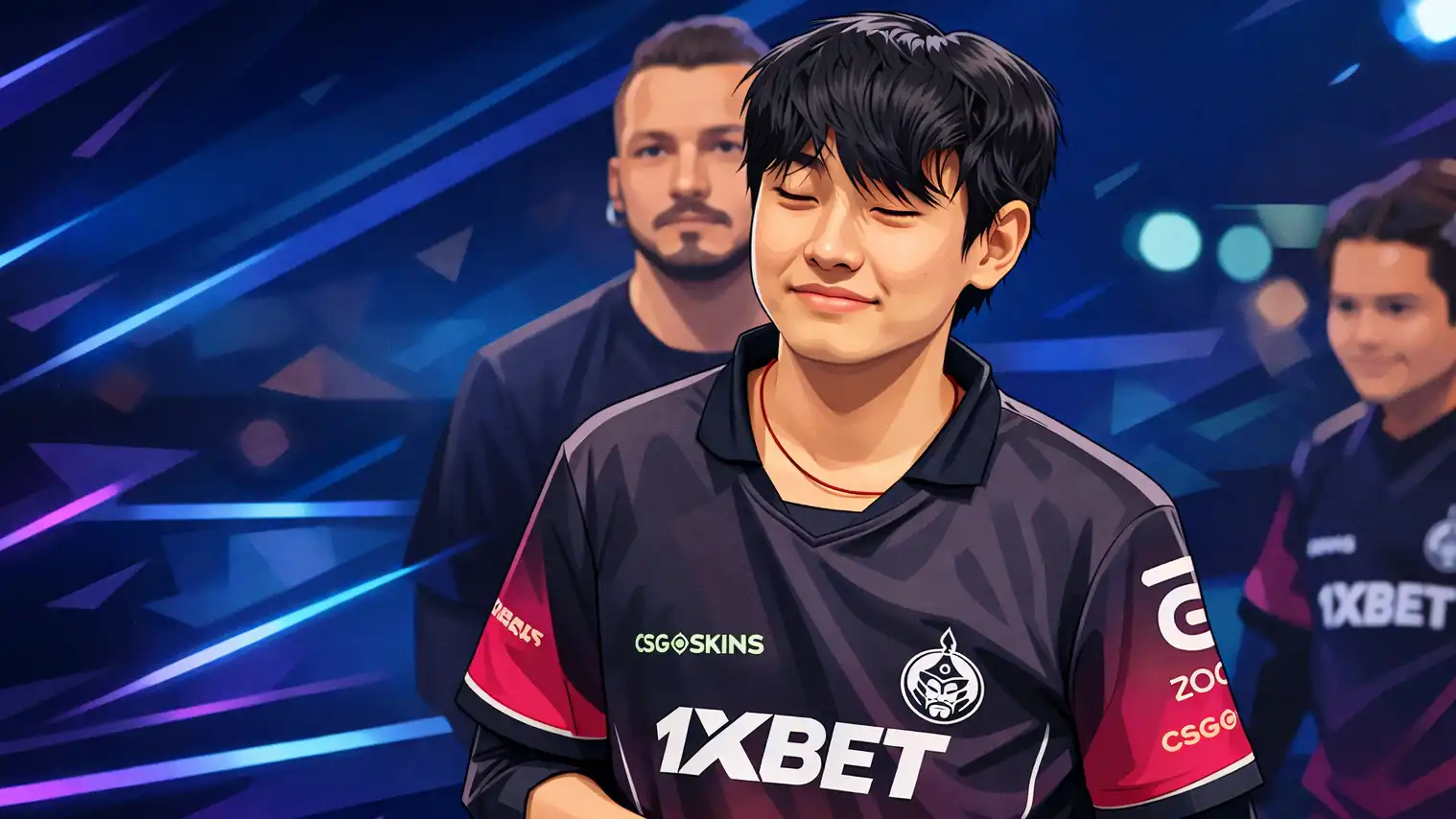

Techno Explains The MongolZ's Two-IGL System With nin9


Sodbayar "Techno" Munkhbold has revealed how Yesuntumur "nin9" Gantulga's leadership experience is influencing The MongolZ. Following the team's 2-1 opening victory over Legacy at IEM Beijing 2026, the Mongolian rifler explained that nin9's contributions sometimes make the lineup feel as though it has two in-game leaders.
However, Garidmagnai "bLitz" Byambasuren remains the primary caller. Techno's comments highlight a developing leadership structure as The MongolZ work to integrate their new roster and strengthen preparations for the Singapore Major.
Quick Summary
-
Main development: Techno praised nin9's secondary calling and leadership experience.
-
Primary IGL: bLitz retains responsibility for the team's main tactical decisions.
-
Recent result: The MongolZ defeated Legacy 2-1 in their IEM Beijing opener.
-
Key concern: Limited practice time and a demanding schedule have affected team coordination.
-
Major objective: Improve the new lineup's consistency ahead of the Singapore Major.
-
Confirmation: Direct statements from Techno in his November 2 HLTV interview.
Techno Explains How nin9 Supports The MongolZ's In-Game Leadership
The MongolZ's new lineup has gained an additional tactical voice through nin9, whose previous experience as an in-game leader has become an important part of the team's communication.
Speaking to HLTV following the victory against Legacy, Techno described the difference between nin9's earlier playing days and his current role.
The two players previously competed together under IHC approximately four years earlier. Since that period, nin9 has developed leadership experience, including time with The Huns.
That experience appears to have translated into more active communication within The MongolZ.
"It almost feels like we are playing with two IGLs, you know?"
Techno immediately clarified that this does not represent a formal change in the team's leadership hierarchy. bLitz continues to direct the majority of the team's play, while nin9 provides an additional voice in certain situations, particularly when the players are operating together around B sites.
The distinction matters. Rather than describing a roster with two equal tactical leaders, Techno was emphasizing the value of having another experienced player capable of contributing information and direction during rounds.
The comments suggest that The MongolZ are developing a more distributed communication structure without replacing their established captain.
IEM Beijing Victory Exposes The MongolZ's Practice Challenges
The interview followed a difficult opening series against Legacy at IEM Beijing 2026.
Although The MongolZ secured a 2-1 victory, the series was not straightforward. Legacy won Mirage in overtime before the Mongolian team recovered to take the remaining maps.
The Mirage defeat was particularly notable because The MongolZ had beaten the same opponent 13-8 on that map during their previous meeting in Bucharest.
Techno did not attribute the reversal primarily to an opponent-specific tactical adjustment. Instead, he pointed toward The MongolZ's own execution and preparation.
The rifler acknowledged that the team struggled on the Terrorist side of Mirage, with a demanding recent schedule limiting the amount of time available for collective practice.
This explanation provides important context for the new roster.
Individual experience can improve communication, but players still need repeated practice to establish timing, utility coordination, positioning, and shared expectations.
The MongolZ's ability to recover and win the series demonstrated resilience. However, the opening-map difficulties also indicated that the lineup had not yet reached the level of consistency it was targeting.
The result therefore carried two different messages: the team could overcome a difficult start, but there was still considerable work to complete before its next major objective.
Background: The MongolZ's New Roster and Road to Singapore
The MongolZ entered the November tournament period following a series of contrasting results.
The new lineup had already secured the 1win Private Club title, providing an encouraging early result for the revised roster.
However, the team subsequently experienced a more difficult campaign in Bucharest, raising questions about how quickly its new combination could achieve consistent results against international opposition.
Techno also discussed the team's position in the Valve Regional Standings (VRS), explaining that its ranking had fallen significantly after the previous Major.
By the time of the November 2 interview, he was encouraged that The MongolZ had returned to the top 20.
That ranking reference should be understood as Techno's assessment at the time of the interview, rather than a claim about the team's current VRS position.
For The MongolZ, the immediate challenge was not simply winning individual series. It was establishing a reliable tactical identity that could withstand stronger opposition and the pressure of a Major environment.
The MongolZ roster at the time of Techno's interview
|
Player |
Role or relevance |
|---|---|
|
Garidmagnai "bLitz" Byambasuren |
Primary in-game leader |
|
Sodbayar "Techno" Munkhbold |
Rifler; interview subject |
|
Yesuntumur "nin9" Gantulga |
Player contributing secondary calls |
|
Usukhbayar "910" Banzragch |
Active player |
|
Anarbileg "cobrazera" Uuganbayar |
Active player |
|
Erdenedalai "maaRaa" Bayanbat |
Coach |
Roster snapshot: November 2, 2026, as listed by HLTV. Roles not established by the interview are intentionally left unspecified.
Why Techno's Comments Matter for The MongolZ
The significance of Techno's remarks extends beyond the unusual description of having two in-game leaders.
In professional Counter-Strike, an IGL typically carries responsibility for coordinating the team's strategic approach, responding to opponents, and making decisions during rapidly changing rounds.
However, effective communication does not require every decision or observation to originate from one player.
Experienced teammates can provide information, suggest adjustments, and identify opportunities without assuming formal control of the team.
That distinction is particularly relevant to The MongolZ's current situation.
1. bLitz retains leadership continuity. The team can continue working within an established decision-making structure rather than introducing an entirely new tactical hierarchy.
2. nin9 adds another source of information. His leadership experience may help the team identify situations and communicate possible solutions more quickly.
3. The arrangement could support mid-round adaptation. An additional experienced voice may be valuable when opponents disrupt the original plan.
4. Communication still requires coordination. More voices are not automatically an advantage. Players need to understand who makes the final decision and when information should be communicated.
Techno's explanation indicates that The MongolZ are benefiting from nin9's experience, but it does not establish that the team has adopted a formal dual-IGL system.
That distinction is essential when evaluating the tactical implications of the interview.
Update: nin9 Responds to Techno's Two-IGL Comments
November 7, 2026 — Verified follow-up
Five days after Techno's interview, nin9 offered his own perspective on the team's communication structure.
Speaking to HLTV after The MongolZ defeated Natus Vincere 2-0 to reach the IEM Beijing grand final, nin9 downplayed the extent of his calling responsibilities.
He explained that he identifies useful setups and communicates observations to bLitz, who makes the final decisions.
nin9 also acknowledged that the new lineup was still adapting, although he believed the team was improving with each match.
This follow-up provides stronger evidence for how the system functions in practice. Techno's original remarks were praise for nin9's leadership experience, rather than confirmation of a formal shared-IGL arrangement.
The later interview also demonstrates that the roster's development continued beyond its opening victory against Legacy.
Timeline: The MongolZ's Roster Development and IEM Beijing Campaign
|
Date / period |
Development |
Significance |
|---|---|---|
|
Approximately 2022 |
Techno and nin9 previously played together at IHC |
Established familiarity between the players |
|
Before November 2026 |
nin9 gained IGL experience, including with The Huns |
Added leadership experience |
|
Before IEM Beijing |
The MongolZ won the 1win Private Club with their new lineup |
First tournament title with the revised roster |
|
Before November 2 |
The MongolZ experienced a more difficult event in Bucharest |
Highlighted consistency challenges |
|
November 2, 2026 |
The MongolZ defeated Legacy 2-1 at IEM Beijing |
Successful opening series |
|
November 2, 2026 |
Techno discussed nin9's secondary calling |
Clarified the team's leadership structure |
|
November 7, 2026 |
The MongolZ defeated NAVI 2-0 to reach the Beijing final |
Demonstrated further tournament progress |
|
November 7, 2026 |
nin9 explained his communication responsibilities |
Confirmed bLitz retains final decision-making authority |
|
Singapore Major preparation |
Bootcamp location remained undecided in Techno's interview |
Practice planning identified as a priority |
Key Details: Techno, nin9 and The MongolZ
|
Category |
Verified information |
|---|---|
|
Main player |
Sodbayar "Techno" Munkhbold |
|
Team |
The MongolZ |
|
Region |
Mongolia / Asia |
|
Main IGL |
Garidmagnai "bLitz" Byambasuren |
|
Secondary calling contributor |
Yesuntumur "nin9" Gantulga |
|
Relevant former team |
IHC |
|
nin9's leadership background |
The Huns |
|
Interview event |
IEM Beijing 2026 |
|
Opening opponent |
Legacy |
|
Opening result |
2-1 victory |
|
Upcoming major objective |
Singapore Major |
|
Original interview date |
November 2, 2026 |
|
Follow-up interview |
November 7, 2026 |
|
Formal dual-IGL appointment |
Not confirmed |
|
Confirmed bootcamp location |
TBD |
|
Current VRS ranking |
TBD — requires a dated standings check |
|
Next scheduled match |
TBD — requires current fixture verification |
Tactical Impact: How Secondary Calling Could Help The MongolZ
The MongolZ's arrangement offers an interesting case study in how a team can incorporate leadership experience without formally changing its captain.
Illustrative communication structure
nin9 — Secondary voice
Observations, setup suggestions, situational information
bLitz — Primary IGL
Final tactical decisions and team direction
Team execution
Coordinated responses and round execution
Potential advantages
More information during rounds. A secondary caller may help identify positional weaknesses, opponent tendencies, or opportunities that the primary IGL cannot immediately observe.
Faster local decisions. Techno specifically highlighted situations around B sites. An experienced teammate communicating from that area could help coordinate defensive responses or communicate potential adjustments.
Reduced communication bottlenecks. Sharing useful information may allow the main IGL to focus on broader decisions rather than personally identifying every tactical detail.
Better adaptation under pressure. If the team establishes clear communication rules, nin9's experience could improve its ability to react when an opponent disrupts the initial plan.
Potential limitations
Secondary calling can also introduce uncertainty if players deliver conflicting instructions or communicate too much information at once.
That makes leadership clarity essential.
The available interviews suggest bLitz remains responsible for final decisions, but there is insufficient evidence to determine whether nin9's involvement has measurably improved specific maps, defensive setups, or mid-round conversion rates.
Those conclusions would require match demos, communication recordings, or relevant statistical evidence.
Tournament Impact: Why Practice Matters Before the Singapore Major
The MongolZ's upcoming Major preparations formed another important part of Techno's interview.
The team was not scheduled to participate in BLAST Rivals in Hong Kong, creating additional time that could be used for practice.
However, Techno had not confirmed a bootcamp destination.
He mentioned Mongolia, Hong Kong, and Vietnam as possible locations, while noting that European teams would be traveling to Asia ahead of the Major.
This leaves an important strategic decision unresolved: where The MongolZ can obtain the most useful practice while maintaining an efficient preparation schedule.
For a recently adjusted roster, that period could be particularly valuable.
The team may need to refine its communication, establish reliable map-specific approaches, and ensure its players understand their responsibilities under pressure.
The additional practice window does not guarantee better tournament results. Nevertheless, it provides an opportunity to address the coordination problems Techno identified after the Legacy series.
Ranking and VRS implications
Techno's reference to returning to the top 20 reflects the team's efforts to improve its competitive standing.
However, the interviews do not establish a precise ranking-point change attributable to nin9's calling or to the Legacy victory.
Any claim about VRS gains, Major seeding, or ranking movement would require separately verified standings and the applicable tournament results.
The safest conclusion is that The MongolZ were targeting improved consistency while seeking to strengthen their competitive position.
What Changes Now for The MongolZ?
The most important takeaway is that The MongolZ have not confirmed a change of IGL.
Instead, the team has an additional experienced player capable of contributing to its decision-making process.
The November 7 follow-up reinforces that interpretation.
nin9's account places bLitz at the center of tactical decisions, with nin9 offering observations and suggestions.
Consequently, the immediate priority appears to be improving how the existing lineup works together rather than introducing a different leadership hierarchy.
The MongolZ's progression to the IEM Beijing grand final also provides evidence that the roster was capable of delivering strong results while continuing to adapt.
It does not, by itself, prove that the secondary-calling arrangement caused that improvement.
What to Watch Next
Several developments will help determine whether nin9's experience becomes a lasting competitive advantage.
-
Communication consistency: Whether The MongolZ maintain clear decision-making during difficult rounds.
-
Mirage performance: Whether the team resolves the Terrorist-side problems Techno identified against Legacy.
-
nin9's tactical contribution: Whether future interviews or match analysis reveal a larger secondary-calling role.
-
Bootcamp arrangements: Where the team chooses to practice before the Singapore Major.
-
Major performance: Whether improved preparation translates into more consistent results against international opposition.
-
VRS movement: Whether subsequent tournament results improve the team's standings.
The most useful indicator will not necessarily be a single victory. Sustained performance across multiple opponents and maps would provide stronger evidence that the roster has developed a reliable system.
Related Players, Teams and Events
|
Entity |
Connection |
|---|---|
|
Techno |
Discussed the team's leadership and practice requirements |
|
nin9 |
Provides additional tactical information and setup suggestions |
|
bLitz |
Retains primary IGL responsibilities |
|
The MongolZ |
Team developing the new lineup |
|
Legacy |
Opponent in the IEM Beijing opener |
|
Natus Vincere |
Opponent defeated in the Beijing semifinal |
|
IEM Beijing 2026 |
Tournament where the interviews took place |
|
Singapore Major 2026 |
Upcoming preparation objective |
FAQ: Techno and The MongolZ's Leadership Structure
Does The MongolZ have two IGLs?
Not officially. Techno described nin9 as an additional leadership voice, but confirmed that bLitz remains the primary in-game leader. nin9 later explained that he suggests setups and communicates information while bLitz makes the decisions.
Who is nin9 in The MongolZ?
Yesuntumur "nin9" Gantulga is a Mongolian Counter-Strike player who previously competed alongside Techno at IHC. His subsequent experience as an in-game leader, including with The Huns, has contributed to his current team's communication.
Why did The MongolZ struggle against Legacy at IEM Beijing?
According to Techno, a demanding schedule and insufficient collective practice contributed to the team's difficulties, particularly on the Terrorist side of Mirage. Despite losing that map in overtime, The MongolZ won the series 2-1.
How is The MongolZ preparing for the Singapore Major?
Techno emphasized the need for additional practice. The team was expected to have more preparation time because it would not participate in BLAST Rivals in Hong Kong. At the time of his interview, the bootcamp location remained undecided.
Did nin9 confirm Techno's comments about having two IGLs?
nin9 confirmed that he contributes information and tactical suggestions, but downplayed the scale of his responsibilities in a November 7 interview. His explanation supported the interpretation that bLitz remains the team's main decision-maker.
Related News