

Swisher Explains How M80 Is Helping JBa Become a More Independent Player After Wildcard

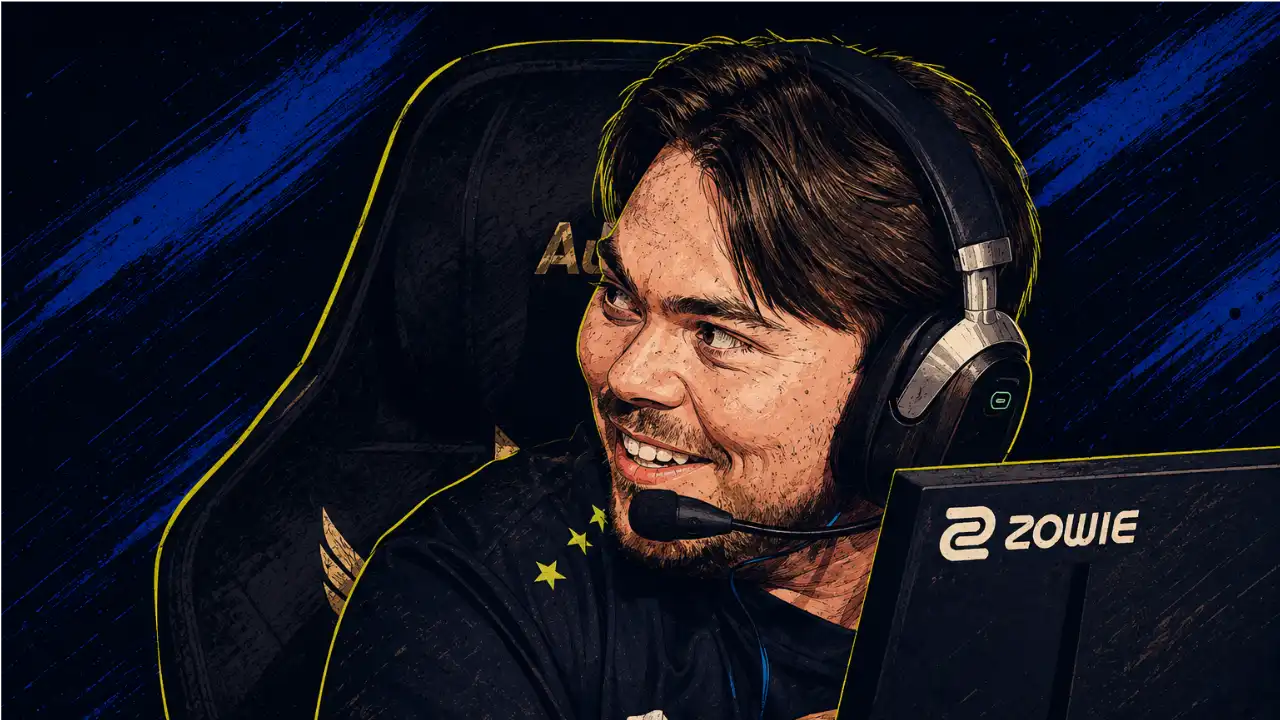
Michael “Swisher” Schmid believes M80’s work with Josh “JBa” Barutt is not only about improving his numbers, but about changing the way he understands Counter-Strike.
After M80 advanced through Stage 1 with a 3-1 record, the American rifler spoke to HLTV about the team’s progress, his own role changes, and JBa’s development since joining from Wildcard. The headline result was clear: all three American players on M80 — Swisher, Mason “Lake” Sanderson, and JBa — finished the stage with ratings above 1.20, while JBa produced his best event rating since signing for the organization.
For Swisher, that improvement is tied to the way M80 are trying to integrate JBa into a more structured system. He explained that JBa still brings habits from heavy FACEIT and pug grinding, something the team has to manage carefully. According to Swisher, JBa is constantly playing, often alongside Fritz “slaxz-” Dietrich, but the challenge is making sure that confidence and sharpness translate into official matches without drifting into unnecessary re-peeks or overly loose decisions.
The most revealing part of the interview came when Swisher discussed JBa’s background at Wildcard. He suggested that the young rifler had often been told what to do rather than taught why those decisions were being made. In M80, the goal is different: they want him to feel the game more, understand the reasoning behind calls, and become confident enough to make independent decisions inside the server.
That theme fits JBa’s broader career arc. He first gained attention as one of North America’s more promising young riflers during his time with Wildcard, where he played under Peter “stanislaw” Jarguz. Earlier coverage of JBa already pointed to both his strengths and his growing pains: he was praised for his energy and fearlessness, but decision-making and communication under pressure were identified as areas that stronger opponents could punish.
Those weaknesses did not stop him from becoming one of Wildcard’s key players. At the Shanghai Major cycle, Wildcard exceeded expectations by reaching the Elimination Stage after a strong Americas RMR run, and JBa later described the experience of playing on stage as both exciting and nerve-wracking. By mid-2025, he was already speaking publicly about personal growth, saying that maturing as a person was becoming even more important than simply improving as a player.
His move to M80 at the end of 2025 marked the next major step. M80 officially signed JBa to replace Jadan “HexT” Postma, while Wildcard were coming off a turbulent period that included roster instability and public controversy. Dust2.us reported before the official announcement that JBa had remained a sought-after player despite Wildcard’s struggles, noting his 1.13 rating across 172 maps and a 0.97 rating against top-30 opposition during that period.
Now, the early signs at M80 are more positive. Swisher’s comments suggest that the team are not trying to remove JBa’s natural aggression or confidence, but to give it better structure. The balance is delicate: overcoaching a young aimer can take away the instincts that made him valuable in the first place, but leaving him entirely to a pug-style approach can create the same mistakes that elite teams are built to punish.
Swisher also connected M80’s improvement to broader team preparation. He mentioned the addition of analyst Luca “Munstur” Ioanițiu, formerly of Passion UA, as a factor in helping the team arrive better prepared for tougher opposition. At the same time, Swisher said he has personally benefited from returning to more comfortable rotator roles in 2026. He described himself as a selfless player who has often been moved around to fix problems on different maps, but said the current setup has suited him well.
M80’s position in North America gives this development extra weight. In late May, HLTV’s regional ranking listed M80 as the No. 1 team in North America, ahead of Liquid and Wildcard. That makes JBa’s adaptation more than an individual storyline: if M80 want to turn regional strength into deeper international runs, they need their young rifler to become not just mechanically dangerous, but tactically self-sufficient.
Wildcard, meanwhile, have also continued to rebuild their own identity. Their new roster won BC Game Masters Championship Season 2 in Portugal in May, showing that the organization remains competitive even after the changes that sent JBa to M80. Still, Swisher’s remarks add another layer to the comparison between JBa’s old and new environments. At Wildcard, he grew into a recognized prospect; at M80, the expectation is that he becomes a player who understands the game well enough to shape rounds himself.
That is the central message behind Swisher’s interview. JBa is no longer being treated simply as a young talent who needs instructions. M80 want him to become a player who understands context, makes his own calls, and carries responsibility inside the system. His strong Stage 1 numbers suggest the process is already producing results, but Swisher’s comments make it clear that the real objective is long-term: turning JBa from a dangerous prospect into an independent, complete rifler.
Related News
.webp)
.webp)
.webp)