
Mercury Explains TYLOO Practice Philosophy and Game Sense Focus

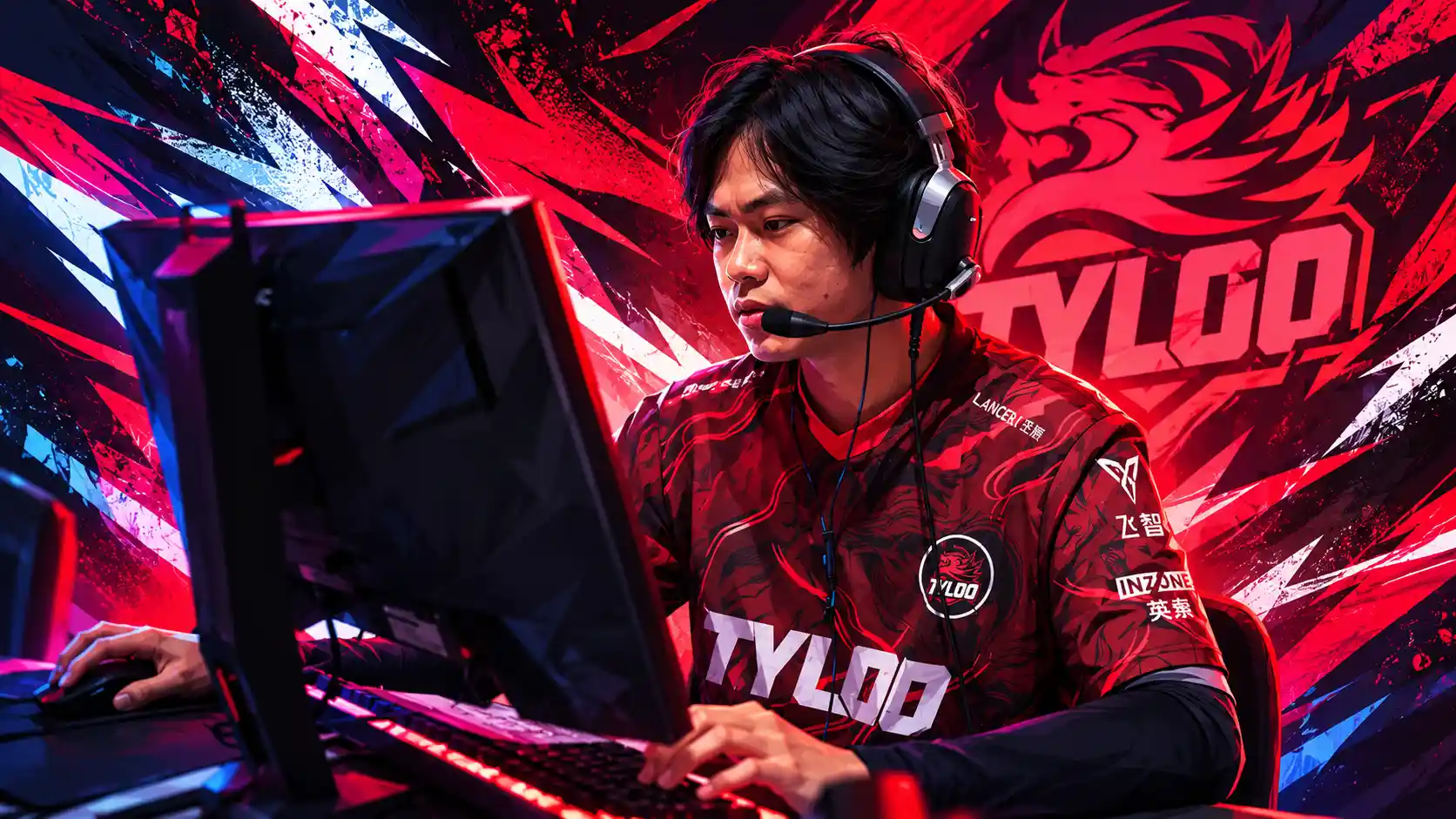
TYLOO in-game leader Jingxiang “Mercury” Wang has explained how the Chinese team is trying to improve one of its most important weaknesses: decision-making outside predetermined tactics.
Speaking to HLTV during ESL Pro League Season 24, Mercury said TYLOO want practice to expose players to unpredictable situations and encourage them to make their own judgment calls rather than simply following a tactics sheet. His comments come at an important point in TYLOO’s battle with The MongolZ for Asia’s sole direct Stage 2 place at the next Major.
The philosophy offers insight into how TYLOO are attempting to close a game-sense gap that coach WeiJie “zhokiNg” Zhong previously identified between the Chinese scene and elite international Counter-Strike.
Quick Summary
| Detail | Information |
|---|---|
| Player | Jingxiang “Mercury” Wang |
| Team | TYLOO |
| Role | In-game leader |
| Region | China / Asia |
| Interview published | October 2, 2026 |
| Event | ESL Pro League Season 24 |
| Main subject | Practice, game sense and independent decision-making |
| Coach | WeiJie “zhokiNg” Zhong |
| Main regional rival discussed | The MongolZ |
| Major objective | Asia’s sole direct Stage 2 position |
| Next listed match | vs. Falcons, October 3 |
| Confirmation status | Direct HLTV interview |
What did Mercury say about TYLOO’s practice?
Mercury’s central point was that structured tactics alone are not enough to prepare players for everything that happens during a Counter-Strike round.
When asked how TYLOO are attempting to improve their players’ game sense, Mercury explained that practice should emphasize default situations and allow players to encounter unexpected scenarios.
“The purpose of practice should lean more towards default play.”
He added that the objective is for players to make their own judgment calls rather than being restricted to predetermined tactical instructions.
That distinction is important.
A tactical system can define opening protocols, utility, executes and reactions to expected information. But CS2 rounds frequently develop into situations that cannot be completely scripted beforehand.
Mercury’s comments indicate that TYLOO want their players to become more comfortable solving those situations independently.
Mercury and TYLOO are targeting game sense, not just tactics
The subject did not emerge in isolation.
HLTV asked Mercury about previous comments from TYLOO coach zhokiNg, who identified game sense as an area where the team trails elite opposition.
Mercury’s response provides a clearer picture of how TYLOO are attempting to address that problem.
Instead of treating practice exclusively as repetition of set strategies, his description emphasizes defaults and situations in which players must interpret information for themselves.
In practical terms, that philosophy could encourage players to become less dependent on perfectly scripted rounds.
It should not, however, be interpreted as TYLOO abandoning structured tactics. Mercury also explained that he outlines how the team intends to approach matches, while zhokiNg provides tactical suggestions that Mercury incorporates into preparation.
The broader picture is therefore one of balance: preparation establishes the framework, while practice is intended to improve the players’ ability to operate when a round moves outside that framework.
Key details from Mercury’s interview
| Topic | Mercury’s position |
|---|---|
| Practice priority | Developing judgment and game sense |
| Preferred practice environment | More default-oriented situations |
| Tactical flexibility | Different opponents require different approaches |
| IGL responsibility | Mercury prepares the team’s approach |
| Coach involvement | zhokiNg provides tactical suggestions |
| Leadership pressure | Mercury acknowledges pressure and occasional self-doubt |
| Regional objective | Secure Asia’s No. 1 position |
| Major implication | Direct entry into Stage 2 |
| Primary regional competitor | The MongolZ |
Source: Mercury’s October 2 interview with HLTV.
Why Mercury’s comments matter for TYLOO
Mercury is describing a development problem that extends beyond learning more executes.
TYLOO already have tactical preparation. The more difficult objective is improving how players react once the information available during a round makes the original plan obsolete.
This becomes particularly relevant against stronger international opposition.
Defaults can produce different situations from round to round depending on opponent aggression, utility usage, rotations, opening kills and the information collected across the map. Players must then decide whether to take space, wait, rotate, fight, regroup or communicate an alternative.
Mercury’s stated practice philosophy appears designed to create more repetitions of precisely those unscripted decisions.
That interpretation is consistent with comments TYLOO players made earlier in their development. In a 2025 5EPlay interview, the team discussed the strength of elite international opponents in areas such as mid-round decision-making, adaptation and late-round play. Mercury himself identified mid-round decisions and responses as areas worth learning from top teams.
The October 2026 comments therefore suggest continuity in TYLOO’s development priorities rather than an entirely new concern.
Mercury’s development as TYLOO’s IGL
Mercury has been TYLOO’s captain since the summer of 2024, according to HLTV. The 25-year-old acknowledged that becoming the in-game leader increased both his workload and the pressure attached to his performances.
He also explained that preparing the same style for every opponent creates a vulnerability.
Mercury said an IGL needs to approach different teams differently because repeatedly using the same style makes it easier for opponents to prepare specifically for it.
That philosophy can also be seen in his comments from earlier tournaments.
During the 2026 Cologne Major, Mercury discussed adapting his calling and preparing specific ideas for Astralis on Nuke. In another interview during XPL Guangzhou, he explained that TYLOO had anticipated EYEBALLERS’ Cache pick and prepared specifically for it.
Together, those comments point toward an IGL increasingly focused on opponent-specific preparation while simultaneously trying to give his teammates greater autonomy during rounds.
TYLOO development timeline
| Period | Development |
|---|---|
| Summer 2024 | Mercury takes over TYLOO’s in-game leadership |
| Early 2025 | TYLOO discuss international teams’ advantage in adaptation and mid-round decision-making |
| 2025 international campaign | Mercury identifies mid-round decisions and responses as areas to learn from elite teams |
| June 2026 | Mercury discusses changes to his calling and opponent-specific preparation at the Cologne Major |
| July 2026 | TYLOO continue using opponent-specific preparation at XPL Guangzhou |
| October 2026 | TYLOO move ahead of The MongolZ in Asia’s VRS race, according to HLTV |
| October 2, 2026 | Mercury explains TYLOO’s practice philosophy at ESL Pro League Season 24 |
| October 3, 2026 | TYLOO are listed to face Falcons at ESL Pro League Season 24 |
The timeline combines HLTV’s current interview with earlier interviews covering Mercury and TYLOO’s tactical development.
Tactical analysis: what does “making your own judgment calls” mean?
The following is analysis based on Mercury’s description, not a confirmed change to TYLOO’s tactical system.
Mercury’s approach can be understood as training decision-making rather than simply expanding a playbook.
Consider a default round.
The IGL can establish the opening setup and objectives, but the next 30–60 seconds may produce countless variations. An opponent could push an extremity, expend unusual utility, surrender map control, stack a bombsite or create an unexpected player advantage.
No tactics sheet can realistically prescribe every response.
Training players to interpret those situations independently could potentially reduce the amount of information Mercury has to personally process and communicate during every mid-round.
It could also make TYLOO harder to predict if players become more comfortable exploiting opportunities without waiting for an explicit call.
Whether that improvement actually appears in official matches will require a larger competitive sample. Mercury’s interview describes the objective of TYLOO’s practice rather than evidence that the problem has already been solved.
The coach-IGL relationship inside TYLOO
Mercury also provided useful information about how tactical preparation is divided between himself and zhokiNg.
The IGL described himself as responsible for explaining how TYLOO will approach a match. zhokiNg contributes tactical suggestions, which Mercury can then incorporate into his preparation.
That indicates a collaborative structure rather than suggesting that either figure controls every tactical decision alone.
Confirmed TYLOO lineup referenced by HLTV
| Member | Role/status |
|---|---|
| Yi “JamYoung” Yang | Player |
| Dongkai “Jee” Ji | Player |
| Jingxiang “Mercury” Wang | Player / IGL |
| Qianhao “Moseyuh” Chen | Player |
| Su “Zero” Jingshen | Player |
| WeiJie “zhokiNg” Zhong | Coach |
HLTV displayed this TYLOO lineup alongside the October 2 interview.
Tournament impact: TYLOO have more than EPL results at stake
The timing of Mercury’s comments makes TYLOO’s development particularly important.
According to HLTV, TYLOO moved ahead of The MongolZ to become Asia’s No. 1 team during the current VRS race. Mercury explained that there were still two significant tournaments before the relevant ranking cutoff and that TYLOO wanted to earn as many points as possible.
The reward is particularly valuable.
Mercury explained that Asia has only one direct position in Stage 2 of the upcoming Major, while the remaining regional teams would begin in Stage 1.
Securing the region’s leading qualifying position would therefore allow TYLOO to bypass the opening stage.
Because VRS is dynamic, this article does not treat the October 2 ordering as a permanent ranking. The standings should be rechecked after relevant tournament results.
What changes now for TYLOO?
There is no announced roster or coaching change attached to Mercury’s comments.
The change is developmental rather than personnel-based.
TYLOO are attempting to create practice conditions in which players must make more decisions for themselves instead of relying exclusively on prepared tactical responses.
For Mercury, that potentially creates a second layer to his development as an IGL.
He must continue preparing opponent-specific game plans while also helping build a system in which his teammates can operate effectively when those plans encounter unexpected situations.
Whether TYLOO can achieve that balance is one of the most important questions surrounding their current international campaign.
Next match: TYLOO vs. Falcons
At the time Mercury’s interview was published, HLTV listed TYLOO’s next ESL Pro League Season 24 match against Falcons for October 3, 2026.
That matchup offers an immediate opportunity to observe some of the ideas Mercury discussed.
The result alone will not prove whether TYLOO’s game-sense training has succeeded. More useful indicators will include how the team reacts when initial plans fail, how quickly players respond to unexpected information and whether TYLOO can adjust its approach during a series.
Those are observational criteria rather than confirmed statistical metrics.
Ranking and Major implications
TYLOO’s battle with The MongolZ adds another layer to every relevant result before the ranking cutoff.
HLTV reported on October 2 that TYLOO had overtaken The MongolZ as Asia’s No. 1 side in the relevant VRS race. Mercury nevertheless emphasized that the contest was not finished and pointed to the remaining tournaments before the cutoff.
For that reason, a static numerical VRS value is intentionally omitted here.
Current VRS points: TBD / dynamic.
Final Asia Stage 2 qualification status: TBD.
That avoids presenting a temporary ranking snapshot as an evergreen fact.
What to watch next
The clearest test of Mercury’s philosophy will be whether TYLOO become more adaptable when rounds move away from their planned openings.
Their upcoming international matches can provide evidence in several areas: mid-round adjustments, responses to opponent aggression, late-round decision-making, communication after opening disadvantages and the ability to vary approaches between opponents.
Mercury’s own development is equally important.
His comments show that he sees calling as more than memorizing a tactical system. He is simultaneously managing preparation, opponent-specific styles, leadership pressure and the development of his teammates’ individual decision-making.
The VRS race against The MongolZ provides an immediate competitive consequence for that development.
Related teams, players and events
TYLOO — The Chinese organization represented by Mercury and currently competing for Asia’s strongest Major seeding position.
Mercury — TYLOO’s 25-year-old in-game leader, captain since summer 2024.
zhokiNg — TYLOO’s coach, whose previous comments about game sense provided the context for Mercury’s discussion of practice.
The MongolZ — TYLOO’s primary competitor in the Asian VRS race discussed in the interview.
Falcons — TYLOO’s next listed opponent at ESL Pro League Season 24 when the interview was published.
ESL Pro League Season 24 — The event where HLTV conducted the interview with Mercury.
Upcoming Major — TYLOO and The MongolZ are competing for Asia’s only direct Stage 2 position, according to Mercury and HLTV.
FAQ
What did Mercury say about TYLOO’s practice?
Mercury said TYLOO want practice to emphasize default situations that force players to make their own decisions rather than relying only on predetermined tactics.
Who is TYLOO’s in-game leader?
Jingxiang “Mercury” Wang is TYLOO’s in-game leader. HLTV states that he has captained the team since the summer of 2024.
What weakness is TYLOO trying to improve?
The team is working on game sense and independent decision-making. The discussion followed earlier comments from coach zhokiNg identifying game sense as an important weakness compared with elite teams.
Why is TYLOO’s VRS position important?
Mercury explained that Asia has one direct Stage 2 place available for the upcoming Major. Securing the region’s No. 1 qualifying position would allow the team to skip Stage 1.
Who do TYLOO play next?
At the publication time of Mercury’s interview on October 2, HLTV listed Falcons vs. TYLOO for October 3 at ESL Pro League Season 24. Because match schedules can change, this information should be updated after the match.
Related News
.webp)