

HLTV Brain Beta Launches as phzy and Staehr Lead 2vX Test

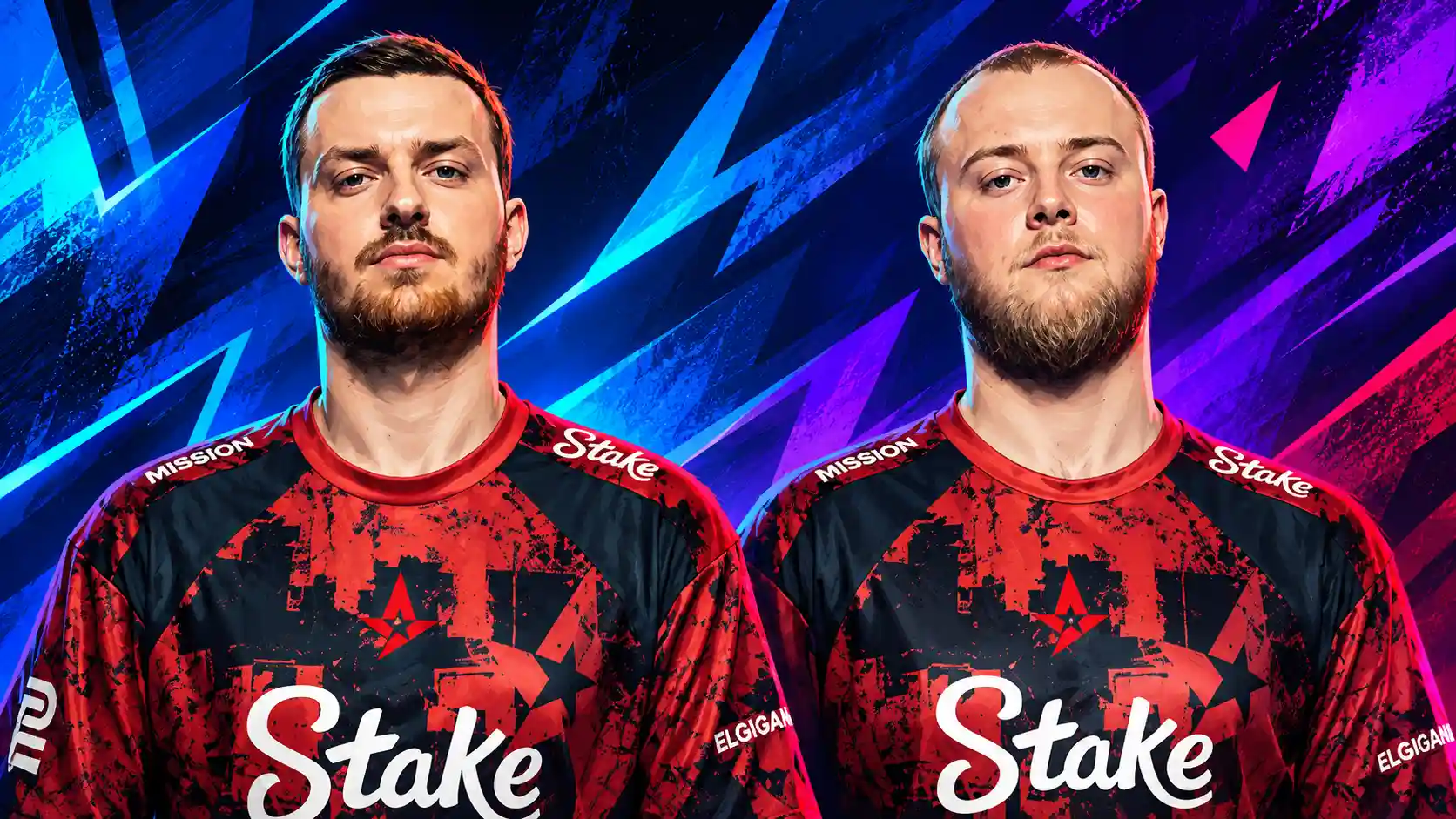
HLTV has launched the closed beta of HLTV Brain, a new AI-powered assistant designed to answer complex Counter-Strike questions using the website's extensive internal database.
The limited test began on October 13, 2026 and is planned to run for two weeks, with access gradually expanding to additional users. HLTV says the assistant uses its own data covering players, teams, matches, news, rankings and statistics.
One of the first demonstrations produced an unusual CS2 insight involving Love "phzy" Smidebrant and Victor "Staehr" Staehr. In a reconstructed analysis of late-round 2v2-to-2v5 situations at Big Events, the Astralis duo ranked first among pairs meeting the minimum sample requirement.
Quick Summary
| Detail | Information |
|---|---|
| Product | HLTV Brain |
| Platform | HLTV |
| Type | AI-powered Counter-Strike assistant |
| Beta launch | October 13, 2026 |
| Access | Limited closed beta |
| Planned beta duration | Two weeks |
| Expansion | More users planned to be added over time |
| Data sources | HLTV players, teams, matches, news, rankings and statistics |
| Public access | Waitlist available |
| Example players | phzy, Staehr, r1nkle, ZywOo, donk, karrigan and others |
| Underlying AI model | TBD / not disclosed in the launch article |
| Pricing | TBD / not disclosed |
| Confirmation status | Official |
What Happened: HLTV Brain Enters Closed Beta
HLTV officially opened a limited closed beta for HLTV Brain on October 13.
Rather than functioning as a traditional statistics page where users manually select filters, HLTV Brain allows Counter-Strike questions to be posed conversationally.
The system can then draw information from HLTV's database and assemble an answer from relevant player, team, match, roster, ranking, news and statistical records.
HLTV says the assistant is trained on and uses exclusively HLTV data when answering Counter-Strike questions.
The initial closed beta is expected to last approximately two weeks.
Access is limited, but HLTV said additional users would be introduced over time. Users who do not currently have access can join a waitlist for an opportunity to participate in the test.
No public launch date beyond the closed-beta period was confirmed in the original announcement.
How HLTV Brain Works
The central idea behind HLTV Brain is not simply to reproduce statistics already visible on a player's profile.
Its more interesting potential is combining multiple parts of HLTV's database to answer questions that would otherwise require extensive manual research.
The launch demonstrations cover several different types of query:
-
reconstructing late-round performance between player duos;
-
identifying every teammate a player had during a specific team tenure;
-
comparing the statistical gap between a team's best player and their next-best teammate;
-
examining how unusual it is for a team to win a Big Event when one player records a particularly low tournament rating.
Those examples illustrate the distinction between conventional filtering and conversational database analysis.
Instead of requiring a reader to locate several pages, export information and manually compare results, HLTV Brain attempts to perform the research chain from a natural-language question.
phzy and Staehr Lead HLTV Brain's 2vX Example
The most relevant demonstration for phzy and Staehr involved late-round situations at Big Events.
HLTV Brain reconstructed 2v2-to-2v5 situations from 2025 through September 29, 2026 and ranked duos with at least 50 qualifying rounds.
The analysis placed Astralis' phzy and Staehr first.
| Rank | Team | Duo | Situations | Wins | Win rate |
|---|---|---|---|---|---|
| 1 | Astralis | phzy / Staehr | 60 | 23 | 38.33% |
| 2 | Aurora | MAJ3R / soulfly | 64 | 23 | 35.94% |
| 3 | Aurora | XANTARES / Wicadia | 134 | 45 | 33.58% |
| 4 | PARIVISION | xiELO / nota | 56 | 18 | 32.14% |
| 5 | Natus Vincere | b1t / jL | 53 | 17 | 32.08% |
The full demonstration also included combinations from Spirit, Vitality, B8, FUT and another Natus Vincere pairing.
However, the methodology comes with an important qualification.
HLTV Brain described this result as a conservative reconstruction, not an exact event-by-event record. The calculation used survival timestamps to determine when the third teammate died and which opponents remained alive.
Because those timestamps are recorded in whole seconds, rounds in which another teammate died during that same recorded second were excluded from the reconstruction.
That methodological disclosure matters: 38.33% should be understood as the result of this specific reconstructed query and its parameters, rather than a universal "clutch duo rating."
Key Details About HLTV Brain
| Feature | Confirmed status |
|---|---|
| Natural-language CS questions | Yes |
| HLTV player data | Yes |
| Team data | Yes |
| Match data | Yes |
| News data | Yes |
| Rankings | Yes |
| Statistics | Yes |
| Multi-source database analysis | Demonstrated |
| Closed beta | Active at announcement |
| Waitlist | Available |
| Planned beta length | Two weeks |
| Wider release date | TBD |
| Subscription/pricing | TBD |
| Underlying AI model | TBD |
| API/public developer access | TBD |
| Mobile-specific release | TBD |
The unspecified items above have deliberately been left as TBD. They were not confirmed in HLTV's launch announcement.
Another Example: Reconstructing r1nkle's NIP Teammates
HLTV also demonstrated how Brain could simplify historical roster research.
The assistant was asked to identify every player who overlapped with Artem "r1nkle" Moroz during his primary-player spell with Ninjas in Pyjamas.
It identified 12 players whose primary spells overlapped with r1nkle's primary NIP tenure from April 2, 2024 to April 14, 2026.
The answer then addressed an important ambiguity: whether r1nkle's subsequent period on the bench should count as still being "at NIP."
Including that period added stavn and n0te, taking the result to 14 players.
HLTV Brain explicitly explained that this was based on roster-history overlap rather than matches actually played together.
That distinction demonstrates a potentially valuable aspect of the product: useful answers to historical questions often depend on defining exactly what is being measured.
ZywOo, donk and the Largest Teammate Rating Gaps
Another demonstration asked how the world's best players compared statistically with their own teammates.
Under the query's parameters, ZywOo's 2021 season produced the largest gap.
The analysis compared the highest-rated player with the next-best teammate while requiring at least 50 shared maps and limiting the sample to teams that appeared in HLTV's top 10 during the relevant year.
ZywOo recorded a 1.29 rating compared with misutaaa's 1.02 in 2021, creating a 0.27 difference.
The next-largest gaps in the demonstration included donk versus sh1ro in 2026 and ZywOo versus NBK- in 2019.
There is another methodological caveat.
The examples span different versions of HLTV Rating. HLTV Brain specifically noted that Rating 2.0 and Rating 3.0 are not calibrated against one another, meaning cross-era comparisons need to be interpreted carefully.
The karrigan Question Shows Why Methodology Matters
One of the more complex launch examples involved Finn "karrigan" Andersen and Falcons' IEM Cologne Major 2026 victory.
The question examined how uncommon it was for a player with a low individual event rating to still win a Big Event.
Using a queried sample covering 44 Big Events between January 2025 and October 2026, HLTV Brain divided player-event performances into Rating 3.0 bands.
The demonstration found 155 player-event entries below 0.80, with one belonging to a player whose team won the event. That equated to approximately 0.6% within that sample.
By comparison, players rated 1.20 or higher were on the winning team in 23.4% of the queried player-events.
Crucially, the output did not present that as a universal probability.
The demonstration explicitly warned that the below-0.80 sample was small and that the statistic measures team success as much as individual performance.
This is arguably as important as the headline numbers themselves: analytical tools become substantially more useful when they explain the assumptions and limitations behind an answer.
HLTV Brain Launch Timeline
| Date | Development |
|---|---|
| Before October 13, 2026 | HLTV Brain developed around HLTV's Counter-Strike data |
| October 13, 2026 | Closed beta officially announced |
| October 13, 2026 | Limited group receives access |
| October 13, 2026 | Waitlist made available |
| October 13, 2026 | phzy/Staehr, r1nkle, ZywOo/donk and karrigan examples published |
| Following beta period | Additional users expected to be added over time |
| Approx. two weeks after launch | Planned closed-beta window ends, subject to HLTV's testing plans |
| Wider public release | TBD |
Why HLTV Brain Matters for Counter-Strike Research
Counter-Strike has accumulated an enormous historical data footprint.
A straightforward question such as "What was this player's rating?" is relatively easy to answer through a traditional statistics interface.
Questions involving relationships between datasets are harder.
Which teammate combinations performed best in a specific late-round configuration?
Which players overlapped with another player's tenure?
How large was the statistical gap between a superstar and his teammates across different seasons?
How frequently did teams win despite a player falling within a particular performance band?
Those questions can require several filters, datasets and manual calculations.
HLTV Brain's potential value is therefore less about replacing a normal player profile and more about creating an interface between natural-language questions and a large structured Counter-Strike database.
If the system can consistently interpret complex queries, apply appropriate filters and communicate methodological limitations, it could reduce the time needed for certain types of CS2 research.
That is an analysis of the product's potential, not a guarantee about its accuracy or future capabilities.
Impact Analysis
Impact on fans
For fans, HLTV Brain could make deeper statistical questions accessible without requiring knowledge of database structures or advanced statistical tools.
Someone could theoretically start with a normal Counter-Strike question and allow the system to determine which information needs to be combined.
The closed beta will help establish how reliably that works outside curated demonstrations.
Impact on journalists and analysts
The concept could also be useful for journalists, commentators and analysts looking for unusual historical connections or statistical starting points.
However, AI-generated analysis should still be checked against source data—particularly when a result is reconstructed rather than directly stored as an existing statistic.
The phzy/Staehr example demonstrates exactly why: the result depends on definitions, minimum samples and timestamp limitations.
Impact on players and teams
There is no direct competitive change to Astralis, phzy, Staehr or any other team simply because HLTV Brain launched.
The players appear as subjects in example analyses rather than participants in the development of the product.
No tactical, roster or contractual change should therefore be inferred from their inclusion.
Ranking and VRS impact
There is no direct Valve Regional Standings impact from HLTV Brain's launch.
The product analyzes Counter-Strike information; it does not change match results or VRS standings.
No ranking impact should be attributed to phzy and Staehr because they topped one reconstructed HLTV Brain query.
Historical Context: From Filters to Conversational CS Data
Traditional Counter-Strike statistics research is built around pages, tables and filters.
HLTV Brain introduces a different interface: the user describes the information they want, and the system attempts to assemble the relevant analysis.
That does not necessarily make traditional statistical pages obsolete.
Structured pages remain useful when users already know what metric, event, player or team they want to inspect. Conversational analysis becomes more valuable when the question requires combining several dimensions or when the exact path to the answer is unclear.
The distinction could make HLTV Brain complementary to HLTV's existing database rather than simply a replacement for its search and statistics interfaces.
What Changes Now?
For most HLTV users, the immediate change is limited because Brain launched as a closed beta, not a full public release.
Selected users can test the system while others can join the waitlist.
The important next stage is feedback.
Real-world questions are likely to test the assistant in ways curated launch examples cannot, including ambiguous terminology, unusual date ranges, roster edge cases and queries where the available data cannot support a reliable conclusion.
How HLTV Brain handles those cases may ultimately matter more than how quickly it answers straightforward questions.
What to Watch Next
The first major question is whether HLTV expands access after the planned two-week closed-beta period.
A broader launch date has not been confirmed, so that remains TBD.
Accuracy will be another major area to monitor.
The initial demonstrations already show the importance of methodology. The phzy/Staehr analysis required a specific minimum sample and reconstruction method, while the r1nkle example changed depending on whether a benched period counted toward his NIP tenure.
Those are exactly the types of ambiguities a statistical assistant needs to communicate clearly.
It will also be worth watching whether HLTV eventually discloses more technical information about Brain, including its underlying AI model, access model and potential pricing. None of those details were specified in the initial announcement.
Related Players, Teams and Entities
HLTV Brain: The AI-powered Counter-Strike assistant currently introduced through a limited closed beta.
phzy: Astralis player Love "phzy" Smidebrant. Together with Staehr, he ranked first in the launch article's reconstructed late-round duo analysis.
Staehr: Astralis player Victor "Staehr" Staehr and phzy's partner in the leading reconstructed 2vX pairing.
Astralis: The team represented by phzy and Staehr in the 2vX demonstration.
r1nkle: Used in HLTV Brain's historical roster-research demonstration involving his Ninjas in Pyjamas tenure.
Ninjas in Pyjamas: The organization examined in the r1nkle teammate-history query.
ZywOo: Featured in the teammate-rating-gap example, including the largest gap returned under the demonstration's parameters.
donk: Featured in the same statistical comparison for his 2026 performance.
karrigan: Used as the subject of a query examining how frequently teams win Big Events alongside players in lower Rating 3.0 bands.
FAQ
What is HLTV Brain?
HLTV Brain is an AI-powered assistant designed to answer Counter-Strike questions using HLTV's database of players, teams, matches, news, rankings and statistics. It entered closed beta on October 13, 2026.
Is HLTV Brain available to everyone?
No. It launched to a limited selection of users in closed beta. HLTV said additional users would be added over time and provided a waitlist for people interested in access.
How long will the HLTV Brain beta last?
HLTV said the closed beta was planned to run for two weeks. A final date for unrestricted public availability was not specified in the launch announcement.
Why are phzy and Staehr connected to HLTV Brain?
HLTV used phzy and Staehr as part of an example showing Brain's analytical capabilities. The Astralis pair ranked first in a reconstructed analysis of 2v2-to-2v5 late-round situations at Big Events between 2025 and September 29, 2026, among duos with at least 50 qualifying situations.
What was phzy and Staehr's result?
The reconstruction identified 60 qualifying situations, 23 wins and a 38.33% win rate for the Astralis pairing. HLTV Brain cautioned that the calculation was a conservative reconstruction because survival timestamps are recorded in whole seconds.
Related News


