
Liquid Coach flashie Explains Why JT Is Key to Team's CS2 Rebuild
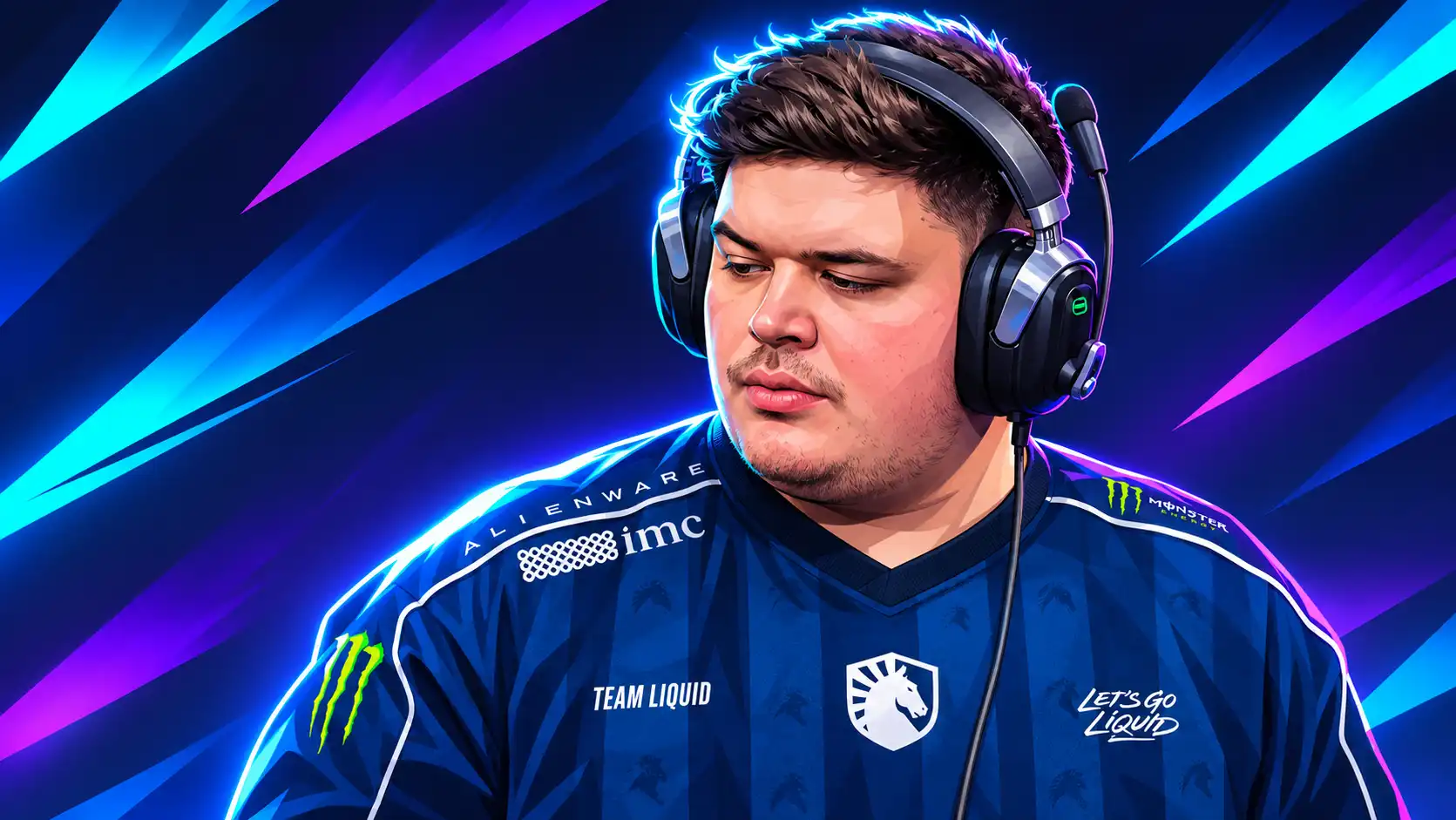
Team Liquid's coach believes his tactical understanding with in-game leader JT has created the structure that was missing from the organization's previous Counter-Strike 2 lineup.
Team Liquid coach Viktor "flashie" Tamás Bea has identified his working relationship with Johnny "JT" Theodosiou as one of the most important developments in the team's rebuilding process, explaining that their shared understanding of Counter-Strike has made it easier to establish a consistent tactical identity.
Speaking to HLTV following Liquid's 2-0 victory over Aurora in their opening match at IEM Beijing 2026 on November 2, flashie contrasted the current roster's unified approach with the communication and strategic disagreements that complicated the team's previous lineup.
The Hungarian coach also discussed Liquid's struggles to convert advantageous rounds, the importance of rebuilding fundamental teamplay, and the development of young AWPer Georgi "Jorko" Mitev.
His comments offer insight into how Liquid are attempting to turn a period of roster instability into a more sustainable competitive foundation.
What Did flashie Reveal About JT and Liquid's New Direction?
The most significant revelation from flashie's interview was not simply that Liquid's coach enjoys working with JT. It was his explanation of why their partnership has changed the team's internal decision-making process.
According to flashie, the previous Liquid lineup struggled to establish a common understanding of how Counter-Strike should be played.
Although he stopped short of describing the situation as outright disagreement, he acknowledged that the team effectively operated with six different perspectives on how to approach matches and achieve victories.
That fragmentation made it difficult to develop a unified system.
With JT now directing the team in-game, flashie believes the coaching staff and players have a clearer strategic foundation.
The coach explained that he and JT approach the game in similar ways, particularly when discussing preparation, advantageous situations, disadvantageous situations, and the fundamentals of successful teamplay.
This alignment matters because a coach's strategic ideas must ultimately translate into decisions made by players during live rounds.
When the coach and in-game leader interpret situations differently, implementing a consistent system can become more complicated.
When they share the same principles, establishing common protocols and expectations may become easier.
For Liquid, flashie believes that second scenario is now possible.
Importantly, his comments describe an improvement in internal coordination rather than proof that the roster has already solved its competitive problems.
The team still needs to demonstrate that its clearer identity can produce reliable results against elite opposition.
Why flashie and JT's Tactical Partnership Matters
The relationship between a coach and an in-game leader is one of the defining elements of a professional Counter-Strike team's structure.
The coach generally contributes to strategic preparation, opponent analysis, practice priorities, and broader tactical development. The in-game leader must apply those ideas during matches while responding to changing situations.
Liquid's current arrangement appears to provide a stronger connection between these responsibilities.
Based on flashie's interview, three areas stand out.
1. A clearer approach to advantageous rounds
One of Liquid's recurring problems at PGL Masters Bucharest was converting rounds in which they had already established an advantage.
flashie specifically identified closing out such situations as an area the team had discussed before IEM Beijing.
From a tactical perspective, this can involve decisions about positioning, trading, utility management, and whether to maintain or change the pace of a round.
The interview does not establish which individual mistakes were most responsible for Liquid's previous failures.
However, it confirms that improving advantageous-round execution had become an explicit development priority.
2. More consistent decision-making under pressure
Liquid's coach also highlighted the importance of agreeing on how to approach disadvantageous situations.
For a developing roster, shared principles can reduce uncertainty when a round does not unfold according to the original plan.
A consistent decision-making framework may help players understand when to take initiative, when to preserve resources, and when to coordinate a collective response.
These are potential benefits of the system flashie described, rather than individually verified improvements in Liquid's match statistics.
3. Better preparation and communication
flashie emphasized that Liquid have been working on protocols for recurring in-game scenarios.
Instead of treating each difficult situation as an isolated problem, the team is attempting to establish repeatable responses.
That approach could make preparation more effective and reduce the number of decisions players must negotiate during high-pressure moments.
For JT, the significance is clear: his leadership is not being evaluated solely through individual performances, but also through his ability to translate the coaching staff's ideas into coordinated teamplay.
Background: Why Liquid Needed a Tactical Reset
Liquid's latest development phase followed changes to a lineup that previously included Kamil "siuhy" Szkaradek and Roland "ultimate" Tomkowiak.
In the HLTV interview, flashie described the earlier roster as a group that struggled to establish a shared philosophy.
His comments did not assign responsibility to a particular former player.
Instead, they identified a collective problem: the team lacked sufficient agreement about how to approach the game.
That distinction is important.
A lineup can contain individually talented players while still struggling to establish effective communication, consistent mid-round decisions, and a coherent tactical identity.
Liquid's difficulties were therefore not necessarily limited to mechanical performance.
The interview suggests that improving organizational clarity within the server has become a central priority.
From PGL Bucharest to IEM Beijing
Liquid's performances at PGL Masters Bucharest provided both encouragement and warning signs.
The team opened the tournament with a victory over MOUZ, raising expectations after a period of inconsistent results.
However, flashie explained that the increased expectations also made it harder for the players to remain composed.
Liquid subsequently faced Aurora in Bucharest and failed to secure the result they wanted.
Their next meeting at IEM Beijing produced a different outcome.
Liquid defeated Aurora 2-0, giving flashie an early indication that the team's discussions about confidence and composure had been productive.
The result represented progress, but one series alone cannot establish whether Liquid's underlying weaknesses have been permanently addressed.
Timeline: Liquid's Roster Transition and Tactical Development
The following timeline separates confirmed competitive milestones from the broader development process described by flashie.
|
Period |
Development |
Significance |
|---|---|---|
|
Summer 2026 |
Liquid underwent roster changes |
Began the development phase discussed by flashie |
|
Before PGL Bucharest |
Liquid experienced difficulties in lower-tier events |
Exposed communication and fundamental teamplay issues |
|
October 24, 2026 |
Liquid defeated MOUZ in their PGL Bucharest opener |
Raised confidence and expectations |
|
Late October 2026 |
Liquid lost to Aurora at PGL Masters Bucharest |
Highlighted problems converting advantages and handling pressure |
|
Between Bucharest and Beijing |
Liquid held discussions about composure and round execution |
Targeted weaknesses identified in previous matches |
|
November 2, 2026 |
Liquid defeated Aurora 2-0 at IEM Beijing |
Provided an encouraging early result |
|
November 2, 2026 |
flashie's HLTV interview was published |
Revealed the importance of his tactical alignment with JT |
|
Future events |
Continued evaluation of Liquid's system |
Will test whether improvements are sustainable |
Timeline based on flashie's interview and HLTV's published match coverage. The precise dates of individual internal discussions were not disclosed.
Team Liquid CS2 Roster: Players and Roles
The following lineup reflects the players identified in HLTV's Liquid roster listing accompanying the November 2 interview.
|
Player |
Role or responsibility |
Relevance |
|---|---|---|
|
Johnny "JT" Theodosiou |
In-game leader |
Central to the team's tactical direction |
|
Jonathan "EliGE" Jablonowski |
Rifler, veteran |
Provides experience and guidance |
|
Keith "NAF" Markovic |
Rifler, veteran |
Supports the development of younger teammates |
|
Mario "malbsMd" Samayoa |
Rifler |
Part of the current five-player lineup |
|
Georgi "Jorko" Mitev |
AWPer |
Developing his consistency and composure |
|
Viktor "flashie" Tamás Bea |
Coach |
Oversees tactical development and team preparation |
The table describes the lineup associated with the interview, not a guarantee that the roster will remain unchanged throughout the season.
Key Details: flashie's Comments Explained
|
Topic |
Confirmed information |
Competitive implication |
|---|---|---|
|
Coach–IGL relationship |
flashie and JT share similar strategic principles |
Clearer tactical coordination |
|
Previous lineup |
flashie described competing ideas about how to play |
Explains difficulties establishing a unified system |
|
Team communication |
Liquid are developing shared protocols |
Could improve consistency in recurring situations |
|
Round conversion |
Closing advantageous rounds was a focus after Bucharest |
Important for reducing avoidable round losses |
|
Confidence |
The team discussed handling pressure between events |
Could support more composed performances |
|
Jorko's development |
flashie praised his mechanics but identified areas for improvement |
Individual development remains a priority |
|
Coaching philosophy |
flashie described himself as primarily strategic |
Suggests a focus on structured tactical development |
|
Ranking/VRS impact |
No ranking calculation was provided |
Quantitative impact remains TBD |
|
Next opponent |
Not established by the interview |
TBD |
Jorko's Development: Why Liquid's Young AWPer Needs Time
Another important part of flashie's interview concerned Georgi "Jorko" Mitev.
The Bulgarian sniper represents a different type of challenge for Liquid's coaching staff.
While JT's arrival appears to have improved the team's strategic alignment, Jorko's development requires patience and individual support.
flashie praised the youngster's mechanical ability but acknowledged that concentration and emotional control remain areas for improvement.
He also emphasized Jorko's willingness to learn from the team's more experienced players, particularly EliGE and NAF.
That veteran presence could become especially valuable as Jorko adapts to higher-level competition.
The difference between mechanical talent and competitive consistency
An AWPer can possess excellent aim and still struggle to deliver consistently against elite opponents.
The role frequently demands difficult decisions involving positioning, timing, rotations, and risk management.
Those decisions become more complicated when opponents apply sustained pressure or force a player into unfamiliar situations.
For Jorko, a more clearly defined team system could potentially reduce some of that uncertainty.
If Liquid establish consistent protocols around their sniper, he may be better positioned to concentrate on executing his responsibilities.
However, the interview does not provide enough evidence to claim that JT's leadership has already improved Jorko's statistical output.
His development should instead be assessed across future matches, with particular attention to consistency against stronger opposition.
flashie's Coaching Evolution: Lessons From NAVI and B1ad3
Liquid's tactical reset is also connected to flashie's personal development as a coach.
Before taking on his responsibilities with Liquid, the Hungarian worked alongside Andrey "B1ad3" Gorodenskiy at Natus Vincere.
That experience exposed him to an established coaching approach, but flashie emphasized that he did not intend to simply reproduce B1ad3's methods.
Instead, he has been working toward a style that reflects his own strengths and the different personalities within Liquid.
His interview identified adaptability as a central part of that process.
Some players require detailed guidance and frequent intervention. Others may perform better with greater independence.
Recognizing those differences has been an important part of flashie's development.
He described his current approach as predominantly strategic, with an additional emphasis on emotional support.
This combination is particularly relevant for a roster balancing experienced competitors with a developing young AWPer.
It also helps explain why the relationship with JT matters so much.
A coach who emphasizes strategic preparation needs an in-game leader capable of interpreting and implementing that preparation.
Their shared understanding could provide a foundation for Liquid's longer-term development.
Tactical Impact: What Could Improve Under flashie and JT?
The most useful way to evaluate Liquid's new approach is to identify specific areas where improved coordination might produce observable results.
Advantage conversion
Shared rules for positioning, trading, and risk management could help Liquid avoid losing rounds after gaining an early advantage.
Mid-round communication
Clearer protocols may reduce hesitation and contradictory calls when the original plan breaks down.
Pressure management
Better-defined responsibilities and expectations could help players maintain composure in close matches.
Player development
A more consistent tactical framework may help Jorko learn from veteran teammates without constantly adapting to conflicting instructions.
These are potential outcomes based on the problems flashie identified. They are not independently verified statistical improvements.
Tournament Impact: What Liquid's Victory Over Aurora Actually Proves
Liquid's 2-0 victory over Aurora at IEM Beijing was significant because it followed a defeat against the same opponent at PGL Masters Bucharest.
The rematch offered a relatively direct opportunity to evaluate the team's immediate response to its previous difficulties.
According to flashie, Liquid entered the Beijing encounter feeling less nervous and better prepared to handle the pressure.
That suggests the team's internal discussions may have had a positive short-term effect.
Nevertheless, there are limits to what the result establishes.
A single best-of-three victory cannot demonstrate that Liquid have become consistently competitive against the strongest teams in the world.
It also cannot isolate the contribution of coaching changes from individual performances, map preparation, opponent form, or other match-specific factors.
The more meaningful test will be whether Liquid can reproduce their improved composure across multiple tournaments and against different styles of opposition.
Does the result affect Liquid's Valve Regional Standings?
Official match results can contribute to a team's competitive standing under Valve's ranking methodology, but the exact impact depends on the applicable ranking data and calculation.
No verified before-and-after VRS figures were established from the source material used for this article.
Accordingly, any precise ranking movement or invitation consequence remains TBD rather than a confirmed effect of the Aurora victory.
What Changes Now for Team Liquid?
flashie's comments point toward a development model centered on consistency rather than another immediate tactical overhaul.
The team is attempting to establish common expectations about how rounds should be played, how preparation should be approached, and how players should respond when matches become difficult.
For JT, this means working closely with a coach who shares his interpretation of the game.
For flashie, it means having an in-game leader who can help translate his strategic philosophy into practical decisions.
For Liquid's other players, the potential benefit is greater clarity about responsibilities and expectations.
The interview does not confirm any additional roster move, role reassignment, or organizational restructuring.
Instead, the emphasis is on improving the effectiveness of the existing lineup.
That makes Liquid's next stage of development particularly interesting.
If the team continues improving without further changes, it would support the argument that better coordination was a major missing ingredient.
If inconsistency persists, Liquid may need to investigate whether tactical alignment alone is sufficient.
What to Watch Next: Five Indicators of Liquid's Progress
|
Indicator |
What to monitor |
Why it matters |
|---|---|---|
|
Advantage conversion |
Frequency of losses from favorable player-count situations |
Tests a weakness identified by flashie |
|
Results against elite opposition |
Performance across multiple high-level events |
Measures whether improvements translate beyond one series |
|
JT's in-game leadership |
Coordination and adaptation during difficult rounds |
Tests the effectiveness of the coach–IGL partnership |
|
Jorko's consistency |
Performances and decision-making across different opponents |
Tracks his development within the system |
|
Composure in close matches |
Execution during late rounds and high-pressure situations |
Tests whether the team's confidence work is sustainable |
Liquid's next confirmed opponent and match time should be added when verified through an official tournament schedule.
For future updates, it will be especially valuable to compare these indicators against the team's performances at PGL Masters Bucharest rather than relying on isolated match outcomes.
Related Teams, Players, and Events
The following entities provide useful context for readers following Liquid's development.
|
Entity |
Connection to the story |
|---|---|
|
Team Liquid |
Team undergoing tactical development |
|
Viktor 'flashie' Tamás Bea |
Head coach discussing the rebuild |
|
Johnny 'JT' Theodosiou |
In-game leader and flashie's tactical partner |
|
Georgi 'Jorko' Mitev |
Young AWPer whose development remains important |
|
Jonathan 'EliGE' Jablonowski |
Veteran providing experience |
|
Keith 'NAF' Markovic |
Veteran supporting the team's development |
|
Aurora |
Opponent in Bucharest and Beijing |
|
IEM Beijing 2026 |
Event where the interview took place |
|
PGL Masters Bucharest 2026 |
Previous tournament exposing Liquid's weaknesses |
|
Natus Vincere |
Organization where flashie worked alongside B1ad3 |
FAQ: flashie, JT, and Team Liquid's CS2 Rebuild
Who is flashie in Counter-Strike 2?
Viktor "flashie" Tamás Bea is a Hungarian Counter-Strike coach working with Team Liquid. He previously gained experience alongside B1ad3 at Natus Vincere and describes his coaching approach as primarily strategic, supplemented by emotional support for players.
Why does flashie believe JT is important to Liquid?
flashie believes JT shares his understanding of Counter-Strike fundamentals, preparation, and in-game decision-making. This alignment makes it easier to establish a consistent tactical direction across the roster.
What was wrong with Liquid's previous lineup?
According to flashie, the previous roster struggled to agree on a unified approach to the game. He described different strategic perspectives within the team, which made collective development difficult. He did not identify a single player as responsible.
How did Liquid perform against Aurora at IEM Beijing 2026?
Liquid defeated Aurora 2-0 in their opening match on November 2, 2026. The victory followed a defeat against Aurora at PGL Masters Bucharest and was viewed by flashie as an encouraging improvement in confidence and composure.
What does Jorko need to improve?
According to flashie, Jorko possesses strong mechanical ability but needs to improve his concentration and composure. The coach believes that continued experience and guidance from Liquid's veteran players will be important to his development.
Related News