
Esports World Cup confirms expanded 32-team CS2 tournament for 2027 and return in 2028

The Esports World Cup has confirmed that Counter-Strike 2 will return for its 2027 and 2028 editions, extending the game’s place in the multi-title competition for another two years.
The 2027 tournament will run from July 20 to August 1 at Esports Boulevard in Riyadh, Saudi Arabia. It will feature 32 teams, a $2 million prize pool and a substantially expanded format built around four double-elimination groups and a 16-team playoff bracket.
All stages—including a separate open qualifier—will be played on LAN in Riyadh. The organizer has also tentatively scheduled the 2028 CS2 competition for July 14–30, although its format and qualification system have not yet been announced.
The confirmation arrives almost a year before the 2027 tournament begins. Consequently, there is no finalized participant list, HLTV ranking cutoff, group draw, match schedule or set of eligible rosters to analyze. Those competitive details will only become clear after Valve publishes the ranking snapshots that will determine invitations and seeding.
Esports World Cup 2027 tournament information
| Detail | Confirmed information |
|---|---|
| Tournament dates | July 20–August 1, 2027 |
| Location | Esports Boulevard, Riyadh, Saudi Arabia |
| Environment | LAN |
| Teams | 32 |
| Prize pool | $2 million |
| Group stage | Four eight-team double-elimination groups |
| Teams advancing | Four from each group |
| Playoffs | 16-team bracket |
| Playoff series | Best-of-three |
| Grand final | Best-of-five |
| Open qualifier | July 16–18 in Riyadh |
| Invite ranking | First available June 2027 VRS publication |
| Seeding ranking | First available July 2027 VRS publication |
Teams are scheduled to arrive on July 18, with media day taking place on July 19. Departures are planned for August 1–2.
These dates are separate from the Riyadh Open Qualifier, which will be held immediately before the main event from July 16–18.
A larger field changes the character of the event
The most significant part of the announcement is not simply CS2’s return. EWC 2027 will retain the 32-team scale used in 2026 while moving to a clearly defined group-stage structure.
The opening phase will divide the field into four groups of eight. Each group will operate under a double-elimination system, with four teams advancing to the playoffs.
That structure gives every participant some protection against an opening defeat. It also limits the volatility associated with single-elimination opening rounds: one poor series will damage a team’s route through the group, but it will not immediately end its tournament.
Half of the field will progress to Stage 2, where 16 teams will compete on LAN. Matches will be played as best-of-three series until the best-of-five grand final.
The organizer has not yet confirmed the exact playoff seeding procedure, whether group winners will receive a specific bracket advantage or how teams from the same opening group will be separated in the knockout draw. Those details will materially affect the value of finishing first rather than merely qualifying.
Valve’s ranking will supply most of the field
Twenty-six of the 32 main-event places will be distributed through Valve’s Regional Standings:
| Qualification route | Main-event places |
|---|---|
| Global VRS invitations | 20 |
| North American VRS invitations | 2 |
| South American VRS invitations | 2 |
| Asian VRS invitations | 2 |
| Wildcard invitations | 2 |
| Riyadh Open Qualifier | 4 |
The first available monthly Valve Regional Standings publication in June 2027 will determine the invited teams. The first available July ranking will then be used for tournament seeding.
This creates two distinct competitive checkpoints. Results accumulated before the June publication will decide who receives an invitation, while the following month can still alter the group draw and the route teams face through the event.
The system also reserves six ranking-based places for North America, South America and Asia. That regional protection should prevent the field from being determined exclusively by the top 26 teams in the global table, while still requiring invited sides to earn their places through Valve-sanctioned competition.
The two wildcard positions are the least defined part of the qualification system. The organizer has not announced its selection criteria, so it is too early to determine whether those invitations will reward regional representation, recent results, commercial considerations or teams affected by the ranking cutoff.
Invite exceptions will apply when a player is banned, but the complete eligibility and roster-lock regulations have not yet been published.
The Riyadh qualifier offers four genuine routes into the main event
Four teams will qualify through an in-person open tournament at Esports Boulevard from July 16–18.
Unlike a conventional BYOC event, the qualifier will be a non-BYOC LAN competition, meaning participants will not be required to bring their own computers. Registration details and the full competitive format will be announced later.
The qualifier carries its own $100,000 prize pool:
| Placement | Reward |
|---|---|
| 1st–4th | Main-event qualification |
| 5th–8th | $9,500 |
| 9th–16th | $7,750 |
The four qualifying places give teams outside the VRS invitation zone a direct route into one of the richest tournaments on the calendar. They also create an unusual test of logistics and endurance: successful teams may finish the qualifier on July 18, attend media day on July 19 and begin the main tournament as early as July 20.
That turnaround could place open-qualifier teams at a preparation disadvantage. At the same time, they would enter the group stage with recent LAN repetitions and competitive momentum that invited opponents may lack.
Until registration rules are released, it remains unclear how broad the qualifier field will be, whether entry will be capped and how the organizer will handle teams whose players require additional travel documentation.
The champion will earn $700,000
The $2 million main-event prize pool will be distributed across all 32 participants.
| Placement | Prize money |
|---|---|
| 1st | $700,000 |
| 2nd | $300,000 |
| 3rd | $150,000 |
| 4th | $90,000 |
| 5th–8th | $60,000 each |
| 9th–16th | $35,000 each |
| 17th–23rd | $20,000 each |
| 24th–32nd | $10,000 each |
The winner’s allocation has increased from $600,000 at EWC 2026 to $700,000 in 2027. The runner-up will receive $300,000, while teams reaching the semifinals are separated into third and fourth place in the published distribution.
The announcement does not yet explain whether a third-place match will be played or whether semifinalists will be ordered through another competitive mechanism.
EWC’s wider Club Championship can provide additional financial importance beyond the CS2 prize pool. Results in Counter-Strike contribute to the standings of multi-game organizations, meaning the tournament may influence not only the CS2 title but also the broader EWC club race.
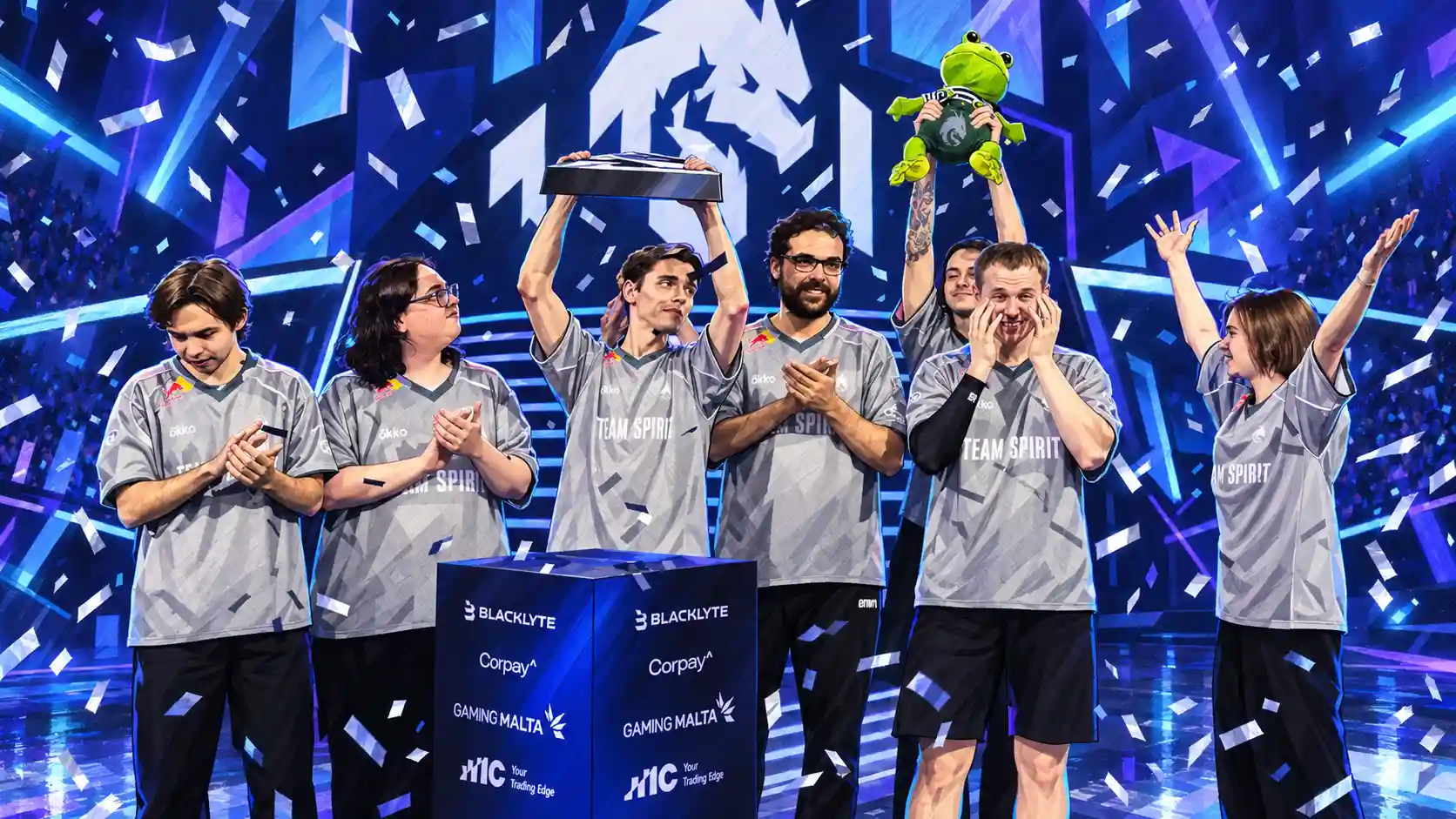
Spirit set the standard at the 2026 edition
Spirit will enter the next edition as defending champions if they qualify and retain an eligible roster.
The organization won EWC 2026 in Paris after defeating FUT in the grand final. The event featured 32 teams and the same overall $2 million prize pool, with Spirit collecting $600,000, FUT earning $340,000 and Legacy finishing third for $190,000. The tournament ran from August 12–23 at the Accor Arena. HLTV’s event record confirms the final standings and prize distribution.
Spirit’s title run included a victory over Vitality—their first against the European side in two years at the time—before they overcame FUT in the final.
Danil “donk” Kryshkovets received HLTV’s MVP award after powering Spirit through the event. His individual ceiling, combined with Dmitry “sh1ro” Sokolov’s consistency, gave Spirit the star output needed to survive a field in which several lower-ranked teams exceeded expectations.
FUT’s run to second place and Legacy’s third-place finish were important reminders of the uncertainty created by a 32-team event. A large field does not guarantee that the established top five will control every late-round place, particularly when emerging teams arrive with fewer recent matchups for opponents to study.
The move back to Riyadh also represents a geographical change. EWC 2026 was staged in Paris, while the 2027 edition—including its open qualifier—will take place entirely in the Saudi capital.
Why a current favorites list would be premature
No team has qualified for EWC 2027, and the relevant Valve ranking will not be published until June 2027. Current HLTV positions from September 2026 cannot responsibly be used to build a competitive hierarchy for an event beginning ten months later.
Between now and the invitation cutoff, teams may:
- change players, coaches or in-game leaders;
- gain or lose VRS points;
- alter their map pools following updates;
- qualify for or miss major international events;
- undergo role changes that affect their competitive level;
- fall outside the regional or global invitation positions.
The same limitation applies to a list of players to watch. Current stars such as donk, sh1ro, ZywOo and m0NESY would be obvious candidates if their teams qualify, but none can yet be presented as a confirmed EWC 2027 participant.
Player ratings, recent form, last-five records and map statistics should be assessed much closer to the tournament. Using 2026 numbers as a projection for July 2027 would obscure rather than clarify the competitive picture.
A complete preview should therefore be published after the June invitation ranking and updated again following the July seeding release. That is when it will be possible to verify the participants, current rosters, form, player statistics, map pools and meaningful head-to-head history.
The June ranking cutoff will shape the real title race
The first major competitive storyline will develop months before the opening match. With 20 global invitations and only a limited number of protected regional places, teams sitting near the VRS cutoff will need to manage both results and scheduling carefully throughout the first half of 2027.
For leading organizations, the July seeding snapshot creates a separate incentive. Securing an invitation will not guarantee a favorable draw: a poor final month before seeding could place a contender into a group containing several similarly ranked opponents.
The format should still favor depth. Teams will need enough map coverage to navigate multiple best-of-three series before a best-of-five final. A narrow specialist pool may be sufficient to produce an upset, but it becomes progressively harder to protect across an extended double-elimination stage and four-map-or-longer title decider.
The confirmed structure also gives lower-ranked teams two distinct paths. Regionally protected VRS places reward sustained results, while the Riyadh qualifier offers an immediate route for teams that miss the ranking cutoff or improve too late to receive an invitation.
CS2 will remain part of EWC through 2028
The organizer has also committed to bringing Counter-Strike 2 back in 2028. Competition is tentatively scheduled for July 14–30, but no venue details, team count, prize pool or qualification rules have been released.
That two-year commitment gives organizations additional scheduling certainty and establishes EWC as a recurring part of the summer CS2 calendar. Its precise position relative to Majors and other tier-one events will matter, particularly for travel, preparation and roster-lock planning.
For now, the 2027 event is defined by its scale rather than its teams: 32 participants, 26 ranking-based invitations, two wildcards, four LAN qualifier places and a 16-team playoff stage.
The field will not begin taking shape until Valve’s June 2027 ranking publication. Once it does, the most important question will be whether the enlarged format rewards the established hierarchy—or gives the next FUT or Legacy enough room to break through again.
Related News