

CS2 Reload Update Overhaul: Valve Changes Ammo System, Nerfs AWP and Sparks Pro Player Backlash

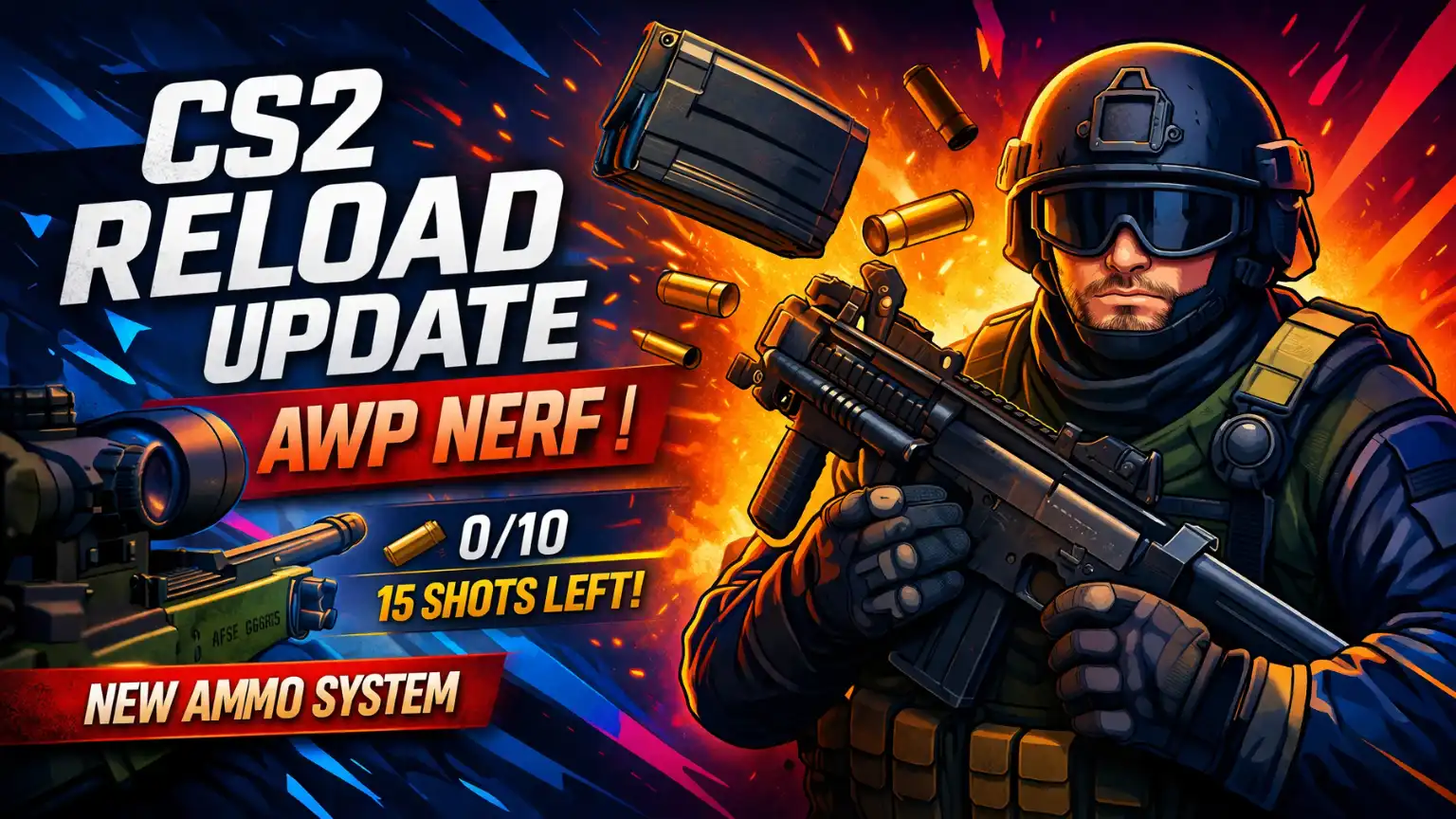
CS2 Reload Update Overhaul: Valve Changes Ammo System, Nerfs AWP and Sparks Pro Player Backlash
Valve’s latest Counter-Strike 2 update has completely reworked reload mechanics, introducing a magazine-based ammo system that is already dividing the CS2 community and professional players.
Valve Introduces New Reload Mechanics in CS2
Valve has released a major CS2 update that fundamentally changes how reloading works in Counter-Strike 2. The new system replaces the traditional shared ammo pool with a magazine-based reload mechanic, meaning unused bullets are now lost when a player reloads.
Previously, players could reload without penalty after firing a few shots. Now, every reload becomes a high-risk decision — reinforcing Valve’s goal of increasing tactical depth.
Valve stated that reloading should carry “higher stakes,” forcing players to think more carefully about ammo usage.
This shift significantly impacts gameplay, especially in clutch situations where ammo conservation becomes critical.
AWP Nerfed: Biggest Impact of the CS2 Update
The AWP nerf in CS2 is the most controversial part of the update.
The AWP now effectively has only three magazines
This limits players to around 15 shots per round
Missed shots and unnecessary reloads are heavily punished
This change directly affects aggressive AWP playstyles and could reshape how teams use the weapon in both matchmaking and pro play.
How the New CS2 Ammo System Changes Gameplay
The new reload mechanics affect all weapon categories, not just the AWP:
Rifles & SMGs: Reduced effective ammo due to wasted reloads
Spam & wallbangs: Now riskier due to ammo loss
Pre-firing angles: Requires better discipline
Clutch situations: Ammo tracking becomes essential
Overall, the update introduces a new layer of resource management never seen before in Counter-Strike.
Pro Players React to CS2 Reload Changes
The update immediately triggered reactions across the pro scene and analysts.
kennyS (former Major-winning AWPer) joked:
“Now I need to stop reloading after every AWP shot… and stop missing.”
m0NESY (G2 Esports AWPer) criticized the change:
“Another AWP nerf… just remove the weapon already.”
Mauisnake (analyst) supported the update, suggesting:
The changes could improve tactical depth and punish mindless spam.
Thorin (analyst) disagreed, calling it:
An unnecessary change to a core mechanic that was already working.
The divided response highlights how impactful this update could be for the future of CS2.
Tournament Impact: When Will Pros Play the New Patch?
Despite the major gameplay shift, the update will not be used immediately in top-tier competition.
BLAST Open Rotterdam will remain on the old patch
The first big event expected to use the update is PGL Bucharest (April 4)
This delay gives professional teams time to adapt before the changes hit Tier 1 LAN play.
Additional Changes in the CS2 Update
Alongside reload mechanics, Valve added several quality-of-life improvements:
Map guides in Competitive and Retakes (first 5 rounds)
Expanded support for Workshop maps and community servers
Easier system to join friends’ custom games
These updates aim to improve both onboarding for new players and the community ecosystem.
Is This the Most Important CS2 Meta Change Yet?
The new reload system could become one of the most meta-defining updates in CS2 history.
For the first time:
Ammo management is a core skill
Reload timing can decide rounds
Weapon balance is indirectly reshaped
The biggest question now is whether this adds strategic depth — or disrupts the classic Counter-Strike formula too much.
Conclusion
Valve’s reload overhaul is more than just a gameplay tweak — it’s a fundamental shift in how Counter-Strike 2 is played.
With the AWP nerf, stricter ammo economy, and growing debate among pros, the update is set to reshape both casual and competitive CS2.
All eyes are now on upcoming tournaments to see which teams adapt fastest — and whether this controversial change will last.
Related News