
zhokiNg Says China’s Small CS2 Player Pool May Be Hurting TYLOO’s Growth

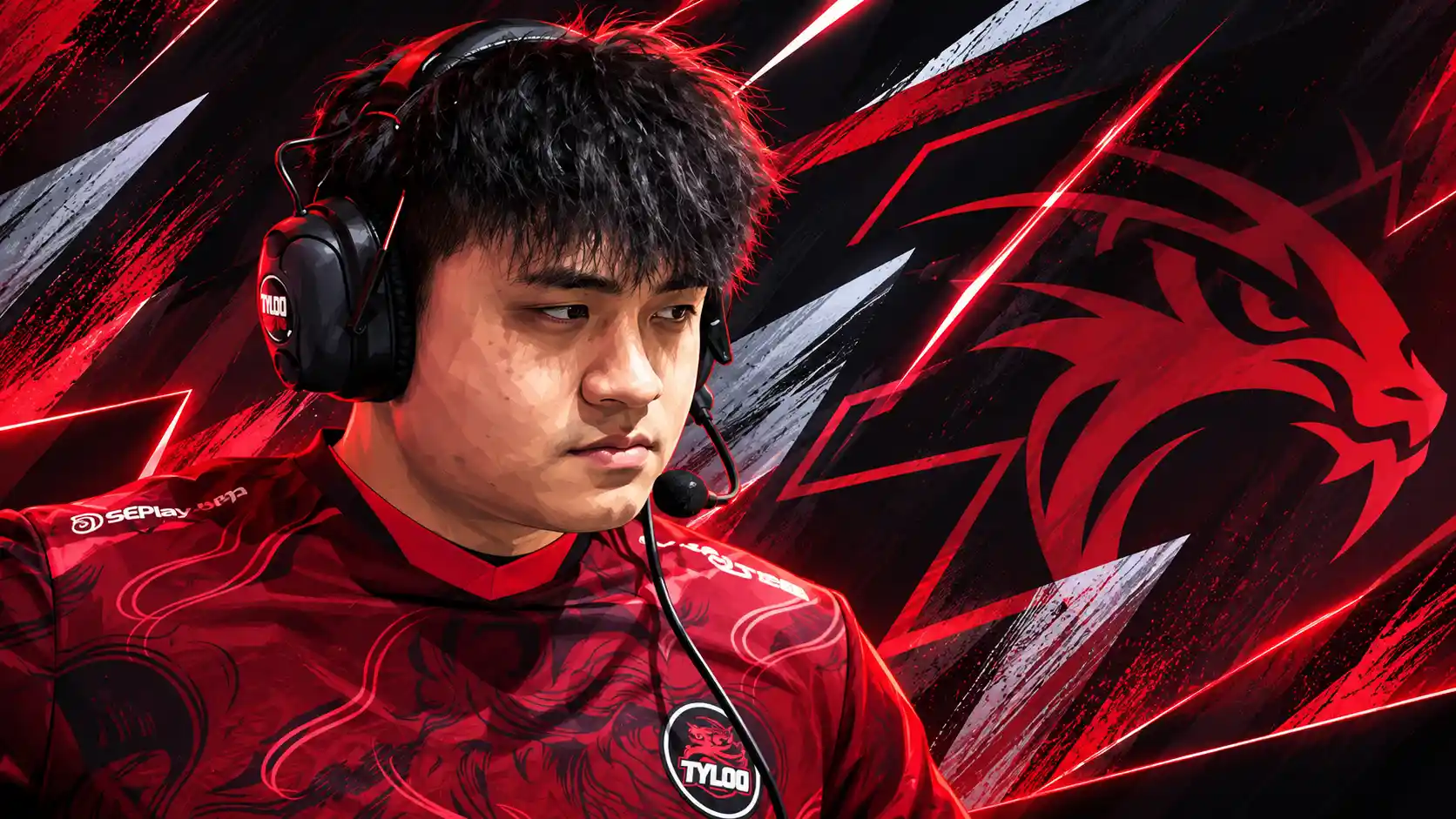
TYLOO coach WeiJie “zhokiNg” Zhong has identified China’s limited Counter-Strike talent pool as one factor behind the organization’s unusual roster stability — and suggested that the lack of competition for places may be making it harder for his players to push beyond their comfort zones.
Speaking after TYLOO’s 9th-12th place exit from FISSURE Playground 3, zhokiNg said the team had targeted the playoffs but failed to perform at the expected level. His assessment went beyond the tournament result, highlighting weaknesses in decision-making, information processing, clutch situations and the wider structural problem of finding replacement-level talent in Chinese Counter-Strike.
Quick summary
| Topic | Details |
|---|---|
| Team | TYLOO |
| Coach | WeiJie “zhokiNg” Zhong |
| Event | FISSURE Playground 3 |
| Result | 9th-12th place |
| Playoff goal achieved? | No |
| Losses mentioned by source | Alliance, PARIVISION |
| Main concern | Limited Chinese player pool and player development |
| Competitive weaknesses identified | Information processing, adaptation, tactics and clutch play |
| Roster issue | Four players besides Zero have been together for more than two years |
| Roster changes announced? | No |
| Region | China |
| Date | September 12, 2026 |
| Confirmation | Direct interview with zhokiNg via HLTV |
What happened to TYLOO at FISSURE Playground 3?
TYLOO left FISSURE Playground 3 in 9th-12th place following defeats to Alliance and PARIVISION. According to zhokiNg, that fell short of the team's internal objective.
“Our goal was actually to make it to the playoffs,” the coach told HLTV, adding that the players did not consistently reach the level he expected from them during the event.
The result itself was only part of his concern.
zhokiNg pointed toward individual mistakes and broader shortcomings in TYLOO's ability to react to information during rounds. He said the team currently lacks the comprehensive individual ability and speed of information processing seen among top-tier opposition.
He also identified mid-round clutch situations as a significant weakness, explaining that the issue extends beyond raw mechanics into game sense, adaptation and decision-making.
Those comments provide a more detailed explanation for TYLOO's difficulties than simply attributing the team's exit to form.
zhokiNg: TYLOO’s roster security may be part of the problem
The most significant part of zhokiNg's interview concerned TYLOO's roster construction.
HLTV noted that four members of the current lineup besides Zero have remained together for more than two years — a notably long period of stability in modern Counter-Strike.
Asked whether TYLOO had kept its core because the organization believed strongly in those players or because alternatives were limited, zhokiNg leaned toward the latter explanation.
“In China, the player pool is indeed too small,” he said.
The coach then connected that shortage directly to internal competition.
According to zhokiNg, players can feel that they are unlikely to be replaced easily, potentially reducing the pressure to move beyond their existing comfort zones and improve.
That does not amount to an announcement that TYLOO will make roster changes. zhokiNg explicitly said there is no fixed threshold determining when the organization makes a move.
Instead, results are one factor in the evaluation process, alongside whether TYLOO can correctly identify the causes of its failures and prevent the same problems from repeatedly appearing.
Why China’s CS2 player pool matters for TYLOO
zhokiNg's comments highlight a structural problem that extends beyond one tournament.
A deep domestic ecosystem gives organizations alternatives when a lineup stagnates. Emerging players can compete for established positions, academy systems can supply replacements, and teams can rebuild without necessarily abandoning their regional identity.
A smaller professional player pool reduces those options.
That potentially leaves TYLOO with a difficult choice: continue developing a proven Chinese core despite inconsistent international results, identify emerging domestic prospects before they are fully established, or eventually consider a broader approach to recruitment.
TYLOO has previously experimented with international roster construction. In 2023, the organization signed Luka “emi” Vuković, Marin “ROGA” Rogić and Tengis “sk0R” Batjargal alongside Freeman and SLOWLY, demonstrating that an international direction is not unprecedented for the organization.
There is no evidence in zhokiNg's latest interview, however, that TYLOO currently plans another international rebuild.
TYLOO’s current roster
As of September 12, HLTV lists TYLOO with the following lineup.
| Member | Status |
|---|---|
| Yi “JamYoung” Yang | Player |
| Dongkai “Jee” Ji | Player |
| Jingxiang “Mercury” Wang | Player |
| Qianhao “Moseyuh” Chen | Player |
| Su “Zero” Jingshen | Player |
| WeiJie “zhokiNg” Zhong | Head coach |
Zero is the newest member of the starting five. TYLOO added him in January 2026 after YuanZhang “Attacker” Sheng retired from playing and transitioned into the coaching structure.
The other four players therefore represent the long-standing core referenced during zhokiNg's interview.
Attacker’s role inside TYLOO
zhokiNg also provided additional information about Attacker's work behind the scenes.
Rather than describing him simply as another tactical coach, zhokiNg characterized Attacker's regular role as more disciplinary in nature: helping ensure the players remain focused and engaged with the team's work.
Attacker also contributes to preparation for official matches.
That detail is relevant in the context of zhokiNg's concerns about comfort and accountability. TYLOO is not only attempting to address its problems through roster decisions; its coaching structure also appears designed to improve standards within the existing lineup.
Tactical impact: what zhokiNg believes TYLOO must improve
The coach's comments point toward several interconnected areas.
TYLOO's problems cannot be reduced to aim or mechanical skill alone. zhokiNg specifically emphasized processing information quickly, understanding changing situations, adapting during rounds and handling mid-game clutch scenarios.
One example came against Alliance.
TYLOO held an 11-3 advantage but allowed Alliance back into the map. zhokiNg felt his players became too relaxed and highlighted issues with tactical execution, individual mistakes and decision-making in 3v3 and 3v2 situations.
From a tactical-development perspective, that distinction matters.
Improving mechanical output can sometimes be addressed through individual practice. Improving communication, information processing and late-round adaptation requires coordinated development across the lineup.
It also helps explain why roster stability has become relevant to the discussion: TYLOO must determine whether those weaknesses can be corrected within the existing core or eventually require personnel changes.
Timeline
| Date | Development | Significance |
|---|---|---|
| May 2023 | TYLOO announced an international roster overhaul | Shows the organization has previously looked outside China's domestic player pool |
| July 2025 | TYLOO reached the FISSURE Playground 1 final | Demonstrated the core's international upside |
| July 2025 | TYLOO won FISSURE Playground 1 | Major international breakthrough for the Chinese lineup |
| July 2025 | JamYoung earned the FISSURE Playground 1 MVP award | Became the first Chinese player to receive an HLTV MVP medal |
| January 2026 | Zero joined TYLOO | Filled the starting position following Attacker's retirement |
| September 2026 | TYLOO exited FISSURE Playground 3 in 9th-12th | Team failed to reach its playoff target |
| September 12, 2026 | zhokiNg discussed China's limited player pool | Coach publicly connected roster security with the challenge of continued player development |
TYLOO's FISSURE Playground 1 run provides important context for the current discussion. The team previously demonstrated that its core can deliver internationally, even winning the event while zhokiNg had to stand in for Jee during part of the tournament.
Key details
| Question | Current answer |
|---|---|
| Is TYLOO changing its roster? | No roster move was announced |
| Does zhokiNg believe China's player pool is small? | Yes |
| Does he think that affects TYLOO? | He suggested it may create additional roster security for players |
| What did TYLOO target at FISSURE Playground 3? | Playoffs |
| Did TYLOO reach that target? | No |
| What weaknesses did zhokiNg identify? | Information processing, adaptation, game sense, tactical execution and clutch play |
| Is there a fixed performance threshold for roster changes? | No |
| Do results influence roster decisions? | Yes, according to zhokiNg |
| Is Attacker involved with preparation? | Yes |
| Has a future roster move been confirmed? | No |
Why zhokiNg’s comments matter
There are two separate stories inside the interview.
The first concerns TYLOO's immediate performance. The team did not achieve its FISSURE Playground 3 target and, in zhokiNg's assessment, displayed problems that separate it from top-level opposition.
The second is more important over the long term.
TYLOO's coach is publicly discussing the relationship between China's talent pipeline and internal competition within the country's most internationally established Counter-Strike organization.
Chinese Counter-Strike has already produced evidence that it can compete internationally. TYLOO's FISSURE Playground 1 victory was a particularly significant example, while JamYoung became the first Chinese player to claim an HLTV MVP medal.
But isolated peaks and sustainable depth are different challenges.
If TYLOO cannot easily find players capable of challenging its established starters, maintaining competitive pressure becomes more difficult. Conversely, replacing experienced players simply for the sake of change could weaken a lineup that has already demonstrated a high ceiling.
That is the roster-management dilemma behind zhokiNg's comments.
Impact analysis
Roster impact
No immediate change has been confirmed.
The interview does, however, make future roster evaluation worth monitoring. zhokiNg acknowledged that results matter and indicated that repeated unresolved failures would be relevant when assessing the lineup.
Tactical impact
TYLOO's priority appears broader than changing individual positions.
The coaching staff must improve the team's information processing, adaptability, tactical execution and late-round decision-making if it wants to narrow the gap to stronger international opposition.
Tournament impact
FISSURE Playground 3 represents a missed target rather than evidence of an announced rebuild.
TYLOO entered with playoff ambitions and finished 9th-12th, giving the coaching staff another international sample from which to evaluate the lineup.
Chinese CS2 ecosystem impact
The comments raise a larger development question for Chinese Counter-Strike: whether the domestic ecosystem can consistently produce enough high-level players to create competition for positions on teams such as TYLOO.
That conclusion should be treated as a structural issue raised by zhokiNg rather than proof that specific roster changes are imminent.
Ranking/VRS impact
Specific post-event Valve Regional Standings movement was not provided in the source used for this article.
VRS impact: TBD.
What changes now for TYLOO?
For now, nothing concrete has changed in TYLOO's announced starting lineup.
Instead, the pressure shifts toward development.
zhokiNg's comments suggest the organization wants to understand whether recurring mistakes can be corrected before making personnel decisions. That makes upcoming international performances particularly useful indicators of whether the current five are progressing.
The distinction is important: this is not a roster-change report.
It is an unusually direct assessment from TYLOO's coach about why roster competition is difficult to create and why the existing players may need additional pressure to keep developing.
What to watch next
The first question is whether TYLOO can translate zhokiNg's criticism into cleaner mid-round Counter-Strike. Late-round situations, communication under pressure and the team's response after gaining large advantages will be particularly relevant given the problems he identified at FISSURE Playground 3.
The second is roster stability.
If similar weaknesses continue across future events, zhokiNg's comments provide useful context for any eventual personnel discussion. If TYLOO improves without making changes, the decision to retain its established core will look more justified.
The third is China's broader talent pipeline.
Zero's arrival in January demonstrated that TYLOO is willing to promote emerging domestic talent when it identifies a suitable candidate. Whether more players can reach that level will influence the organization's future roster options.
Next confirmed TYLOO match: TBD.
Next confirmed event: TBD based on the supplied source.
Related teams, players and events
TYLOO — China's long-standing international Counter-Strike representative and the central team in this story.
WeiJie “zhokiNg” Zhong — TYLOO head coach and the source of the comments regarding China's player pool, roster security and the team's competitive weaknesses.
JamYoung — member of TYLOO's established core and the first Chinese player to win an HLTV MVP medal after his FISSURE Playground 1 performance.
Jee — TYLOO AWPer and member of the long-standing core.
Mercury — member of the current TYLOO lineup.
Moseyuh — member of the current TYLOO lineup.
Zero — newest player in the current starting five, signed in January 2026.
Attacker — former TYLOO player who moved into the coaching structure and now contributes to discipline and match preparation.
Alliance — one of the teams that defeated TYLOO at FISSURE Playground 3.
PARIVISION — the other opponent cited in connection with TYLOO's tournament exit.
FISSURE Playground 3 — the event that prompted zhokiNg's latest assessment.
FAQ
What did zhokiNg say about China's CS2 player pool?
zhokiNg said China's player pool is “indeed too small” and suggested that this can give TYLOO's players additional job security because replacing them is difficult. He believes that situation may make it harder to push players beyond their comfort zones.
Is TYLOO making roster changes?
No roster changes were announced in the interview. zhokiNg said TYLOO does not have a fixed threshold for making changes, although results and the team's ability to solve recurring problems influence its evaluation.
Why was zhokiNg disappointed with TYLOO?
TYLOO targeted the FISSURE Playground 3 playoffs but finished 9th-12th. zhokiNg also felt the players did not perform at their expected level and identified problems involving individual mistakes, information processing, adaptation and clutch situations.
Who currently plays for TYLOO?
HLTV currently lists JamYoung, Jee, Mercury, Moseyuh and Zero as TYLOO's starting lineup, with zhokiNg as coach.
What is Attacker's role with TYLOO?
According to zhokiNg, Attacker has a disciplinary role during regular preparation, helping keep players focused, while also contributing to preparation for official matches.
Related News