
Team Spirit Star donk Reveals Bootcamp Routine: “I Go to Bed at 2 AM”


Team Spirit Star donk Reveals Bootcamp Routine: “I Go to Bed at 2 AM”
How Team Spirit prepares for major CS2 tournaments
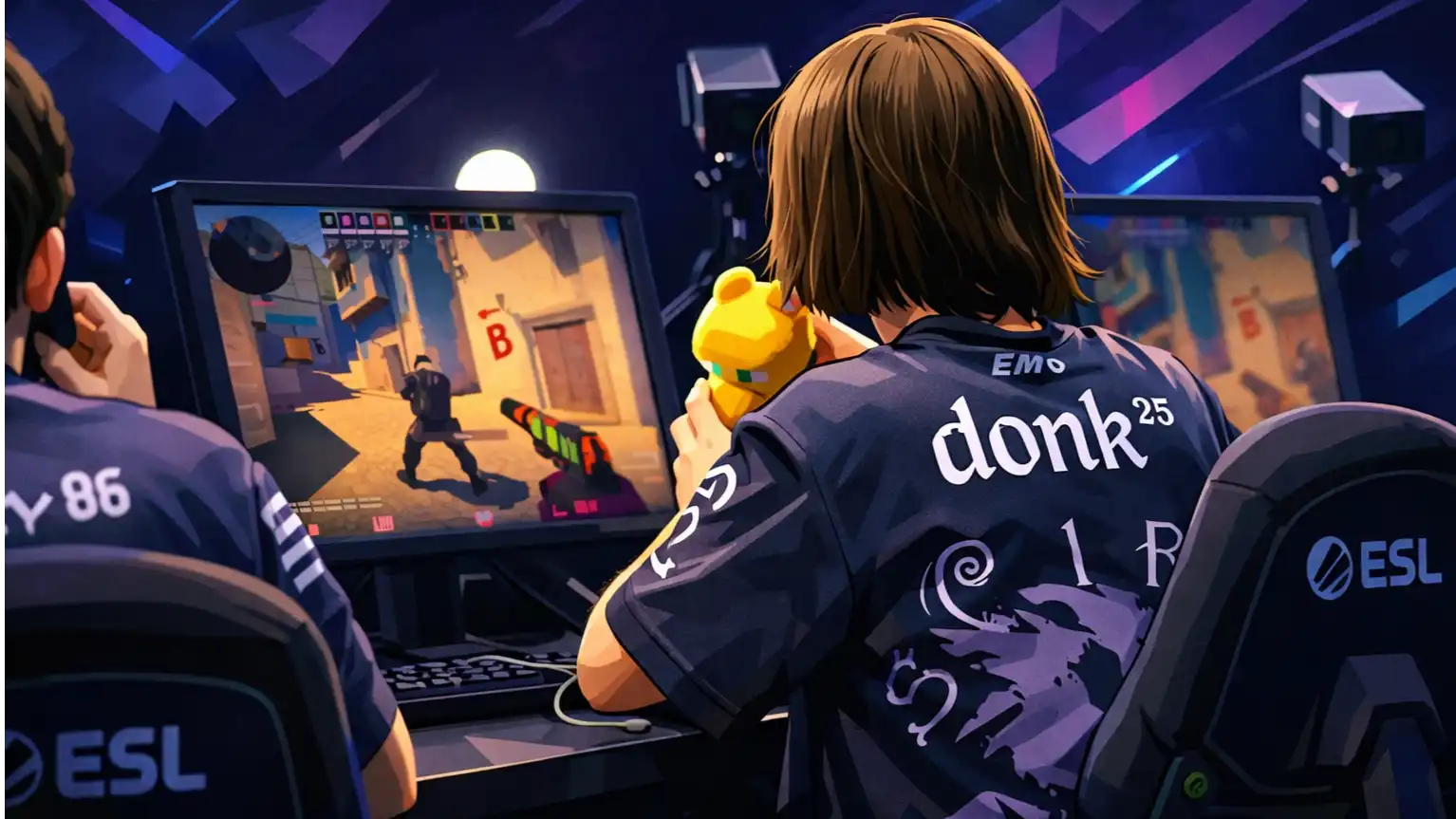
Team Spirit prodigy Danil “donk” Kryshkovets has revealed how the team structures its intense bootcamp routine ahead of major Counter-Strike 2 events. According to the young rifler, the team’s daily schedule revolves around long theory sessions, multiple scrims, and late-night practice that often keeps him awake until 2:00 AM.
The CS2 star shared details of Team Spirit’s preparation process, explaining how the team spends most of the day reviewing demos, practicing tactics, and playing scrimmages against other professional teams.
“We wake up, have breakfast, then there’s a team meeting. After that we review demos for about three to three and a half hours,” donk said.
Team Spirit bootcamp schedule in CS2
According to donk, a typical day at Team Spirit’s bootcamp follows a strict structure designed to maximize preparation before tournaments.
Team Spirit bootcamp routine
-
Wake up and have breakfast
-
Team meeting and theory session
-
Demo reviews for 3–3.5 hours
-
Lunch break
-
Six scrims (practice matches)
-
Dinner
-
Another 2–3 hours of demo review
-
Free time or individual practice
-
Sleep around 2:00 AM
“Then we have dinner and review demos again for two or three hours. After that we have free time — you can practice or go to sleep. I usually go to bed around two in the morning, and then the cycle repeats,” donk explained.
The routine highlights the demanding practice culture at the top level of professional CS2, where teams combine tactical preparation with high volumes of scrimmages to stay competitive.
Intense preparation ahead of tournaments
Bootcamps play a critical role in preparing teams for major competitions such as ESL Pro League, IEM tournaments, and Counter-Strike Majors. During these training periods, players typically live and practice together, allowing them to focus entirely on strategy development and team coordination.
The heavy emphasis on demo analysis described by donk reflects a broader trend in professional Counter-Strike. Teams increasingly rely on analytical preparation to refine map pools, anti-strats, and mid-round decision-making.
Coaches highlight donk’s potential
Donk has quickly become one of the most exciting talents in the CS2 scene. His rise has attracted praise from competitors and analysts across the esports ecosystem.
NAVI coach Andrii “B1ad3” Horodenskyi previously spoke about donk’s potential as a player.
“He has a great future,” B1ad3 said, while noting that young stars must continue developing both in and out of the game.
The 17-year-old rifler gained global attention after delivering standout performances against top-tier teams and rapidly establishing himself as one of Team Spirit’s key players.
Team Spirit’s structured approach to practice
Team Spirit players have repeatedly emphasized the importance of preparation and communication within the roster. Earlier, the team explained that strong in-game structure and coordinated decision-making are essential to competing at the highest level.
The long demo review sessions described by donk are a major part of that process. These meetings allow players to analyze opponents, improve team strategies, and review mistakes from scrims or official matches.
Combined with six daily practice games, the schedule illustrates how demanding professional Counter-Strike preparation has become.
The grind behind top CS2 teams
Donk’s comments offer a rare behind-the-scenes look at how elite CS2 teams prepare during bootcamps. While fans often only see the matches on stage, the reality is that players spend 10–12 hours per day training, reviewing gameplay, and refining strategies.
For rising stars like donk, that dedication is part of what it takes to compete at the highest level of Counter-Strike esports.
Related News