

Rating 3.0 Gets Accuracy Update for Cache and Round Swing


HLTV has rolled out a new accuracy update for Rating 3.0, refining the statistical model behind player ratings across Counter-Strike 2. The changes introduce map-specific data for Cache, update the datasets used for Round Swing and economy adjustments, improve post-plant calculations, and fix several edge cases in how player impact is measured.
The update is relatively small in terms of its effect on most individual ratings, but it is important for the long-term reliability of Rating 3.0. HLTV says the recalculation changes a single-map rating by just 0.021 on average across 6,687 CS2 maps played from July through September 2026.
Quick Summary
| Detail | Information |
|---|---|
| Update | Rating 3.0 accuracy improvements |
| Announced | October 1, 2026 |
| Main purpose | Improve statistical accuracy |
| Dataset updated through | September 29, 2026 |
| Maps played since Rating 3.0 release | 29,030 |
| LAN maps in that sample | 9,029 |
| Most affected map | Cache |
| Key metric affected | Round Swing |
| Average historical single-map change | 0.021 |
| Major structural Rating 3.0 overhaul? | No |
What Changed in Rating 3.0?
The update primarily gives Rating 3.0 more information with which to evaluate the context surrounding kills, deaths, economy and round situations.
HLTV says 29,030 maps had entered its database since Rating 3.0 was released, including 9,029 LAN maps. That significantly larger sample gives the model more information about how particular round situations actually play out.
This matters because Rating 3.0 does not treat every map or every kill identically.
Its underlying calculations can account for the map, side, economy and game state. Round Swing, for example, measures how an action changes a team's probability of winning a round rather than simply counting the action itself.
The October update improves several parts of that system.
HLTV breaks down how Rating 3.0 works, including economy adjustment, Round Swing and situations where traditional raw statistics can be misleading.
Cache Now Has Map-Specific Data
Cache is the clearest beneficiary of the update.
When Rating 3.0 was originally developed, there was not enough CS2 data for Cache to establish reliable map-specific averages. The system therefore had to fall back on global averages when calculating games played on the map.
That was increasingly problematic as Cache returned to competitive CS2.
Valve first brought the reworked Cache into Competitive, Casual, Deathmatch and Retakes in April 2026. It later entered the Active Duty pool in place of Overpass for Premier Season Five, while major tournament organizers also adopted the map.
HLTV now has enough Cache data to begin using map-specific values.
According to HLTV's dataset, Cache has produced a 47.1% Terrorist-side win rate in buy rounds, making accurate side-specific context important when estimating round-winning probabilities.
The sample is still relatively limited. When there is insufficient data for a specific Cache scenario, Rating 3.0 will continue falling back to global averages. HLTV says this decision is made on a per-round basis rather than changing the reference model during a round.
Round Swing Becomes More Accurate
Round Swing is one of the defining features of Rating 3.0.
Instead of assuming every kill carries the same value, it measures how much a kill changes a team's probability of winning the round. Its calculations can include factors such as the map, side, economy, bomb status and number of players alive.
The expanded dataset should make those probabilities more reliable.
A common situation such as a 5v5 has a large sample from which to draw conclusions. More specific scenarios — such as a 4v4 post-plant situation on Inferno — require significantly more historical rounds before their expected win probabilities become stable.
Adding another large block of match data therefore gives Rating 3.0 more evidence for these less common scenarios.
Late Post-Plant Kills Are Now Treated Differently
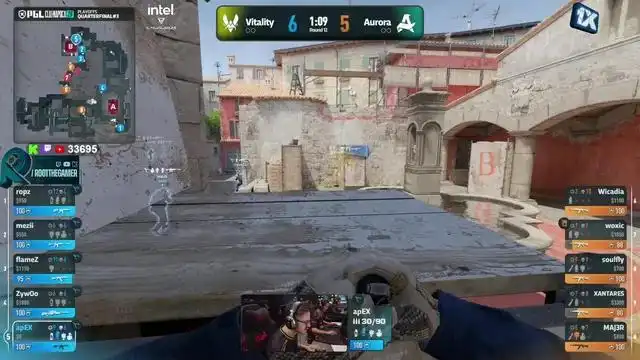
Rating 3.0 now stops awarding Round Swing to late post-plant kills once there is no longer enough time for the Counter-Terrorists to complete a defuse, unless a defuse is already underway.
One of the most meaningful logic changes concerns kills after the bomb has effectively become impossible to defuse.
Rating 3.0 now considers the round decided when the remaining bomb timer makes a successful defuse impossible.
Kills will not contribute to Round Swing when there are:
fewer than 10 seconds remaining without a defuse kit;
fewer than 5 seconds remaining when the CT has a kit;
unless a Counter-Terrorist is already defusing the bomb.
The logic is straightforward: if the round outcome can no longer realistically change, a late kill should not receive the same impact credit as a frag that genuinely altered who was likely to win.
In practical terms, some late post-plant kills will behave more like exit frags from a Round Swing perspective.
HLTV also changed how excess Round Swing is distributed after bomb plants. Only kills occurring after the bomb was planted can now receive that additional post-plant credit.
Negative Round Swing After a Kill Has Been Removed
Another unusual edge case has been fixed.
Previously, small-sample statistical anomalies could create scenarios where a team's modeled win probability actually fell after one of its players secured a kill. That could result in the player receiving negative Round Swing for eliminating an opponent.
The expanded dataset reduces the likelihood of such situations.
If the anomaly still occurs, Rating 3.0 now assigns zero Round Swing rather than negative Round Swing for that kill by merging the before-and-after scenarios into the same win probability.
Stand-Ins Receive Another Calculation Fix
The patch also closes a niche issue involving substitutes.
Stand-ins will no longer receive Round Swing credit for rounds they did not actually play.
It is unlikely to produce major rating movements on its own, but it removes another source of statistical noise from matches involving mid-series or temporary player substitutions.
Key Rating 3.0 Changes
| Component | Previous situation | Updated behavior |
|---|---|---|
| Cache | Global averages used when map data was unavailable | Map-specific Cache data now incorporated |
| Dataset | Older CS2 sample | Games through Sept. 29, 2026 incorporated |
| LAN normalization | Older sample | Updated through Sept. 29 |
| Late bomb kills | Could still affect Swing in effectively decided rounds | No Swing under specified bomb-time thresholds |
| Post-plant excess Swing | Broader kill contribution | Only post-plant kills receive the relevant credit |
| Negative Swing after kills | Possible in rare statistical edge cases | Minimum becomes zero |
| Stand-ins | Could receive Swing for rounds not played | No Swing for absent rounds |
| Historical ratings | Based on previous model | Recalculated using updated parameters |
Rating 3.0 Timeline
| Date | Development |
|---|---|
| November 2024 | Rating 2.1 introduced as an intermediate step toward the next-generation rating model |
| August 20, 2025 | HLTV launches Rating 3.0 across CS2 matches |
| October 29, 2025 | Rating 3.0 adjusted to place more weight on kills |
| April 2026 | Reworked Cache becomes available in official CS2 matchmaking modes |
| July 2026 | Cache enters the Active Duty pool in place of Overpass |
| September 29, 2026 | Cutoff for the dataset used in the latest Rating 3.0 recalibration |
| October 1, 2026 | New Rating 3.0 accuracy improvements announced |
HLTV introduced Rating 3.0 in August 2025 as its largest rating overhaul since Rating 2.0. The system added economy adjustment and Round Swing while expanding the model to six major sub-ratings: Kills, Damage, Survival, KAST, Multi-Kills and Round Swing.
Why the Rating 3.0 Update Matters
The significance of this update is less about dramatically changing player ratings and more about improving the assumptions behind them.
Rating 3.0 depends much more heavily on contextual data than its predecessors.
Consider two identical 5v5 situations on different maps. If one side historically wins considerably more often on one map than another, the baseline probability of winning that round is different.
That changes how much credit an action should receive.
Similarly, killing an opponent when the bomb can still be defused can influence the result of a round. Getting essentially the same frag after the bomb is mathematically guaranteed to explode does not have the same competitive impact.
The update attempts to make that distinction more accurately.
How Much Will Player Ratings Change?
For most players, not much.
HLTV recalculated 6,687 CS2 maps played between July and September 2026 and reported an average movement of only 0.021 in single-map Rating 3.0.
The distribution was:
| Rating movement | Share of player-map samples |
|---|---|
| Average change | 0.021 |
| Change of 0.05 or more | 9.4% |
| Change of 0.10 or more | 1.0% |
| Largest observed change | 0.31 |
These numbers reinforce the nature of the patch: it is a refinement rather than a replacement of Rating 3.0.
There will nevertheless be individual maps and performances where the recalculation is more visible.
Which Maps Are Most Affected?
Cache
Cache is expected to see the largest differences because Rating 3.0 can finally use map-specific information rather than depending primarily on global baselines.
That should improve the way CT/T imbalance and specific round situations are represented.
Inferno
HLTV identifies Inferno as particularly affected by the new bomb-timer rules because of the frequency and importance of post-plant situations on the map.
The adjustment should reduce cases where kills occurring after the practical outcome of a round has already been determined receive excessive Round Swing credit.
Tactical Impact
Nothing about the actual rules of Counter-Strike changes because of this update.
Teams therefore have no tactical reason to change how they play a round merely to accommodate Rating 3.0.
The difference is in measurement rather than gameplay.
For statistical analysis, however, the update should make it easier to distinguish between high-value post-plant actions and kills occurring after a round has effectively ended.
That distinction can be particularly relevant when analyzing closers, clutch situations, exit kills and players whose roles frequently leave them alive late in rounds.
It would be misleading to conclude from the update alone that a specific role has universally gained or lost rating. HLTV has not published role-by-role movement figures for this particular recalibration.
Historical Comparison: Rating 2.1 vs Rating 3.0
Rating 2.1 already attempted to improve how player performance was measured, including adjustments involving survival, opening deaths, saves and assists.
Rating 3.0 went considerably further.
Its launch introduced economy-adjusted statistics and Round Swing, allowing the model to incorporate contextual factors including equipment, side, map and the probability of winning a round.
The latest update demonstrates one consequence of building a more contextual model: the quality of the rating depends partly on the quality and size of its underlying dataset.
As more matches are played — particularly on newly introduced maps — those contextual estimates can be recalibrated.
Tournament and Awards Impact
The update arrives during the final stretch of the 2026 competitive season.
HLTV specifically noted that the increased accuracy comes ahead of the 2026 HLTV Awards and Top 20 Players of the Year process.
That makes historical recalculation relevant.
Because old Rating 3.0 values can move slightly under the updated model, statistical comparisons from earlier in the season may no longer exactly match values recorded before October 1.
However, the published distribution shows that major movements are uncommon: only 1% of the analyzed player-map samples changed by at least 0.10.
VRS Impact
Direct Valve Regional Standings impact: none established.
Rating 3.0 is an HLTV statistical system rather than Valve's VRS formula. No evidence in the announcement indicates that this update directly changes Valve Regional Standings.
What Changes Now?
For readers using HLTV statistics, the most important practical change is that previously recorded Rating 3.0 figures may shift slightly.
Analysts comparing performances should therefore use current database values rather than relying on screenshots or manually recorded ratings captured before the October 1 recalculation.
Cache statistics deserve particular attention because its previous Rating 3.0 calculations lacked the map-specific dataset now available.
The broader structure of Rating 3.0 remains intact.
It still evaluates performance through its six major sub-ratings and uses contextual information to distinguish actions that occur under substantially different competitive circumstances.
What to Watch Next
The next question is how Rating 3.0 behaves as its dataset continues to grow.
Cache sample size: Cache remains relatively new in the current competitive environment. More professional matches should provide larger samples for uncommon economy and post-plant scenarios.
Historical stability: Future recalibrations will show whether Rating 3.0 values increasingly stabilize as more data enters the model.
Awards season: Even small rating changes become more visible when elite players are separated by narrow statistical margins during MVP, EVP and Top 20 discussions.
Future map-pool changes: Rating 3.0's map-specific approach means newly introduced maps can create the same initial data problem that Cache presented.
Round Swing edge cases: The latest changes address several unusual scenarios, but a probability-based model can continue to evolve as new data exposes additional edge cases.
FAQ
What is Rating 3.0 in CS2?
Rating 3.0 is HLTV's player-performance rating system introduced in August 2025. It combines economy-adjusted performance with contextual metrics including Round Swing and uses six principal sub-ratings: Kills, Damage, Survival, KAST, Multi-Kills and Round Swing.
What changed in the October 2026 Rating 3.0 update?
HLTV updated its underlying win-probability and normalization datasets, added map-specific Cache information, changed how late post-plant kills affect Round Swing, prevented kills from generating negative Round Swing and corrected Round Swing calculations involving stand-ins.
Will old Rating 3.0 numbers change?
Yes. HLTV says the updated calculations cause small changes to historical ratings. Across 6,687 maps from July through September 2026, the average single-map Rating 3.0 movement was 0.021.
Why is Cache affected more than other maps?
Rating 3.0 uses map-specific statistical context, but Cache initially lacked enough CS2 data for its own model. The system therefore relied on global averages. HLTV can now incorporate Cache-specific data, although global values can still be used when an individual scenario has an insufficient sample.
Can a kill still give negative Round Swing?
No. Under the new logic, if an unusual statistical scenario suggests that win probability declined after a kill, the player receives zero Round Swing from that kill rather than a negative value.
Related News
.webp)