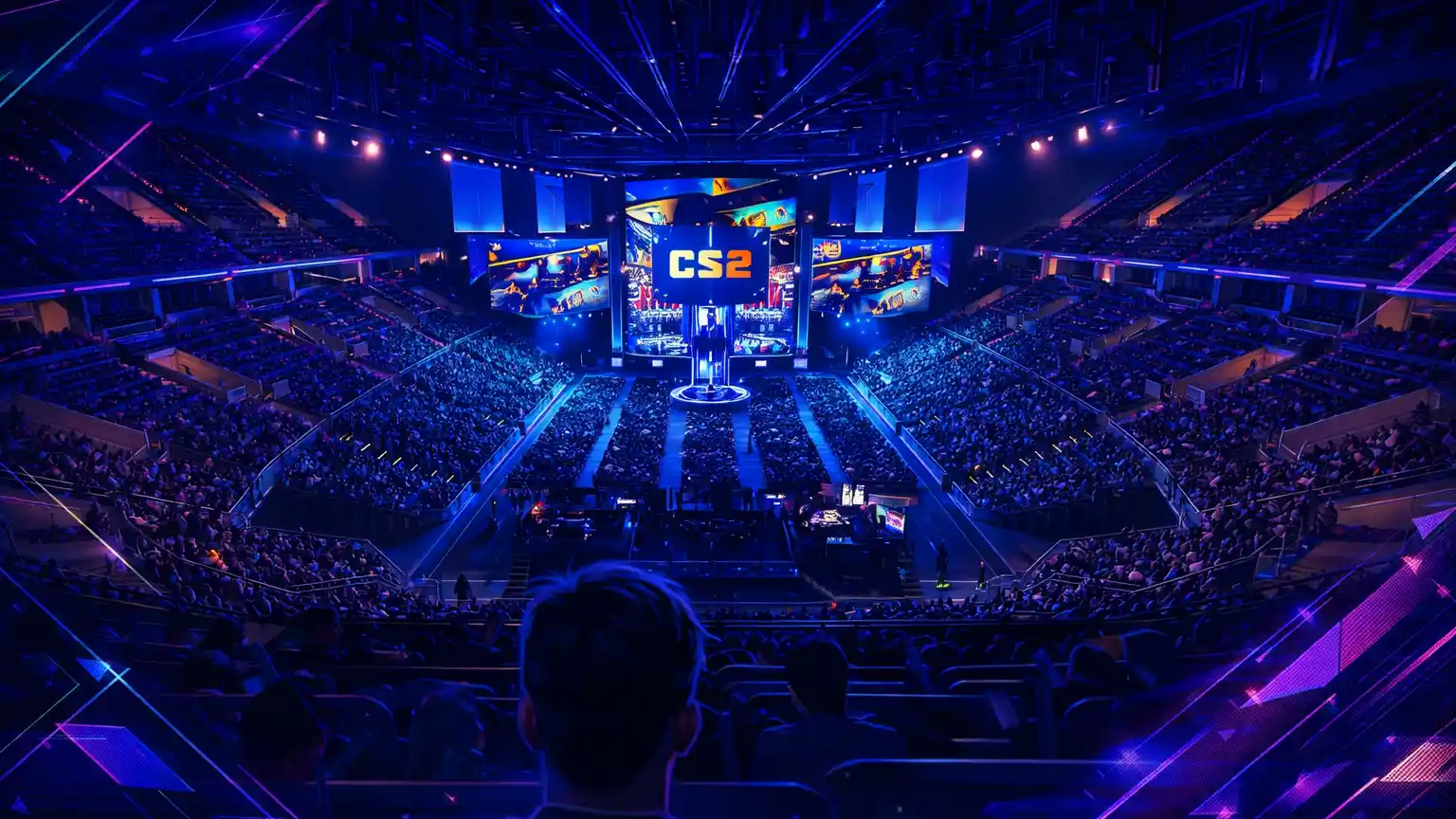

PGL vs BLAST: New Power Struggle Reshapes Counter-Strike in 2027


The fight for control of top-tier Counter-Strike is no longer a quiet business rivalry. It has become the defining power struggle of the post-partnership era, and right now PGL has forced its way into the strongest position against BLAST.
In his latest Strike column, HLTV’s Milan “Striker” Švejda argues that the old BLAST-ESL duopoly started to weaken once Valve ended the closed-partner ecosystem and pushed the scene toward a more open, rules-based circuit. In that environment, PGL’s return to tier-one Counter-Strike in 2025 gave the calendar a third heavyweight organizer for the first time in years. At first, PGL was still clearly behind its two established rivals, but over time it improved its standing by building more attractive events and, crucially, by changing its approach to team incentives. Švejda also disclosed in the article that he has previously worked PGL broadcasts and is booked for two more in the future.
The key point is that PGL stopped trying to win on stubbornness alone. According to the HLTV column, the organizer had resisted the kind of financial concessions elite teams had come to expect, even as ESL and BLAST moved faster to accommodate them after the partnership era ended. That resistance hurt PGL early on. But by 2026, the company had already started to benefit from a more flexible strategy, with HLTV pointing to stronger lineups at events such as PGL Cluj-Napoca and PGL Astana. In Striker’s telling, that progress showed PGL could no longer be dismissed as a distant third-place operator.
What truly escalated the conflict was the 2027 calendar. HLTV reports that PGL directly targeted BLAST rather than ESL, creating overlaps between four of BLAST’s six announced 2027 events and PGL tournaments scheduled for the same general windows. BLAST’s 2027 circuit, officially announced on February 28, includes six events and a $10 million overall investment, with a stronger LAN focus and no main-event online matches. The dates BLAST published line up closely with the schedule cited in Striker’s column: January 13-24, March 15-28, May 10-23, August 30-September 12, October 4-17 in Rio de Janeiro, and November 8-14.
PGL answered with bigger money. HLTV reported on March 9 that PGL pledged $22 million for its 2027-2028 circuit and reaffirmed plans for six events in 2027 and at least six in 2028. The incentive structure includes annual participation and viewership-based rewards, and the total yearly guaranteed payout for 2027 was described in Striker’s column as $11 million, which he said edges out both ESL’s package and BLAST’s new offer. HLTV separately reported that ESL’s 2027 guarantee sits at $10.45 million, plus possible Grand Slam bonuses, while BLAST raised its figure from $8.5 million to $10 million.
The overlap is not theoretical. PGL Bucharest 2027, for example, was announced for January 17-24, almost entirely colliding with BLAST Bounty Season 1. That event will feature a $1,000,000 traditional prize pool plus a $400,000 VRS invite bonus pool, with $80,000 bonuses available to top-ranked invited teams that accept. That is a concrete example of how modern tournament organizers are now competing not just with prestige and production, but with direct financial mechanisms tied to Valve Regional Standings and attendance.
BLAST, for its part, has clearly adjusted rather than tried to outbid everyone across the entire year. Striker interprets BLAST’s decision not to maintain a year-long incentive model in the same way as before as a sign that the organizer has accepted a more selective role for now. HLTV’s earlier reporting on BLAST’s 2027 changes supports that interpretation: the company shifted its structure, reworked Bounty into a fully LAN event, and focused on six tournaments rather than trying to lock teams into a broader seasonal system. In other words, BLAST appears to be moving toward maximizing each event on its own merit, instead of assuming it can dominate the calendar the way it once did.
Recent news around FaZe also shows how brutal the new ecosystem has become for teams. On April 1, HLTV reported that FaZe entered HLC Belgrade PRO, a $30,000 LAN running from April 3-5, in a late attempt to improve their standing for the IEM Cologne Major race. That decision immediately created a clash with PGL Bucharest, which runs from April 4-11. Later that same day, HLTV reported that FaZe were still included in PGL Bucharest’s day-one matchups despite also being scheduled in Belgrade, making forfeits a realistic possibility. That situation is not directly about BLAST versus PGL, but it perfectly illustrates the larger point: under the current system, calendar positioning, VRS value, and event incentives can push teams into impossible scheduling choices.
So the broad conclusion of the original column holds up when checked against the surrounding reporting: PGL has gone from outsider to aggressive frontrunner in the contest for elite Counter-Strike events, and it did so by embracing the very commercial realities it had previously resisted. BLAST is still investing heavily and remains a major operator, but right now it looks more reactive than dominant. ESL, meanwhile, still has scale, legacy, and the added pull of Esports World Cup-linked positioning, which is why Striker argues that PGL chose BLAST as the more vulnerable target. Whether that balance changes again in 2028 or later is still open, but for 2027 the center of gravity appears to have shifted.
Related News