
How HLTV’s Bold Predictions for 2025 Played Ou

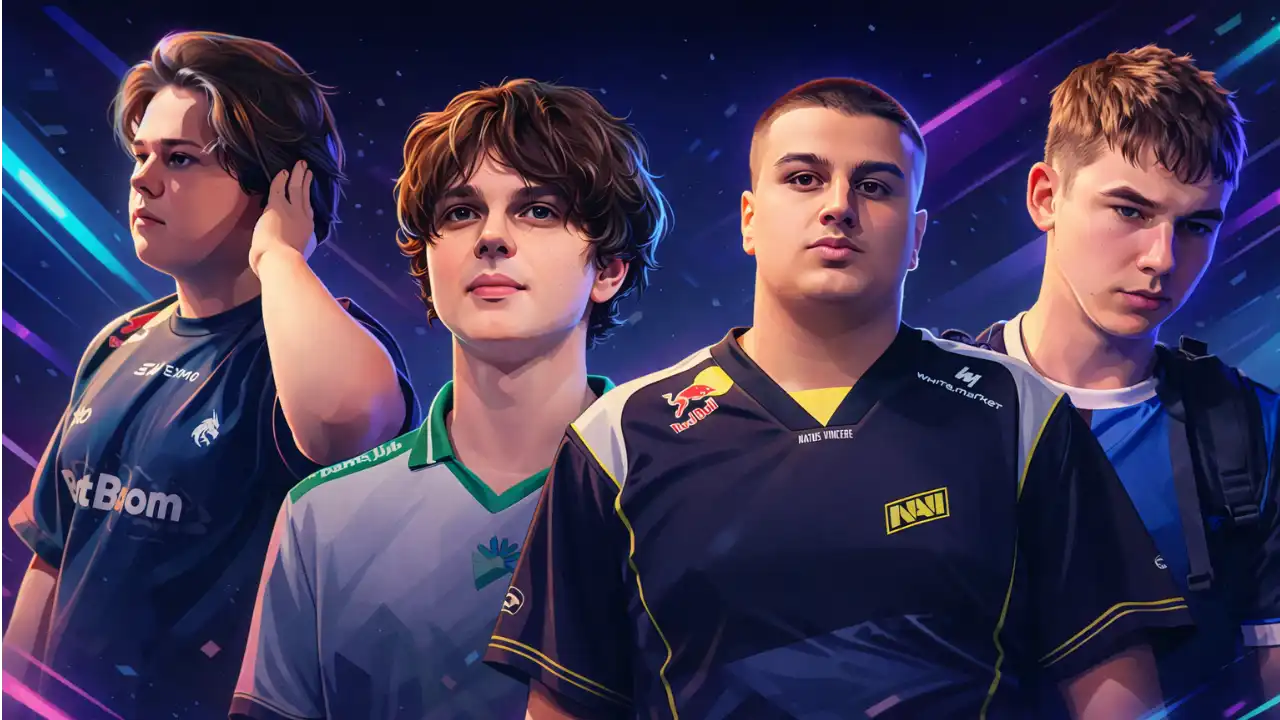
HLTV’s annual “Bold Predictions” exercise is meant to spotlight next year’s breakout youngsters — and it comes with guardrails. Since 2021, the Top 20 players list participants are asked to name a peer who is under 20 and hasn’t competed for a top-20-ranked team, i.e., someone who still qualifies as a genuine “future bet,” not an established star. With HLTV’s Top 20 for 2025 now wrapped up, the site revisited how the 14 names from the previous round of predictions actually performed across 2025 — and the results were a mix of instant validation, “good player, wrong context,” and a few picks that simply never got the stage time to pop.
The headliner: kyousuke mostly delivered — and earned the biggest leap
The clearest “hit” on the list was Maxim “kyousuke” Lukin. He was the most popular pick (six mentions), and 2025 became the year he transitioned from terrifying tier-two lobbies into proving he could hang at the top level. HLTV notes that he kept stacking standout LAN performances early (including extremely high-impact showings at the BetBoom LanDaLan events) before the real storyline arrived: a move to a tier-one superteam environment.
That jump became official during the summer off-season when Falcons announced his signing from Spirit, with kyousuke taking a starting spot in a lineup already built around elite star power. HLTV’s recap frames his Falcons debut as immediately encouraging — including an EVP at IEM Cologne — even if the team itself didn’t turn into an instant trophy machine afterwards. In other words: the “breakout” prediction was right, but it still takes time (and team results) to translate a hot rookie into Top 20 placement.
Related reporting around Falcons’ roster-building helps explain why kyousuke’s integration was watched so closely. HLTV later discussed Falcons’ broader “ceiling” and the way their pieces were assembled (including star acquisitions earlier in 2025), which made kyousuke’s adaptation to tier-one roles and maps part of a wider team experiment rather than a simple “plug-and-play prodigy” story.
makazze: academy hype → main-roster pressure, with real spikes of impact
Drin “makazze” Shaqiri was the only other player to get multiple mentions (two), and his year followed a very “modern CS” arc: strong academy results → promotion → learning pains → flashes of genuine tier-one value. HLTV’s recap emphasizes his rise with NAVI Junior and the way that momentum translated into a main-roster call-up in summer.
The move wasn’t theoretical. In July 2025, HLTV reported that jL stepped down from NAVI’s active roster to take a break, and makazze was promoted into that slot. From there, HLTV describes a messy but believable rookie integration: role overlaps, inconsistency, and early exits — but also proof-of-concept moments later in the year, including strong individual stretches and EVPs at key events.
zweih: the hardest lesson — trophies can hide individual discomfort
Not every “good team result” equals a personal breakout. Ivan “zweih” Gogin is HLTV’s cleanest example of that. He did win big early with Spirit (including IEM Cologne), but HLTV’s review stresses that he personally struggled to find stable footing inside Spirit’s system and role structure. Even later roster tweaks didn’t fully solve the fit issues, and by the time Spirit’s season was closing, the writing was on the wall.
This storyline is also backed by HLTV’s transfer coverage: in July 2025, Spirit officially signed zweih (after earlier reporting that they were targeting him), confirming that his step up to a top contender was real — and that expectations were massive from day one. By late 2025, the broader Spirit roster narrative included additional changes as they tried to rebalance the team.
PR and jcobbb: “earned the chance” outcomes — but context decided the ceiling
HLTV’s recap treats Oldřich “PR” Nový as a talent who largely did his part: he was selected by xertioN, moved to GamerLegion early, posted strong numbers at multiple events, and even landed an EVP for a deep run — but uneven team results and missed “big arena” opportunities limited how loudly his year could resonate.
Jakub “jcobbb” Pietruszewski is a different flavor of the same theme. He didn’t get many early tier-one reps, then suddenly found himself making an enormous leap when FaZe signed him from Betclic in August 2025. HLTV’s season recap notes the predictable turbulence: adapting to the role demands and pressure of FaZe wasn’t kind at first, but he improved later and became part of FaZe’s late-year story (including a major run), even if his level fluctuated by stage.
The “others” bucket: some late bloomers, some partial hits, some whiffs
After the most detailed spotlights, HLTV groups the remaining names into a broader category: players who either didn’t attend enough top events to truly stand out, or simply didn’t match the breakout expectations.
A few still have clearly documented “real moves” behind them:
-
Mason “Lake” Sanderson: HLTV highlights notable spikes in form and specific strong appearances, plus recognition in their Prospects coverage — suggesting the prediction wasn’t random, even if it didn’t become a full tier-one breakout yet.
-
Dmytro “jambo” Semera: the one Passion UA pick HLTV says did make an impression. He joined fnatic in March 2025 (officially announced by the org) and delivered enough to keep his name relevant, even if fnatic weren’t consistently in the top-tier mix.
-
Vladislav “xiELO” Lysov: HLTV describes him as a late bloomer whose trajectory improved significantly after joining PARIVISION mid-year — a move HLTV reported at the time, including quotes framing him as a high-upside, aggressive talent.
-
Džiugas “dziugss” Steponavičius: HLTV notes the growth curve late in 2025, including improvement after the roster moved under FUT, which aligns with HLTV’s reporting that FUT signed the ex-NAVI Junior core (including dziugss).
And then there were names that, per HLTV’s recap, didn’t convert prediction hype into visible top-level impact across the year — for example, jackasmo finishing with modest output, xelex mostly staying in online cups/qualifiers, and MoDo ending the year with a middling rating despite scattered opportunities.
What this says about “Bold Predictions” as a format
The most consistent pattern across HLTV’s review is that “being right” often depends on two separate things happening at once:
-
The player really is special (kyousuke is the obvious example), and
-
The opportunity arrives in the right environment (a roster with roles that fit, enough tier-one events, and team stability).
When either piece is missing, even a talented prospect can end up in the “hard to judge” category — not because the prediction was wrong, but because the season never produced enough high-level sample size to validate it cleanly. That’s why HLTV’s retrospective reads less like a scoreboard of wins/losses and more like a snapshot of how volatile development paths are in modern CS, where one summer transfer window can decide whether a “bold prediction” becomes a headline… or a footnote.
Related News