

FUT’s Transformation from Academy Side to International Contender

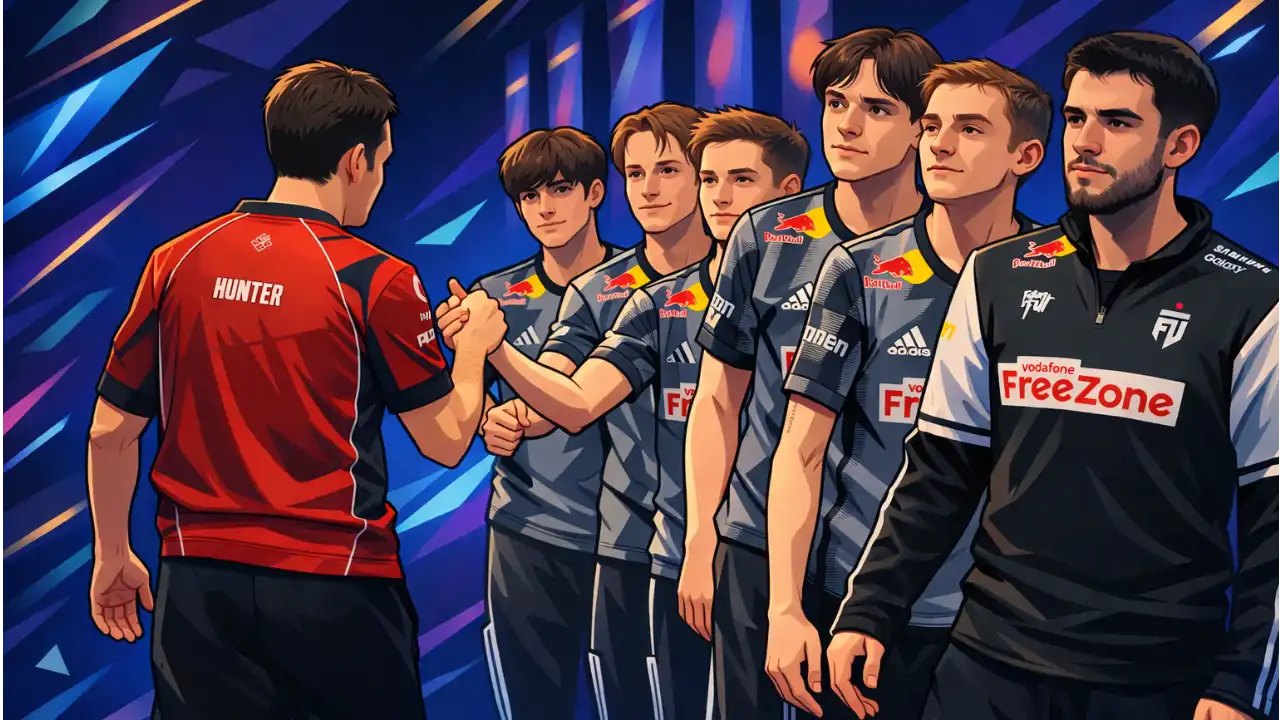
FUT’s Transformation from Academy Side to International Contender
After years as a talented but largely overlooked junior squad, FUT Esports have rapidly matured into one of Counter-Strike 2’s most talked-about teams. What once was a group competing under the constraints of an academy label has now become an independent force — capable of upsetting established tier-one organizations and earning significant results at major international events.
In 2025, FUT was attached to the NAVI Junior academy and faced limitations typical of developmental lineups: restricted access to big LAN events, lower competitive scheduling, and minimal exposure. That all changed when the core five players decided they were no longer content to remain an academy side. They chose to break away and pursue a full-time competitive path, a decision that has paid dividends.
According to coach András “coolio” Fercsák, the team’s success has a lot to do with an intense, professional practice regime the players adopted once they committed to Counter-Strike as a full-time pursuit. With practice schedules resembling those of established tier-one squads — often stretching deep into the night — FUT steadily improved.
Breakout at IEM Kraków and a Statement at PGL Cluj-Napoca
FUT’s rise began to truly attract attention in early 2026, especially at two of the most competitive events on the CS2 calendar: IEM Kraków and PGL Cluj-Napoca.
At IEM Kraków 2026, FUT opened some eyes with a decisive 2-0 victory over Team Liquid, a well-established organization in the Counter-Strike scene. FUT’s win over Liquid came on LAN, where FUT took Ancient 13-4 and Nuke 13-9, demonstrating raw firepower and composure under pressure.
Their run in Kraków ended with a close 1–2 loss to Astralis, but not without showing resilience and high-level play. FUT led on Mirage (13-7) and played a competitive Overpass (11-13) before falling on Nuke. A top-20 placement (9–12th) at this prestigious event marked a big step forward for a squad that only months earlier would not even have been eligible to attend.
Just weeks later at PGL Cluj-Napoca 2026, FUT continued their breakthrough. They began the event with a convincing 2-1 victory over Aurora, a team widely regarded as one of the stronger rosters in the world. FUT controlled Mirage and Overpass, and showed the depth of their tactical and mechanical improvement — a dramatic contrast from their less experienced academy days.
FUT also delivered one of the youngest international rosters’ standout series of the tournament by defeating Astralis 2-0 on LAN, showing they could handle strategic depth, consistency, and mental fortitude even against storied opponents.
A Team Identity Built Around Development and Resilience
FUT’s identity has been shaped not only by results, but by their approach to building chemistry. Many of their players — including standout performers like Dmytro “dem0n” Myroshnychenko, Džiugas “dziugss” Steponavičius, and Aulon “Krabeni” Fazlija — have earned praise for individual performances as well as teamwork.
Rather than splitting up after early success, the core group chose to stay together through roster turbulence, including the departure of their teammate Drin “makazze” Shaqiri after the NAVI Junior split. Coach coolio highlighted that adapting to such changes and integrating new players like Laurențiu “lauNX” Țârlea helped the team evolve.
This cohesion has translated into success across multiple formats: online tournaments, bootcamps intended to simulate LAN conditions, and full-blown international LAN events with living crowds and high pressure.
What This Means for FUT’s Future
FUT’s climb has broader implications in the evolving CS2 esports ecosystem. In recent years, academy teams have been crucial to producing elite talent — but rarely has an entire academy squad made such a leap into the top competitive tier quite so quickly. Players like Valeriy “b1t” Vakhovskiy and Ilya “m0NESY” Osipov have already proven academies can produce stars; FUT now exemplifies that an entire roster can rise together from academy ranks to tier-one relevancy.
Their success has also thrown a spotlight on the importance of matchmaking exposure, LAN experience, and structured practice — factors that separate promising amateur talent from professional contenders. In the process, FUT have shown that dedication and synergy can overcome limitations earlier in their careers.
As FUT continues competing in the ESL Pro League Season 23 and eyes qualification for ESL Pro League finals and subsequent majors, they are no longer a curiosity — they are a team to watch, and one that could shape narratives across competitive Counter-Strike in 2026.
Related News