

ESL Expands IEM Cologne 2027 Playoffs to Eight Teams

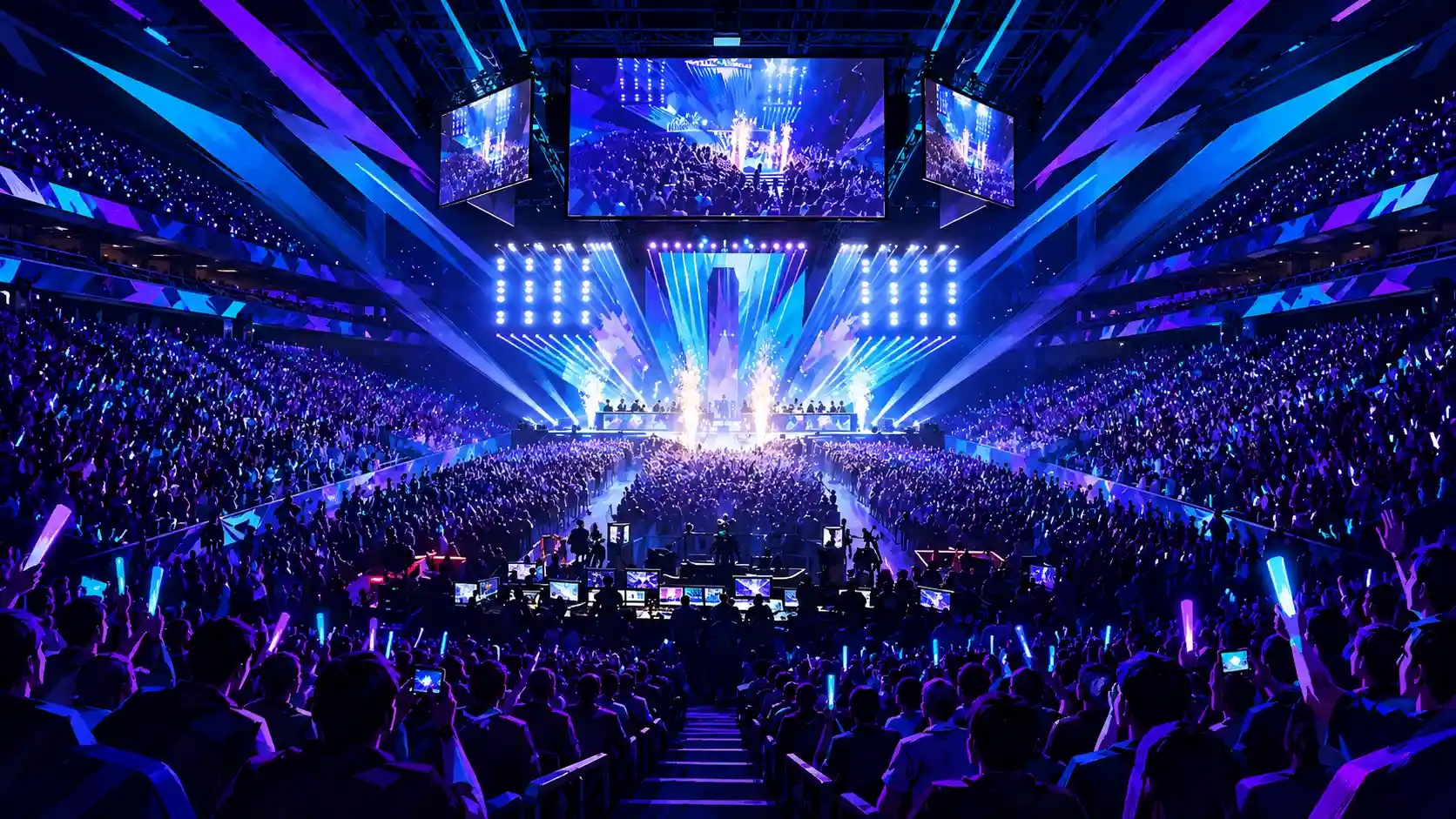
ESL has revealed a major expansion for IEM Cologne 2027, confirming an eight-team playoff bracket, four days of arena competition and a new 360-degree stage configuration inside Germany’s LANXESS Arena.
The Counter-Strike 2 tournament will run from August 4-15, 2027, with 24 teams progressing through two stages before eight reach the single-elimination playoffs. The Grand Final will remain a best-of-five, while ESL is also adding a third-place match to the final day.
The changes make IEM Cologne part of ESL’s broader move toward eight-team arena playoffs across its 2027 Counter-Strike circuit, while the redesigned stage represents a Cologne-specific production change intended to place the competing teams at the center of the LANXESS Arena.
Quick Summary
| Detail | IEM Cologne 2027 |
|---|---|
| Organizer | ESL |
| Game | Counter-Strike 2 |
| Event | IEM Cologne 2027 |
| Classification | ESL Pro Tour Championship |
| Location | Cologne, Germany |
| Venue | LANXESS Arena |
| Tournament dates | August 4-15, 2027 |
| Total teams | 24 |
| Stage 1 | 16 teams, double elimination |
| Stage 2 | 16 teams, two double-elimination groups |
| Playoff teams | 8 |
| Playoff format | Single elimination |
| Arena playoff duration | 4 days |
| Grand Final | Best-of-five |
| Third-place match | Yes |
| Arena configuration | 360° central stage |
| Total winnings | $1.25 million |
| Confirmed teams | TBD |
| Confirmation status | Official ESL announcement |
Source: ESL’s official IEM Cologne 2027 tournament information.
What Happened: ESL Reveals Expanded IEM Cologne 2027 Format
ESL announced additional details for IEM Cologne 2027 on October 1, 2026, outlining significant changes to both the competitive format and the LANXESS Arena presentation.
The most important competitive change is the eight-team single-elimination playoff bracket. Four teams from each Stage 2 group will advance, creating two additional quarter-final matches compared with the traditional six-team playoff structure used at IEM Cologne 2025.
Those playoffs will span four days rather than the traditional three-day arena program associated with regular pre-Major editions of Cologne.
The arena itself is also changing.
ESL says the LANXESS Arena will use a central 360-degree stage, positioning the teams in the middle of the venue rather than using the previous stage layout. According to ESL, the intention is to give more spectators a direct view of the competition.
The playoff expansion also means two more teams will get to compete in front of the Cologne arena crowd.
ESL and IEM Cologne 2027: How the Tournament Will Work
The overall route through IEM Cologne remains recognizable despite the playoff expansion.
Stage 1
Sixteen teams will enter Stage 1 and compete in a double-elimination bracket.
Eight will survive and advance to Stage 2.
ESL currently lists 12 Stage 1 positions for teams from the relevant Global Valve Regional Standings range, alongside four Wildcard Invite positions. The Wildcard mechanism had previously been announced for ESL’s two 2027 Championship events, IEM Kraków and IEM Cologne.
Stage 2
The eight Stage 1 survivors will join eight teams invited directly into Stage 2.
That creates a 16-team field split across two eight-team double-elimination groups.
Instead of three teams advancing from each group, four will qualify for the playoffs, producing the new eight-team bracket.
Playoffs
The final eight teams enter a single-elimination bracket at LANXESS Arena.
Quarter-finals and semi-finals will be played as best-of-three series. The Grand Final will be best-of-five.
IEM Cologne 2027 will additionally feature a third-place decider before the Grand Final.
Key Details
| Category | Confirmed information |
|---|---|
| Tournament | IEM Cologne 2027 |
| Organizer | ESL |
| Dates | August 4-15, 2027 |
| Arrival date | August 2 |
| Media day | August 3 |
| Departure date | August 16 |
| Venue | LANXESS Arena |
| City/Country | Cologne, Germany |
| Environment | LAN |
| Participants | 24 |
| Stage 1 teams | 16 |
| Stage 1 qualifiers | 8 |
| Direct Stage 2 teams | 8 |
| Stage 2 field | 16 |
| Playoff field | 8 |
| Playoff system | Single elimination |
| Quarter-finals | BO3 |
| Semi-finals | BO3 |
| Third-place match | BO3 |
| Grand Final | BO5 |
| Stage design | Central 360° setup |
| Total winnings | $1,250,000 |
| Prize money component | $1,000,000 |
| Club Reward component | $250,000 |
| Rosters/teams | TBD |
IEM Cologne Playoff Format: Historical Comparison
The eight-team field is particularly notable when compared with the regular IEM Cologne 2025 format.
In 2025, Stage 2 sent six teams to the playoffs. The two group winners advanced directly to the semi-finals, while the second- and third-place finishers entered the quarter-finals.
For 2027, eight teams will reach the knockout bracket instead.
| Format element | IEM Cologne 2025 | IEM Cologne 2027 |
|---|---|---|
| Total teams | 24 | 24 |
| Stage 1 teams | 16 | 16 |
| Stage 2 teams | 16 | 16 |
| Playoff teams | 6 | 8 |
| Direct semi-final berths | 2 | No traditional six-team bye structure |
| Single-elimination playoffs | Yes | Yes |
| Grand Final | BO5 | BO5 |
| Third-place match | No | Yes |
| Central 360° stage | No announced equivalent | Yes |
| Arena playoff program | 3 days | 4 days |
There is an important historical distinction: 2027 will not be the first Cologne event with eight teams inside the LANXESS Arena playoffs.
The IEM Cologne Major 2026 already sent eight teams into a four-day Major playoff stage from June 18-21. That tournament, however, operated under the Major structure rather than the standard 24-team ESL Pro Tour Championship format.
The 2027 announcement therefore represents the adoption of the expanded eight-team playoff model for Cologne’s regular ESL Pro Tour Championship structure after the 2026 Major.
Why the IEM Cologne 2027 Changes Matter
The difference between six and eight playoff teams looks small numerically, but it changes several parts of the tournament.
First, Stage 2 qualification becomes less restrictive. Half of the 16-team Stage 2 field will now reach the knockout stage.
Second, reaching the playoffs no longer automatically places a team within the top six. Quarter-finalists eliminated immediately can finish in the 5th-8th range.
Third, the change removes the familiar benefit in the six-team Cologne format where Stage 2 group winners could bypass the quarter-finals and move directly into the semi-finals.
That potentially changes the competitive value of group-stage positioning. Qualifying for the playoffs remains critical, but the route through Stage 2 no longer revolves around securing a semi-final bye under the old six-team structure.
Finally, the additional quarter-finals create more high-stakes matches in front of the LANXESS Arena audience.
Tournament Impact
The expanded bracket gives two additional organizations and ten additional starting players the opportunity to compete on the main Cologne stage, assuming standard five-player starting lineups.
That distinction matters at an event where reaching the arena has traditionally represented a major milestone in itself.
It also increases the amount of elimination Counter-Strike played before the live LANXESS Arena crowd.
From ESL’s perspective, the change fits a wider 2027 strategy. The tournament organizer announced in March that its 2027 events would use eight-team playoffs and conclude with matches played on stage in front of an audience.
IEM Cologne is therefore not an isolated format experiment. It is part of a broader restructuring of ESL’s Counter-Strike tournament circuit.
VRS and Invitation Impact
Valve Regional Standings will play a central role in constructing the IEM Cologne 2027 field.
ESL’s October 1 announcement lists:
-
12 Global VRS positions from the 9th-20th range for Stage 1;
-
four Stage 1 Wildcard Invite positions;
-
eight Global VRS positions from 1st-8th for direct entry into Stage 2.
That creates a significant competitive advantage for teams occupying the highest positions at the relevant invitation snapshot: the eight direct Stage 2 invitees avoid the opening 16-team bracket entirely.
VRS date discrepancy
There is currently an inconsistency across ESL’s own published information.
The October 1 announcement says invitations will follow the first available monthly VRS publication of June 2027, with the first July publication used for seeding. ESL’s dedicated event-details page, however, currently lists July 2027 for both invitations and seeding.
Until ESL reconciles those pages, the definitive invitation VRS publication should be treated as TBD/awaiting clarification rather than inferred.
No current team ranking should be treated as determining qualification for an event that will use a future 2027 VRS snapshot.
Prize Distribution
ESL lists $1.25 million in total winnings, divided between $1 million in prize money and $250,000 in Club Rewards.
| Placement | Prize Money | Club Reward |
|---|---|---|
| 1st | $420,000 | $80,000 |
| 2nd | $200,000 | $40,000 |
| 3rd | $100,000 | $30,000 |
| 4th | $50,000 | $20,000 |
| 5th-8th | $25,000 | $15,000 |
| 9th-12th | $15,000 | $5,000 |
| 13th-16th | $10,000 | — |
| 17th-20th | $5,000 | — |
| 21st-24th | $2,500 | — |
The presence of dedicated third- and fourth-place payouts is consistent with the addition of the third-place decider.
Another 2027 Change: Playoff Viewership Matters to ESL's Club Incentive
The longer arena phase also intersects with a broader ESL ecosystem change.
Starting in 2027, ESL plans to include playoff viewership when calculating the viewership component of its Annual Club Incentive. Previously, playoff audiences were excluded from that calculation.
ESL says the 2027 system will instead use combined average concurrent viewership across the tournament when determining the relevant distribution.
That means the expanded Cologne playoff stage is not only an additional competitive opportunity. Playoff appearances and the audiences surrounding them will exist within a season where playoff viewership forms part of ESL’s club incentive mechanism.
The exact financial effect on any individual organization cannot be calculated in advance and will depend on ESL’s applicable rules and future viewership data.
The 360° LANXESS Arena Stage
The format announcement is also a production announcement.
ESL plans to replace Cologne’s previous arena blueprint with a central 360-degree stage, placing the competing teams at the heart of the LANXESS Arena.
The organizer says the configuration is designed to give more spectators an opportunity to see the action from around the arena.
The competitive effect of that configuration is not yet known. ESL has not published detailed information on booth construction, sound isolation, player orientation or other technical stage specifications in the announcement.
Those details should therefore remain TBD until the organizer provides further production information.
Timeline
| Date | Development |
|---|---|
| October 2024 | ESL details the 2025 EPT Championship structure, including six-team playoffs for IEM Cologne 2025 |
| July-August 2025 | IEM Cologne 2025 uses the six-team playoff model |
| March 25, 2026 | ESL announces eight-team playoffs as part of its wider 2027 tournament changes |
| June 18-21, 2026 | IEM Cologne Major runs an eight-team, four-day LANXESS Arena playoff stage |
| October 1, 2026 | ESL reveals additional IEM Cologne 2027 information and confirms the 360° stage |
| October 15, 2026 | First ticket wave scheduled to go on sale, according to HLTV |
| August 4, 2027 | IEM Cologne 2027 tournament begins |
| August 2027 | Four-day, eight-team LANXESS Arena playoffs |
| August 15, 2027 | Grand Final / final tournament day |
The historical format and 2027 announcement are documented by ESL, while the October 15 ticket-sale date is reported by HLTV.
What Changes Now?
For teams, nothing changes immediately in terms of confirmed participants: the IEM Cologne 2027 team list has not yet been finalized.
The practical changes become important as the tournament approaches.
Organizations will need to monitor the relevant 2027 VRS publication because ranking position will determine the bulk of the invitation structure. The highest-ranked eight eligible teams in the specified Global VRS range are scheduled to receive direct Stage 2 entry, while another group will enter through Stage 1. Four Stage 1 positions are allocated as Wildcard Invite slots.
Once competition begins, four teams rather than three will progress from each Stage 2 group.
For spectators, the most visible differences will be an additional arena day, two more playoff participants, two additional quarter-final matches and the 360-degree stage.
Impact Analysis
Competitive impact
An eight-team bracket increases access to the arena but removes the old six-team playoff bye structure.
Under the 2025 system, winning a Stage 2 group meant direct passage to the semi-finals. In 2027, the published structure is an eight-team single-elimination bracket, so teams should expect to navigate a quarter-final to reach the last four.
Scheduling impact
Expanding the arena program from three to four days gives ESL room for the additional quarter-finals without compressing the entire knockout bracket into the traditional weekend.
Spectator impact
The 360° setup is intended to make the stage visible from more areas of the LANXESS Arena. The final effect on capacity, sightlines and atmosphere cannot be evaluated until ESL publishes more detailed venue plans.
Ecosystem impact
Cologne follows ESL’s broader 2027 shift toward eight-team playoffs. Similar structures have already been announced for other 2027 ESL events, including IEM USA and IEM Brazil.
This makes eight-team arena brackets a structural feature of ESL’s 2027 circuit rather than a Cologne-only exception.
What to Watch Next
The next major updates should fill in the parts of IEM Cologne 2027 that remain unknown.
The most important will be the final clarification of the VRS invitation snapshot, followed by the relevant VRS standings, official team invitations and Wildcard Invite decisions.
The full Stage 1 and Stage 2 brackets, match schedule, participating rosters, talent lineup and detailed LANXESS Arena production layout also remain TBD.
Another point worth monitoring is how ESL seeds the four playoff qualifiers from each Stage 2 group into the eight-team bracket. The final bracket mechanics could determine how much competitive value remains attached to finishing first rather than simply securing a playoff position.
Related Teams, Players and Events
Teams: TBD. No IEM Cologne 2027 participants should be presented as confirmed until ESL issues invitations or qualification is otherwise finalized.
Players: TBD. Player participation depends on the eventual team and roster list.
Related event — IEM Kraków 2027: ESL’s other annual EPT Championship in 2027. ESL has also listed an eight-team single-elimination playoff structure for Kraków.
Related event — IEM Cologne Major 2026: The previous Cologne event and an important historical comparison because its Major playoffs already featured eight teams over four arena days.
Related events — IEM USA 2027 and IEM Brazil 2027: Both have also been announced with eight-team playoffs, demonstrating how the Cologne format fits ESL’s wider 2027 tournament strategy.
FAQ
When is IEM Cologne 2027?
IEM Cologne 2027 is scheduled for August 4-15, 2027 in Cologne, Germany. ESL lists August 2 as the arrival date and August 3 as media day.
How many teams will reach the IEM Cologne 2027 playoffs?
Eight teams will advance to the playoffs. Four will qualify from each of the two Stage 2 groups before entering a single-elimination bracket.
What is changing at the LANXESS Arena?
ESL plans to introduce a 360-degree central stage and expand the arena portion of the tournament to four days. Two additional teams will reach the main stage compared with the six-team format used at IEM Cologne 2025.
Will the IEM Cologne 2027 Grand Final be BO5?
Yes. The Grand Final is confirmed as a best-of-five. Other matches are scheduled as best-of-three series, and the final day will also include a third-place decider.
Which teams are playing at IEM Cologne 2027?
The final team list is TBD. ESL has published the slot distribution, including VRS-based invitations and four Stage 1 Wildcard Invite slots, but the participating organizations have not yet been determined.
Related News

.webp)