

Dust2 Tops BLAST Open Fall 2026 Map Rankings as Anubis Finishes Last


Dust2 emerged as the most-played map at BLAST Open Fall 2026, appearing 14 times across the tournament, while Anubis sat at the opposite end of the map rankings with only six appearances. The final map statistics offer an interesting snapshot of the competitive CS2 map pool and the preferences of teams at the event.
According to statistics cited by Cybersport.ru from HLTV, Ancient and Mirage were tied behind Dust2 with 11 appearances each.
BLAST Open Fall 2026 ran from August 26 through September 6, featuring 16 teams and culminating in Team Spirit defeating MOUZ 3-1 in the grand final.
Quick Summary
Most-played map: Dust2 — 14 maps
Least-played map: Anubis — 6 maps
Second-most played: Ancient and Mirage — 11 each
Tournament: BLAST Open Fall 2026
Dates: August 26–September 6, 2026
Teams: 16
Champion: Team Spirit
Runner-up: MOUZ
Grand final: Spirit 3-1 MOUZ
Dust2 Leads the BLAST Open Fall 2026 Map Pool
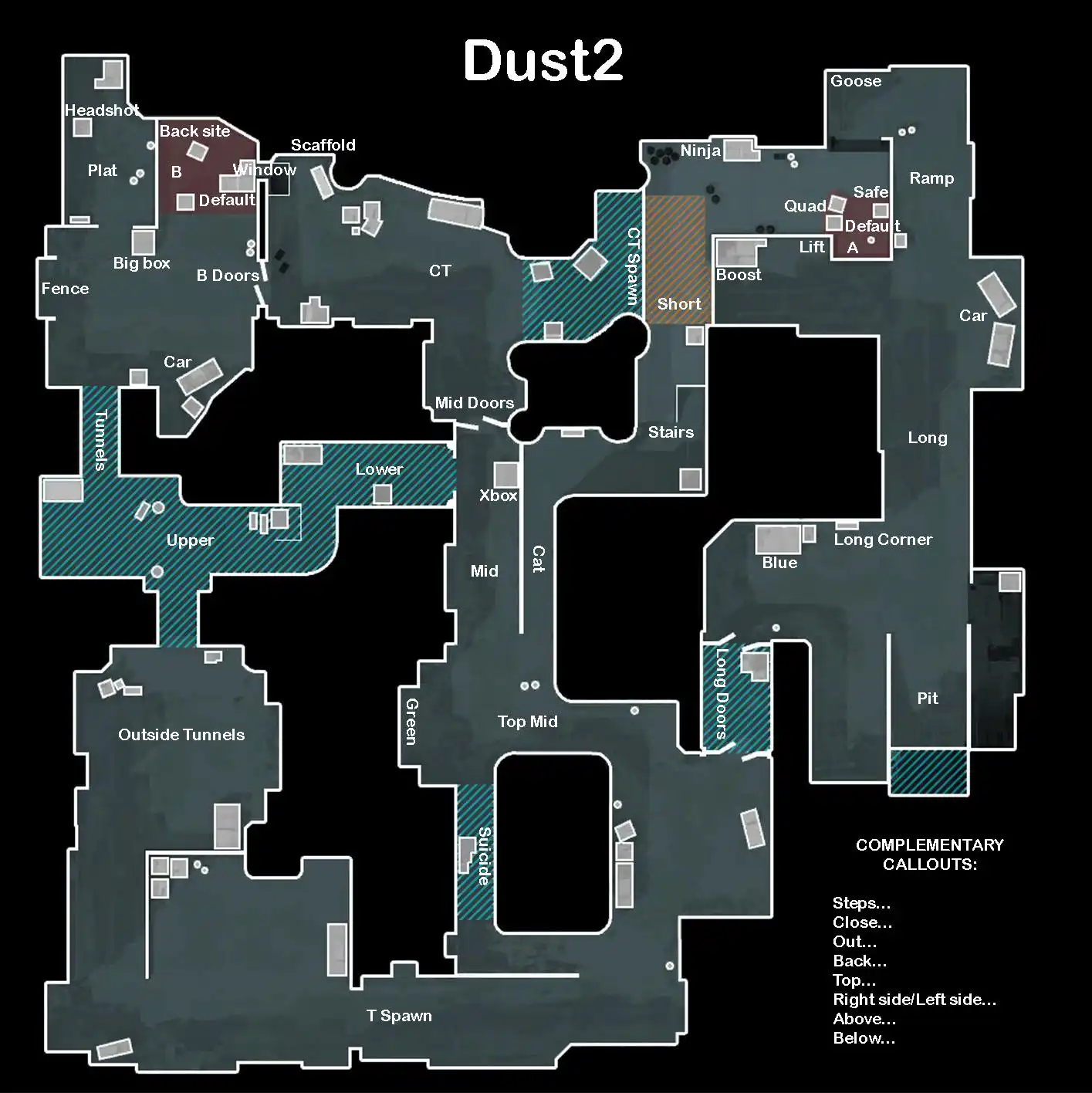
Dust2 topped the BLAST Open Fall 2026 map rankings with 14 appearances, ahead of Ancient and Mirage.
The final tournament statistics put Dust2 clearly at the top of the BLAST Open Fall 2026 map rankings.
Dust2 was played 14 times, three more than both Ancient and Mirage. At the bottom, teams played Anubis just six times. Cybersport.ru published the figures after the tournament, attributing the underlying statistics to HLTV.
A broader tournament statistics page from BO3.gg provides the complete map distribution:
| Rank | Map | Times played |
|---|---|---|
| 1 | Dust2 | 14 |
| 2= | Ancient | 11 |
| 2= | Mirage | 11 |
| 4= | Nuke | 9 |
| 4= | Cache | 9 |
| 6 | Inferno | 8 |
| 7 | Anubis | 6 |
BO3.gg's tournament data independently lists the same 14 appearances for Dust2 and six for Anubis, while also filling in the counts for the rest of the seven-map pool.
The gap is notable: Dust2 was played more than twice as often as Anubis during the tournament.
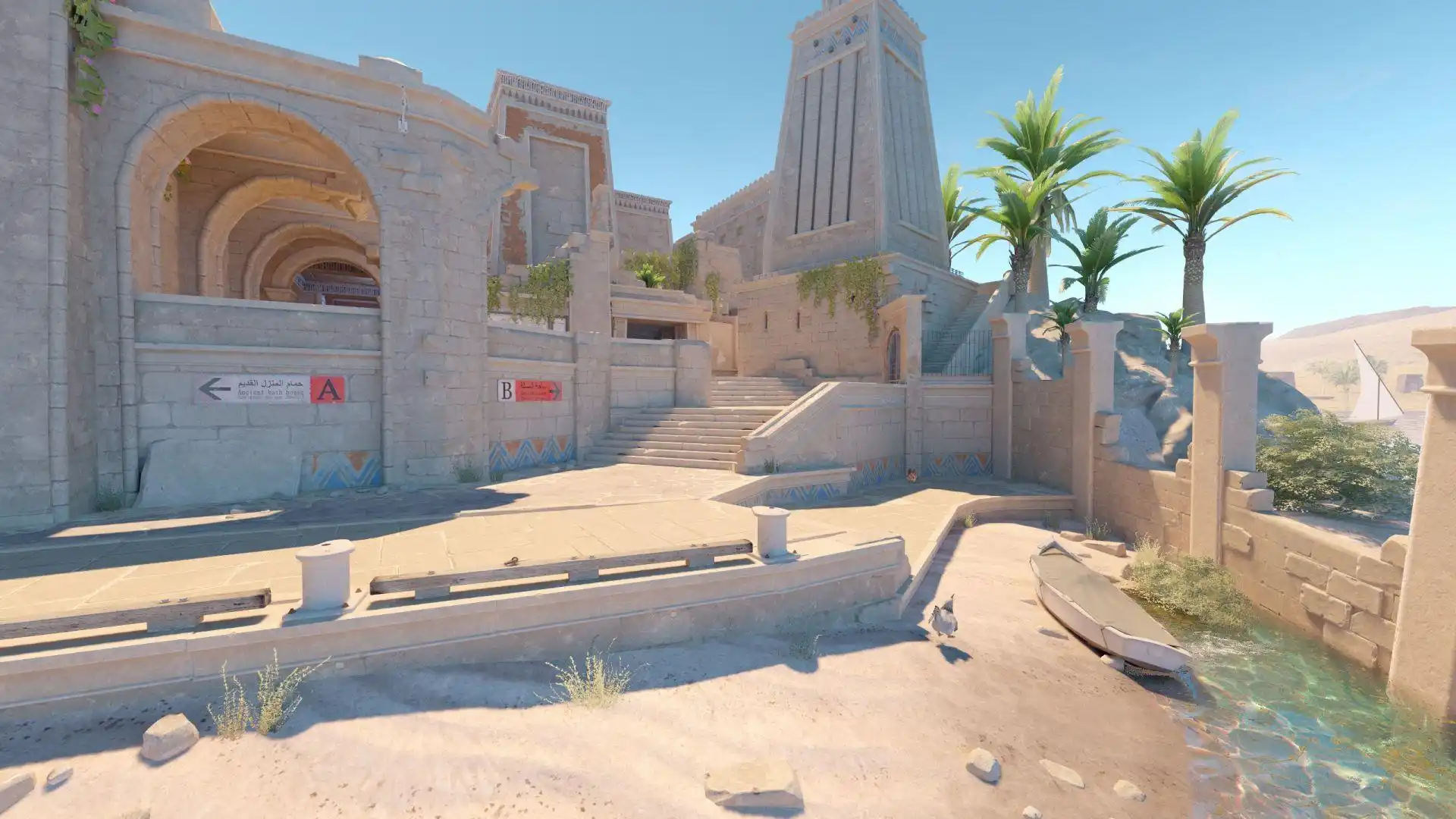
Dust2 and Anubis occupied opposite ends of the BLAST Open Fall 2026 map ranking: Dust2 was played 14 times, while Anubis appeared six times.
What Happened?
BLAST Open Fall 2026 concluded on September 6, making it possible to assess the complete map distribution rather than relying on group-stage trends.
The final numbers showed a clear preference for Dust2. Ancient and Mirage formed the next tier, while Nuke and Cache each appeared nine times. Inferno followed with eight, leaving Anubis alone at the bottom with six.
That does not automatically mean professional teams considered Anubis the weakest map in the pool. Map appearance totals are shaped by the veto process, team-specific strengths, bans and matchups.
What the numbers do demonstrate is simpler: Dust2 survived the veto process and reached the server considerably more often than Anubis at this particular event.
BLAST Open Fall 2026 Map Statistics: Key Details
| Detail | Result |
|---|---|
| Most-played map | Dust2 |
| Dust2 appearances | 14 |
| Least-played map | Anubis |
| Anubis appearances | 6 |
| Difference | 8 maps |
| Ancient appearances | 11 |
| Mirage appearances | 11 |
| Nuke appearances | 9 |
| Cache appearances | 9 |
| Inferno appearances | 8 |
| Tournament dates | August 26–September 6, 2026 |
| Number of teams | 16 |
| Champion | Team Spirit |
| Runner-up | MOUZ |
| Grand final score | Spirit 3-1 MOUZ |
The tournament featured Ancient, Anubis, Cache, Dust2, Inferno, Mirage and Nuke as its competitive map pool. Liquipedia lists BLAST Open Fall 2026 as an offline, 16-team event split between Copenhagen and Porto, with the playoffs taking place at Porto's Super Bock Arena.
Background: Dust2 and Anubis in the CS2 Map Pool
Dust2 occupies a distinctive position in Counter-Strike.
Its simple geographic structure, long sightlines and decades of competitive history make it one of the game's most recognizable battlegrounds. Its strategic depth can still be substantial at professional level, but players and teams generally have extensive familiarity with its fundamental timings and engagements.
Anubis represents a different competitive challenge.
Its pathways, rotations and engagement patterns create a different style of map control, and teams can have much greater differences in their willingness to include it in a veto.
BLAST Open Fall 2026 provides a useful tournament-specific example of that contrast: Dust2 reached 14 maps, whereas Anubis appeared only six times.
However, the data should not be interpreted as proof that Dust2 has universally replaced Anubis in professional preference. One tournament represents a limited sample, and map frequencies can shift significantly depending on the participating teams.
Tactical Impact: Why Map Popularity Matters
Map frequency is more than trivia for professional CS2 teams.
When a map regularly survives vetoes, teams have a stronger incentive to invest practice time into it. That includes developing opening protocols, anti-eco structures, CT rotations, utility sequences, retake setups and opponent-specific counter-strategies.
Dust2's 14 appearances at BLAST Open Fall 2026 therefore made preparation on the map particularly relevant during this event.
There is another important tactical consideration: popularity creates information.
Every additional official map produces demos that opponents can study. Teams that repeatedly play Dust2 expose more of their tendencies, while simultaneously gaining more official-match experience on the map.
That creates an ongoing cycle between practice, match data and anti-stratting.
Anubis being played only six times provided a smaller tournament sample. That alone does not establish whether teams were actively avoiding the map, banning it because of matchup considerations, or simply reaching other maps more frequently through veto combinations.
Dust2 Appeared in Several Important Matches

Dust2 remained relevant deep into BLAST Open Fall 2026, including high-stakes matches during the playoff stage.
Dust2 was not merely accumulating appearances in low-impact series.
For example, Team Falcons defeated Legacy 2-1 during the group stage and closed that series with a 13-6 victory on Dust2.
FURIA also defeated M80 13-5 on Dust2 during its 2-0 group-stage victory.
Vitality produced an even more one-sided Dust2 result against 9z, winning the map 13-2 on the way to a 2-0 series victory.
Later, Dust2 remained relevant in the playoffs. Falcons eliminated G2 2-0 in the quarterfinals, winning Dust2 13-9 after taking Inferno 13-6.
These examples underline why raw appearance totals are useful but incomplete: the context of when a map appears can be just as valuable as its overall frequency.
Anubis Was Last — but Still Produced Meaningful Matches
Anubis finishing last in frequency does not mean it disappeared from the tournament.
In one notable group-stage match, Inner Circle defeated Vitality 13-8 on Anubis before completing a 2-0 series victory.
NAVI also opened its tournament series against M80 with a dominant 13-4 victory on Anubis, although M80 recovered to win the match 2-1.
Later, G2 beat Aurora 2-1 to qualify for the playoffs despite losing the opening Anubis map 7-13.
So the better conclusion is not that Anubis was irrelevant, but that it appeared less frequently than every other map at BLAST Open Fall 2026.
Tournament Timeline
| Date | Development |
|---|---|
| August 26, 2026 | BLAST Open Fall 2026 begins |
| August 26 | M80 defeats NAVI 2-1; NAVI wins Anubis 13-4 |
| August 27 | Inner Circle beats Vitality 2-0, including 13-8 on Anubis |
| August 29 | Vitality defeats 9z 13-2 on Dust2 |
| August 29 | Falcons beats Legacy 2-1 and wins Dust2 13-6 |
| August 31 | Group stage concludes and playoff field is determined |
| September 4 | Falcons eliminates G2; Dust2 is played in the quarterfinal |
| September 6 | Team Spirit defeats MOUZ 3-1 in the grand final |
| September 7 | Post-event statistics identify Dust2 as the most-played map and Anubis as the least-played |
Tournament dates and the final result are confirmed by Cybersport.ru and Liquipedia, while individual match results are supported by the corresponding event reports.
Why Dust2's Popularity Matters
The result is useful because map frequency provides another way to track the evolving professional CS2 metagame.
A map's competitive position cannot be measured solely through win rates. Veto frequency and actual appearances can help reveal how comfortable teams are allowing a map into official series.
For analysts and coaches, repeated Dust2 appearances provide more recent material for studying professional approaches.
For fans, the statistic helps identify which maps are currently appearing most frequently at elite events.
For tournament coverage, it establishes a benchmark that can be compared with upcoming Tier 1 competitions.
Most importantly, the BLAST numbers create a question for future events: was Dust2's lead specific to this field of 16 teams, or will the same pattern persist across the wider professional circuit?
Impact Analysis
Tactical impact
Dust2's high frequency gives professional teams a larger pool of current demos to analyze. If the map continues appearing regularly at future Tier 1 events, opponent-specific preparation could become increasingly important.
Tournament impact
Dust2's presence across both group-stage and playoff series demonstrates that it remained relevant throughout different phases of BLAST Open Fall 2026.
Map-pool impact
Anubis finishing seventh is worth monitoring rather than treating as a definitive trend. A six-map sample at one tournament is insufficient to establish a broader decline by itself.
VRS/ranking impact
TBD / not applicable from the supplied map-frequency data.
The number of times Dust2 or Anubis was played does not independently provide enough information to calculate an effect on Valve Regional Standings.
What Changes Now?
Nothing in the official CS2 map pool changes simply because Dust2 was the most frequently played map at BLAST Open Fall 2026.
Instead, the tournament creates a new data point for analysts.
Teams preparing for future events can compare their own veto strategies with the BLAST field, while observers can track whether Dust2 continues to lead at subsequent elite tournaments.
Anubis deserves particular attention. If it repeatedly finishes near the bottom of map-frequency rankings across multiple tournaments, the evidence for a broader professional trend would become considerably stronger.
One event alone is not enough to make that conclusion.
What to Watch Next
The most important metric is repeatability.
Future Tier 1 tournaments can show whether BLAST Open Fall 2026 represented the beginning of a sustained Dust2-heavy period or simply reflected the map pools of the teams attending this specific event.
Watch for:
- Dust2 pick and ban frequency at upcoming Tier 1 events.
- Whether Dust2 remains among the top maps by actual appearances.
- Whether Anubis continues to sit near the bottom.
- Team-specific Dust2 preferences and permanent bans.
- Changes to the competitive map pool or map balance in future CS2 updates.
Tracking several tournaments rather than one will provide a much stronger picture of the professional map meta.
FAQ
What was the most-played map at BLAST Open Fall 2026?
Dust2 was the most-played map, appearing 14 times during BLAST Open Fall 2026.
How many times was Anubis played at BLAST Open Fall 2026?
Anubis was played six times, the lowest total among the seven maps in the tournament pool.
Which maps were behind Dust2?
Ancient and Mirage were tied for second with 11 appearances each. Nuke and Cache followed with nine each, while Inferno was played eight times.
Does Anubis finishing last mean teams no longer want to play it?
Not necessarily. The statistics cover one tournament and can be influenced by the participating teams and their veto strategies. More Tier 1 events would need to show a similar pattern before describing it as a sustained professional trend.
Who won BLAST Open Fall 2026?
Team Spirit won BLAST Open Fall 2026, defeating MOUZ 3-1 in the grand final. The tournament ran from August 26 through September 6.
Related News
.webp)