
BME Expands Stockholm’s Role in the Tier-2 Counter-Strike Ecosystem with Three New LAN Events

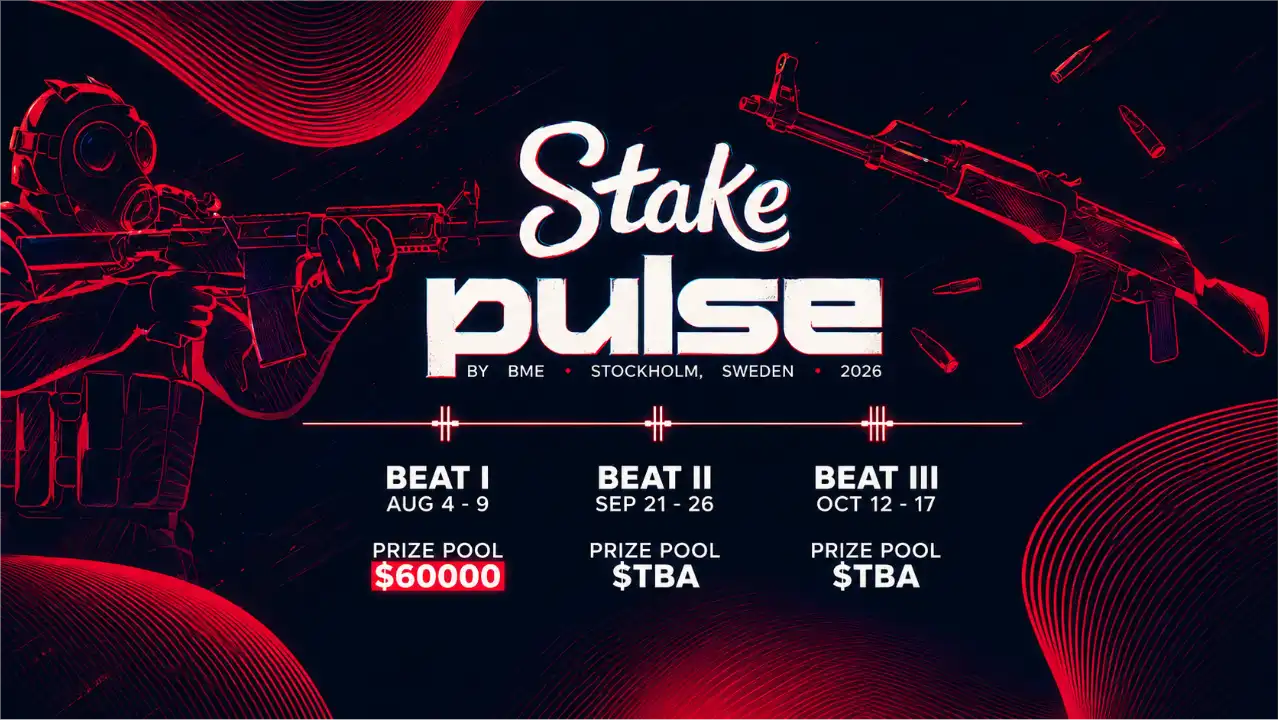
Swedish esports production company Black Molly Entertainment (BME) has announced plans to host three Tier-2 Counter-Strike LAN tournaments in Stockholm, further strengthening the city’s position as one of Europe’s most important esports hubs. The initiative represents a significant investment in the sub-elite competitive scene at a time when opportunities for Tier-2 and Tier-3 teams remain limited despite the rapid growth of Counter-Strike 2.
According to the announcement, BME will organize three separate LAN events in Stockholm, creating additional offline competition opportunities for teams outside the top tier. The tournaments will be held at BME Studios, a venue that has increasingly become a focal point for regional Counter-Strike competitions and esports productions in Sweden.
The move comes during a period of significant transformation within the Counter-Strike ecosystem. Since Valve introduced its tournament ranking system and increased the importance of official standings for event invitations, teams outside the elite level have faced growing pressure to secure valuable ranking points. As a result, LAN tournaments below the Tier-1 level have become increasingly important for organizations seeking sustainable competitive pathways.
BME is not a newcomer to esports event production. Founded in Sweden in 2013, the company has spent more than a decade working across tournament operations, broadcast production, and gaming-related events. The organization has previously been involved in projects ranging from national competitions to international esports productions, helping establish its reputation within the Nordic gaming ecosystem.
One of the announced events is expected to be connected to the Journey tournament series, a circuit that has already expanded its ambitions in 2026. Earlier announcements revealed that Journey would grow into a four-event structure during the year, with Stockholm serving as a central location for several competitions. The circuit features prize pools designed to attract developing professional teams while providing valuable LAN experience.
The importance of such tournaments extends beyond prize money. In the modern Counter-Strike landscape, LAN experience remains one of the most valuable resources for emerging rosters. Many promising teams spend most of their seasons competing online, often without opportunities to test themselves in high-pressure offline environments. Tournament organizers that continue investing in LAN infrastructure therefore play a crucial role in talent development.
Stockholm itself occupies a unique place in Counter-Strike history. Sweden was one of the birthplaces of professional Counter-Strike and produced some of the game’s most influential organizations and players. The city has hosted numerous high-profile esports competitions over the years, including international championships and major Counter-Strike events. Most notably, Stockholm hosted the PGL Major Stockholm 2021, which became one of the most-watched tournaments in Counter-Strike history and demonstrated the city’s continued importance as a destination for world-class esports.
While Tier-1 competition continues to be dominated by organizers such as ESL, BLAST and PGL, the broader ecosystem increasingly depends on independent tournament operators willing to support the next level of competition. Many organizations, analysts and players have voiced concerns about the shrinking number of LAN opportunities available to developing teams. BME’s decision to launch three new events can therefore be viewed as a direct response to a structural need within the scene.
The timing is also notable because Sweden has recently experienced renewed momentum as an esports destination. Alongside major international festivals and gaming events, Stockholm continues to attract organizers seeking reliable infrastructure, experienced production talent and a deeply rooted gaming culture. BME’s expansion adds another layer to that ecosystem by targeting a competitive segment that often receives less attention than premier-level tournaments.
For players, coaches and organizations operating below the elite tier, the new LAN circuit could provide a valuable stepping stone toward larger international competitions. Strong performances at these events may contribute to ranking improvements, greater visibility and increased opportunities to qualify for higher-profile tournaments. In a competitive environment where margins are increasingly small, every LAN appearance can have long-term implications for a team’s trajectory.
Ultimately, BME’s decision to host three Tier-2 LAN tournaments reflects a broader trend within Counter-Strike: the growing recognition that the health of the ecosystem depends not only on sold-out arenas and million-dollar championships, but also on a sustainable pathway for emerging teams. By investing in Stockholm-based offline competition, BME is helping strengthen that pathway while reinforcing Sweden’s long-standing role as one of the spiritual homes of competitive Counter-Strike.
Related News